OSB for Roofing: Is Oriented Strand Board Right for Your Roof Deck?
OSB for roofing has become the dominant roof deck material in modern residential construction, accounting for over 70 percent of new roof installations across Northern Virginia and the broader mid-Atlantic region. Oriented Strand Board offers builders and homeowners a cost-effective alternative to traditional plywood sheathing that delivers reliable structural performance when installed correctly and protected from moisture.
But OSB is not a one-size-fits-all solution. Northern Virginia's humid summers, freeze-thaw winter cycles, and frequent thunderstorms create conditions that exploit OSB's primary weakness: moisture sensitivity. Understanding when OSB works well, when plywood is the smarter choice, and how proper installation techniques maximize OSB performance helps you make informed decisions during your next roof replacement project. This guide covers everything Northern Virginia homeowners need to know about OSB roof decking in 2026.
What Is OSB and How Is It Manufactured?
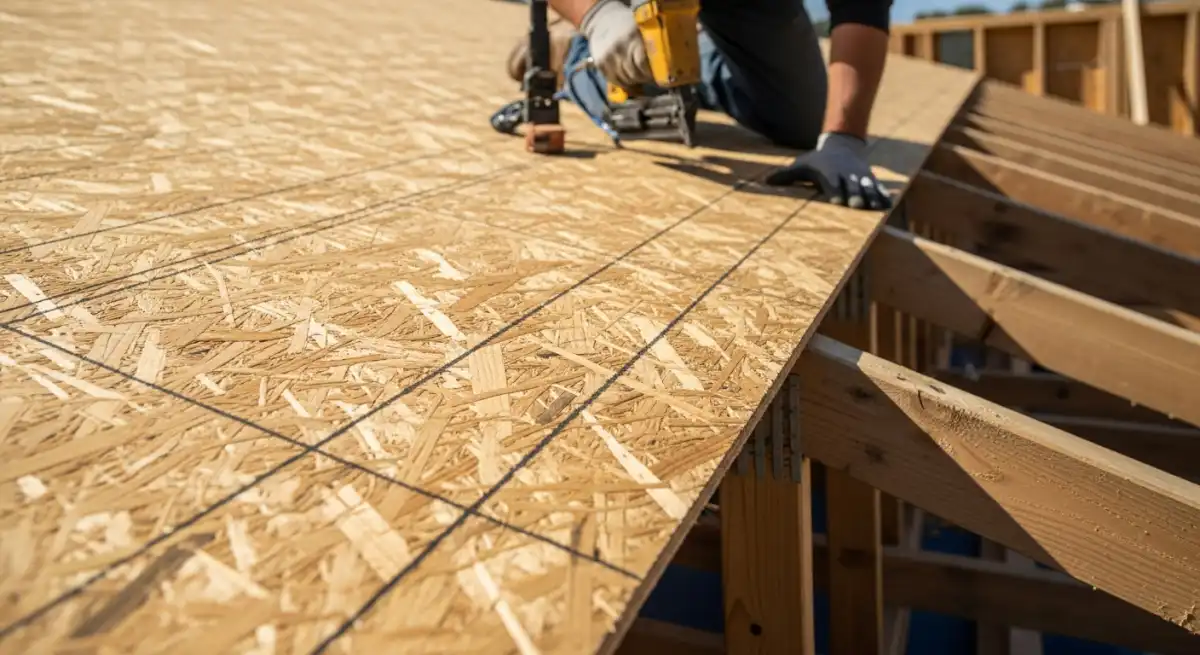
Oriented Strand Board consists of compressed wood strands arranged in specific directional layers and bonded with waterproof adhesives under high heat and pressure. Unlike plywood, which uses continuous wood veneers peeled from logs, OSB uses small wood pieces from fast-growing trees like aspen, poplar, and southern yellow pine. This makes OSB more resource-efficient and less expensive to manufacture.
The manufacturing process arranges wood strands in alternating perpendicular layers. Surface layers run parallel to the panel length while core layers run perpendicular. This cross-orientation provides dimensional stability and structural strength comparable to plywood at a lower price point. Modern OSB uses phenolic or isocyanate resins that create strong, water-resistant bonds between the strands.
The result is a dense, uniform structural panel with predictable engineering properties. Every sheet of OSB that meets the same grade specification performs the same way, unlike plywood where veneer quality varies based on wood species and manufacturing run. This consistency is one reason contractors across Reston, Herndon, Fairfax, and the broader Northern Virginia market prefer OSB for production-level roofing work.
Advantages of Using OSB for Roof Decks
Cost savings represent OSB's most compelling advantage. OSB typically costs 20 to 30 percent less than equivalent plywood panels, which translates to real savings on large roofing projects. On a typical 2,000-square-foot roof in Fairfax County requiring 60 to 70 sheets of decking, the material savings range from $600 to $1,200. For homeowners facing tight budgets, this difference can make the difference between moving forward with a needed roof replacement or delaying into another storm season.
Consistent manufacturing quality means every panel performs to spec. Plywood quality varies based on veneer grade, wood species, and the number of voids or knots in the core layers. OSB eliminates that variability. Large panel sizes up to 8x24 feet mean fewer seams and faster installation for projects where oversized panels are practical. OSB also resists delamination better than lower-grade plywood, maintaining structural integrity under typical service conditions.
Environmental sustainability is another factor. OSB uses smaller, fast-growing trees and produces less waste during manufacturing than plywood. For environmentally conscious homeowners in communities like Reston, where sustainability is part of the community identity, this consideration adds value beyond the balance sheet.
Disadvantages and Moisture Sensitivity of OSB
Moisture sensitivity is OSB's most significant limitation and the primary concern for Northern Virginia installations. When exposed to water, OSB swells more than plywood, especially at edges and cut areas. Panel edges can swell 15 to 20 percent when saturated, compared to 8 to 12 percent for plywood. More critically, OSB takes significantly longer to dry once wet, sometimes retaining moisture for weeks after plywood would have dried completely.
This moisture retention creates real problems during construction delays. Roof decks left exposed during rain absorb water that weakens adhesive bonds and causes permanent edge swelling. Even after drying, OSB may retain a rough, permanently swollen texture that telegraphs through thin roofing materials and creates visible ridges in your finished roof surface.
Northern Virginia's climate compounds the moisture risk. Summer humidity levels averaging 65 to 75 percent, combined with frequent afternoon thunderstorms during roofing season from May through October, mean that OSB deck exposure to rain during construction is a realistic possibility on every project. Contractors who understand this risk take precautions that less experienced crews might skip, making contractor selection critical for OSB installations in our region.
OSB vs. Plywood: Making the Right Choice
The decision between OSB and plywood depends on your specific situation, budget, and how much risk tolerance you have for moisture exposure during construction. Plywood handles moisture better, dries faster, and swells less at the edges. These properties make it the safer choice for projects with uncertain construction timelines, rainy-season installations, or situations where the roof deck may sit exposed for more than a day or two.
OSB works well when properly installed with attention to moisture protection. Projects with tight construction schedules that minimize weather exposure can safely use OSB. Quality installation means sealing all cut edges with specialized OSB edge sealer, installing synthetic underlayment immediately after deck completion, and never leaving OSB exposed overnight when rain threatens. For most well-managed roof replacement projects in Northern Virginia, OSB delivers reliable performance at a meaningful cost savings.
Proper OSB Installation for Northern Virginia Roofs
Correct installation maximizes OSB performance and longevity regardless of climate. Panels must be installed with 1/8-inch spacing between ends and edges to allow for thermal expansion. Skip this step and you risk panel buckling during summer heat that creates visible ridges under your shingles. Every panel should be stamped side up, with the grade stamp facing the attic so you can verify material during future inspections.
Fastening requires specific attention. Use 8d ring-shank nails or approved screws spaced 6 inches on center along panel edges and 12 inches on center in the field. This pattern prevents panel uplift during the 50-to-80 mph wind gusts that hit Northern Virginia during severe thunderstorms and provides proper load transfer across the deck structure. All panel edges must fall on rafters or blocking. Unsupported edges sag over time, creating visible dips in your roofline.
Edge sealing is the step most commonly skipped by rushed crews. Every cut edge on OSB, including cuts for vent pipes, chimneys, and valleys, must receive OSB edge sealer before underlayment installation. Unsealed edges wick moisture like sponges and swell permanently. This single step takes 30 minutes on most projects and prevents the most common OSB failure mode. Insist your contractor performs this step whether you are installing shingles, metal roofing, or any other system.
OSB Grades, Ratings, and Thickness Requirements
Not all OSB is suitable for roofing. Roof decks require structural panels rated for their specific rafter spacing. The span rating printed on every panel tells you the maximum supported distance between rafters. A 24/16 rating means the panel spans 24 inches on roofs and 16 inches on floors. A 32/16 rating handles wider 32-inch roof rafter spacing.
Exposure durability ratings matter equally. Look for OSB rated Exposure 1, which indicates water-resistant adhesives suitable for temporary weather exposure during construction. Never use interior-grade OSB on a roof deck. Premium products like Radiant Barrier OSB incorporate a reflective foil face that reduces attic heat gain, potentially lowering cooling costs in the hot summers that hit Reston, Ashburn, and Centreville.
Thickness depends on rafter spacing and local codes. Standard 7/16-inch OSB works for 16-inch rafter spacing, though 1/2-inch provides noticeably better stiffness and fastener holding. Rafters spaced 24 inches apart require minimum 5/8-inch thickness to prevent deflection under foot traffic and snow loads. Northern Virginia codes align with these minimums, but going one size thicker costs little and provides meaningful performance improvement over a 30-year roof lifespan.
OSB and Plywood Cost Comparison for Northern Virginia
Material costs fluctuate with lumber market conditions, but OSB consistently costs less than plywood for equivalent structural performance. The table below reflects typical 2026 pricing in the Northern Virginia market for the most common roof deck materials and thicknesses.
Prices represent material costs only and do not include labor for installation. Actual project costs will include delivery, fasteners, edge sealer, and installation labor. Request itemized quotes from your contractor that break out deck material costs so you can evaluate the value of upgrading from OSB to plywood or from thinner to thicker panels.
When to Avoid OSB for Roofing
Certain situations clearly call for plywood despite the cost difference. Homes in heavily wooded areas of Great Falls, McLean, and Oakton face increased ambient moisture from tree shade and limited air circulation. Reduced airflow beneath the canopy keeps the roof surface damp longer after rain and increases the risk of condensation on the deck underside during cool nights.
Projects with uncertain timelines or amateur installation should use plywood for its more forgiving moisture characteristics. Roof replacements during the rainy season from late spring through early fall benefit from plywood's faster drying time. If a sudden afternoon thunderstorm wets the deck before underlayment is installed, plywood recovers much more quickly than OSB.
High-end homes in neighborhoods along Georgetown Pike in McLean or the estate properties in Great Falls often specify plywood for perceived quality advantages and better alignment with the premium materials used elsewhere in the project. When you are installing a $25,000 standing seam metal roof or natural slate, spending an extra $800 for plywood decking represents a small percentage of total project cost and eliminates moisture risk entirely.
Long-Term Performance and Warranty Considerations
Properly installed and protected OSB roof decks last 30 to 40 years, matching the lifespan of quality roofing materials. The essential requirement is keeping OSB dry throughout its service life. Adequate attic ventilation prevents condensation on the deck underside during winter when warm interior air meets the cold roof surface. Ridge vents, soffit vents, and properly installed insulation baffles maintain airflow that keeps OSB dry year-round.
Most roofing material manufacturers approve OSB as a suitable substrate, but specific requirements apply. Warranties typically require minimum 7/16-inch thickness, proper fastening patterns, and installation per manufacturer specifications. Some premium metal roofing systems specify plywood for enhanced fastener holding. Review warranty documents before material selection to avoid discovering incompatibilities after installation.
Prompt leak repair is critical for OSB longevity. A small roof leak that would cause minor staining on plywood can cause significant swelling and delamination in OSB if left unaddressed for even a few weeks. Homeowners with OSB decking should schedule annual roof inspections and address any leak indicators immediately to protect the deck investment.
Get Expert Roof Deck Advice in Northern Virginia
Choosing between OSB and plywood is just one of many decisions that determine how well your new roof performs over the next 30 years. Reston Roofing helps homeowners across Reston, Fairfax, Herndon, Sterling, Ashburn, Arlington, and communities throughout Northern Virginia make informed decisions about every aspect of their roof replacement.
We inspect your existing deck during every roof replacement, identify panels that need replacement, and recommend the right material for your specific situation. Our estimates are detailed, written, and include material specifications so you know exactly what you are getting. We never substitute materials without your approval.
Call us today at (571) 453-6515 or schedule a consultation online. We will help you choose deck materials that protect your home and deliver lasting value for decades ahead.
Frequently Asked Questions
Is OSB or plywood better for roofing in Northern Virginia?
Both OSB and plywood perform well when properly installed. OSB costs 20 to 30 percent less and offers consistent quality, making it the standard choice for most Northern Virginia roof replacements. Plywood handles moisture exposure better and dries faster, making it the better option when construction timelines are uncertain or the roof deck may be exposed to rain during installation. For most homeowners working with experienced contractors who follow proper moisture protection protocols, OSB delivers excellent value.
How thick should OSB be for a roof deck?
OSB thickness depends on rafter spacing. For rafters spaced 16 inches on center, use a minimum of 7/16-inch OSB, though 1/2-inch provides better stiffness and fastener holding. For 24-inch rafter spacing, 5/8-inch OSB is the minimum required by Northern Virginia building codes. Using panels thicker than the minimum reduces deflection, improves sound dampening, and provides better fastener withdrawal resistance for shingle and metal roof attachments.
How long does an OSB roof deck last?
A properly installed and protected OSB roof deck lasts 30 to 40 years, matching the lifespan of quality roofing materials installed over it. The key requirement is keeping OSB dry throughout its service life. Adequate attic ventilation, quality underlayment, and prompt repair of any roof leaks are essential. OSB that experiences repeated wetting from leaks or condensation deteriorates faster than plywood under the same conditions.
How much does OSB cost compared to plywood for roofing?
OSB typically costs $18 to $28 per 4x8-foot sheet in the Northern Virginia market, while CDX plywood runs $28 to $45 per sheet for equivalent thickness. On a typical 2,000-square-foot roof requiring 60 to 70 sheets, OSB saves $600 to $1,200 in material costs compared to plywood. Prices fluctuate with lumber market conditions, so get current quotes from your contractor before making a final decision.
Can you install metal roofing over OSB?
Yes. Most metal roofing manufacturers approve OSB as a suitable substrate when it meets minimum thickness and span rating requirements. Standing seam metal roofing installs well over OSB because the clips and fasteners attach securely to the panel surface. Some premium metal systems specify plywood for enhanced fastener holding power, so always verify the specific manufacturer requirements before starting your project.