Best Roofing Materials for Northern Virginia Homes: 2026 Comparison
Choosing the best roofing materials for your Northern Virginia home is one of the most consequential decisions you'll make as a homeowner. The material on top of your house determines how well your home handles the region's brutal summer heat, winter ice storms, spring downpours, and the occasional 80 mph wind event that rips through the Dulles corridor without warning. It also affects your energy bills, your home's resale value, and how often you'll need to call a roofer for maintenance or repairs over the next few decades.
Northern Virginia isn't a forgiving climate for roofing materials. The Washington DC metro area sits in USDA Hardiness Zone 7a, where summer temperatures regularly hit the mid-90s with suffocating humidity, and winter nights drop into the teens with freeze-thaw cycles that crack and split inferior materials. You need a roof that can handle UV degradation from 200-plus sunny days per year, absorb the impact of hail that rolls through Fairfax County and Loudoun County several times each storm season, and shed water efficiently during the intense downpours that dump two inches of rain in 30 minutes during a July thunderstorm.
This guide compares every major roofing material available to Northern Virginia homeowners in 2026. We'll cover realistic costs for the NOVA market, expected lifespans under local weather conditions, energy performance ratings, Virginia building code requirements, and the HOA restrictions you'll run into across communities in Reston, Great Falls, Fairfax, Herndon, and the broader region. Whether you're replacing a 25-year-old roof on your Reston colonial or choosing materials for a new custom build in Great Falls, this comparison gives you the information you need to make a decision that holds up for decades.
Understanding Northern Virginia's Climate Demands on Your Roof
Before diving into specific materials, you need to understand what Northern Virginia's climate actually does to a roof. This context matters because a material that performs well in Arizona or Minnesota may fail prematurely here due to conditions unique to the mid-Atlantic region.
Humidity and Moisture
Northern Virginia's average relative humidity hovers between 65 and 75 percent during summer months. That persistent moisture promotes algae growth on shingles, accelerates the deterioration of organic roofing components, and creates conditions where trapped moisture beneath roofing materials leads to wood rot on the decking below. Homes in low-lying areas near the Potomac River, along Difficult Run in Great Falls, or backing up to Lake Thoreau and Lake Audubon in Reston deal with even higher localized humidity levels. Any roofing material you choose needs to resist moisture absorption and allow adequate airflow underneath to prevent condensation buildup.
Freeze-Thaw Cycles and Ice Dams
Between November and March, Northern Virginia experiences roughly 40 to 60 freeze-thaw cycles in a typical winter. Water seeps into hairline cracks in roofing material during the day, freezes overnight, expands, and widens those cracks with each cycle. Over five or ten winters, this process degrades shingles, splits slate tiles, and compromises flashing seals around chimneys and plumbing vents. Ice dams form when heat escaping from poorly insulated attics melts snow on the upper roof, which then refreezes at the eaves and traps water beneath the shingles. Homes along Hunter Mill Road in Oakton and the older neighborhoods around Vienna town center are particularly vulnerable to ice dams because many were built in the 1960s and 1970s with attic insulation that doesn't meet current standards.
UV Exposure and Heat
Northern Virginia averages roughly 200 sunny days per year. Prolonged UV exposure breaks down the chemical bonds in asphalt shingles, causing them to become brittle, lose granules, and curl at the edges. South-facing and west-facing roof slopes take the worst UV damage, especially on homes without tree shade. Roof surface temperatures on a dark-colored asphalt shingle roof can exceed 160 degrees Fahrenheit during a July afternoon in Fairfax or Herndon. That extreme heat accelerates material aging and drives up your cooling costs as your HVAC system fights to keep up with heat radiating through the roof assembly into your attic.
Wind and Storm Events
Severe thunderstorms and the remnants of tropical systems regularly bring sustained winds of 50 to 60 mph and gusts exceeding 80 mph to Northern Virginia. The June 2024 derecho that hit the DC metro area reminded homeowners across Reston, Sterling, and Ashburn just how quickly wind can strip shingles, lift flashing, and topple trees onto roofs. The open terrain around Dulles International Airport and along the Route 28 corridor in Chantilly and Sterling creates a wind acceleration effect that amplifies damage in those areas. Your roofing material needs a wind rating that matches these real-world conditions, not just the minimum code requirement.
Virginia Building Code Requirements for Roofing Materials
Virginia adopted the 2021 International Building Code with state-specific amendments, and these requirements directly affect which materials you can install and how they must be installed. Your roofing contractor should know these codes inside and out, but understanding the basics yourself protects you from substandard installations.
Wind Resistance Standards
The Virginia Residential Code requires roofing materials in most Northern Virginia jurisdictions to be rated for a minimum 90 mph wind speed exposure. Fairfax County, Loudoun County, and Arlington County all fall within this wind speed zone. In practice, this means three-tab shingles with only 60 mph ratings no longer meet code for new installations in most NOVA communities. Architectural shingles rated at 110 to 130 mph and metal roofing systems rated for 140 mph or higher comfortably exceed the requirement and provide a real-world safety margin for the storm events that hit this area.
Fire Rating Classifications
Virginia requires roofing materials to carry a minimum Class C fire rating, though most jurisdictions in Northern Virginia strongly recommend or require Class A. Asphalt shingles, metal panels, slate, and synthetic slate all carry Class A ratings. Untreated cedar shake carries a Class C rating, which is why some communities restrict its use. Pressure-treated cedar shake can achieve Class B or Class A ratings depending on the treatment process, but you'll need to verify the specific product's certification before installation.
Underlayment and Ice Shield Requirements
Virginia code requires ice and water shield membrane along the eaves extending at least 24 inches past the interior wall line. In valleys, around chimneys, and at any roof-to-wall transitions, additional membrane coverage is required. Synthetic underlayment has largely replaced traditional felt paper in Northern Virginia installations because it handles moisture better, lays flatter, and provides a superior secondary water barrier under any roofing material.
Ventilation Standards
Proper attic ventilation is a code requirement that directly affects how long your roofing material lasts. Virginia code specifies a minimum 1:150 ratio of net free ventilation area to attic floor area, which can be reduced to 1:300 if the ventilation is balanced between intake and exhaust. Inadequate ventilation voids most manufacturer warranties and causes premature failure of asphalt shingles from excessive heat buildup. During any roof replacement, your contractor should evaluate and upgrade your ventilation system to meet or exceed these minimums.
Asphalt Shingles: The Standard for Northern Virginia Roofs
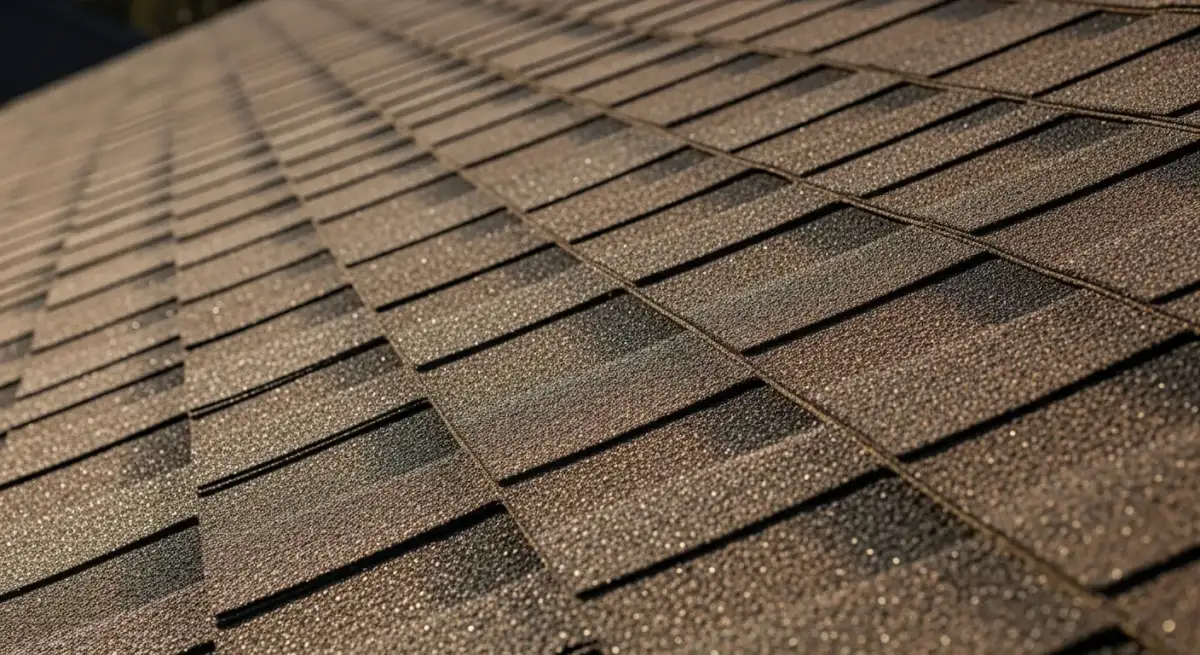
Asphalt shingles remain the most widely installed roofing material across Northern Virginia, covering an estimated 80 percent of residential roofs in Fairfax County, Loudoun County, and Arlington County. They're available in two main categories, and understanding the difference matters when you're comparing quotes and evaluating long-term value.
Three-Tab Asphalt Shingles
Three-tab shingles are the basic, flat-profile asphalt shingle that dominated residential roofing from the 1970s through the early 2000s. They consist of a single layer of asphalt-coated fiberglass mat with ceramic granules on top. You'll still see them on many older homes throughout Springfield, Annandale, and the established neighborhoods along Braddock Road in Fairfax.
Three-tab shingles typically last 15 to 20 years in Northern Virginia's climate, though roofs on south-facing exposures without tree shade often show significant wear by year 12 to 15. Their wind rating maxes out at 60 to 70 mph, which falls short of both Virginia code requirements for new installations and the real-world wind speeds that hit this area during severe storms. The cost savings over architectural shingles is modest, usually $1,000 to $2,500 on a full roof, which makes three-tab a poor value when you factor in the shorter lifespan and lower wind resistance.
For homeowners on a tight budget replacing a three-tab roof today, we strongly recommend upgrading to architectural shingles. The incremental cost per year of roof life makes architectural shingles the clear winner, and most NOVA HOAs now require them as the minimum standard anyway.
Architectural Asphalt Shingles
Architectural shingles, also called dimensional or laminate shingles, are the default choice for Northern Virginia roof replacements in 2026. They feature two or more layers of asphalt-coated fiberglass laminated together, creating a thicker, more textured profile that mimics the appearance of wood shake or natural slate depending on the product line.
Top-tier architectural shingles from GAF (Timberline HDZ), CertainTeed (Landmark Pro), and Owens Corning (Duration) carry wind ratings of 110 to 130 mph, algae resistance warranties of 10 to 15 years, and total material warranties of 30 to 50 years depending on the product tier. In Northern Virginia's actual conditions, you can realistically expect 25 to 30 years of solid performance from a quality architectural shingle installed with proper ventilation and underlayment.
Architectural shingles cost between $8,000 and $15,000 installed on a typical Northern Virginia home with 2,000 to 2,500 square feet of roof area. Premium designer lines with enhanced profiles and longer warranties push the upper end to $18,000 or more. These prices include tear-off of one existing layer, new synthetic underlayment, ice and water shield at eaves and valleys, and all flashing replacement.
Asphalt Shingle Performance in NOVA Weather
Asphalt shingles handle Northern Virginia's climate reasonably well when properly installed and ventilated, but they have definite limitations. The combination of summer heat and UV exposure degrades the asphalt binder faster than in cooler or drier climates. Algae streaking is common on north-facing slopes, especially on homes near wooded areas in Reston's Lake Anne and North Point neighborhoods. And freeze-thaw cycles gradually lift shingle edges and crack sealant strips, particularly on roofs older than 15 years.
The biggest advantage of asphalt shingles is the cost-to-performance ratio. No other material gives you 25 to 30 years of reliable weather protection at this price point. The biggest drawback is the finite lifespan. Unlike metal or slate, asphalt shingles are consumable. You will replace them, and in Northern Virginia, you'll likely replace them sooner than the manufacturer's warranty suggests if your attic ventilation is subpar.
Metal Standing Seam Roofing: The Long-Term Investment
Metal standing seam roofing has gained significant traction across Northern Virginia over the past decade, particularly on custom homes in Great Falls, estate properties along Georgetown Pike in McLean, and newer construction in Ashburn and South Riding. Standing seam panels interlock vertically with raised seams that sit above the flat panel surface, creating a continuous weather barrier with no exposed fasteners that can corrode or back out over time.
Lifespan and Durability
A properly installed metal standing seam roof lasts 50 years or more. Many metal roofs installed in the 1970s and 1980s are still performing well today. The panels are typically made from 24-gauge or 26-gauge steel with a Kynar 500 fluoropolymer finish that resists fading, chalking, and corrosion for decades. Aluminum panels are also available and are preferred for coastal or high-corrosion environments, though steel is the standard choice for inland Northern Virginia locations.
Metal roofs handle Northern Virginia's wind loads with ease. Most standing seam systems are rated for 140 to 180 mph winds, far exceeding the 80 mph gusts that cause damage to asphalt shingle roofs. They shed snow and ice efficiently, which prevents the ice dam problems that plague older homes in Oakton, Vienna, and Falls Church during winter. And they're impervious to the algae and moss growth that stains asphalt shingles in the humid areas around Lake Thoreau, Lake Audubon, and the Difficult Run watershed.
Energy Efficiency and Cooling Savings
Metal roofing delivers measurable energy savings that matter in Northern Virginia's hot summers. Reflective metal panels with Energy Star-rated finishes can reduce roof surface temperatures by 50 to 60 degrees Fahrenheit compared to dark asphalt shingles. The Department of Energy estimates that cool metal roofing reduces cooling energy costs by 10 to 25 percent, depending on your home's insulation, HVAC efficiency, and roof orientation.
For a typical Northern Virginia home spending $200 to $400 per month on summer electricity, that translates to $240 to $1,200 per year in cooling savings. Over the 50-plus year lifespan of a metal roof, those savings add up to a significant offset against the higher upfront cost. Homes with south-facing and west-facing roof slopes in sun-exposed neighborhoods like the communities along Wiehle Avenue in Reston or the open-plan developments near Fairfax Corner see the most dramatic cooling benefits.
Cost Considerations for Metal Roofing
Metal standing seam roofing costs between $18,000 and $30,000 installed on a typical Northern Virginia home. The wide range reflects differences in panel gauge, finish quality, roof complexity, and whether your existing roof structure needs reinforcement to handle the metal panels. Most standard wood-framed homes in NOVA can support metal roofing without structural modifications, but older homes with lightweight trusses may need engineering review.
The cost-per-year calculation often favors metal roofing for homeowners who plan to stay in their home for 15 or more years. A $24,000 metal roof lasting 50 years costs $480 per year. A $12,000 asphalt shingle roof lasting 25 years costs $480 per year, but you'll need to replace it again in 25 years at whatever prices look like in 2051. When you factor in energy savings and the near-zero maintenance requirement, metal roofing becomes the more economical choice over a 30-plus year ownership horizon.
Metal Roofing and NOVA HOAs
HOA acceptance of metal roofing varies widely across Northern Virginia. Some newer communities in Ashburn, Brambleton, and South Riding approve standing seam metal without issue. Many older HOAs in Reston, particularly in the cluster communities around North Point and Hunters Woods, still restrict metal roofing to specific architectural styles or prohibit it altogether. Communities in Great Falls and McLean, where homes tend to be larger and lot sizes more generous, are generally more permissive about metal roofing because the individual homes have less visual impact on neighbors.
Before committing to a metal roof, submit a formal inquiry to your HOA's architectural review board. Bring material samples and photos of completed metal roof installations on homes with a similar architectural style. Some homeowners have successfully changed their HOA's stance on metal roofing by presenting the longevity and energy efficiency data to the board.
Natural Slate Roofing: The Century-Long Investment
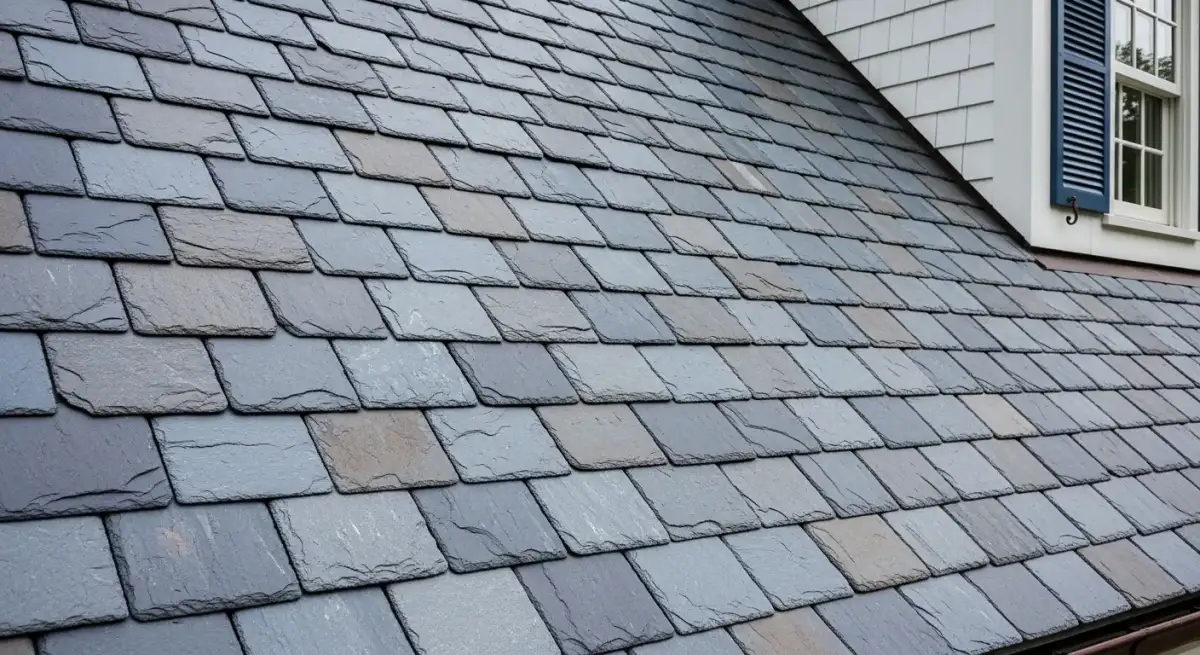
Natural slate is the premier roofing material available, and Northern Virginia has a long history with it. Drive through the historic sections of Old Town Alexandria, the estates along Chain Bridge Road in McLean, or the older homes near the Vienna town center and you'll see slate roofs that have protected those homes for 75 to 100 years or more. Virginia quarries in Buckingham County and the Shenandoah Valley produce some of the finest roofing slate in North America, which means local supply chains exist for both new installations and repair slate matching.
Lifespan and Character
A properly installed natural slate roof lasts 75 to 100 years, and many exceed that mark. The slate tiles themselves are nearly indestructible under normal weather conditions. What fails on a slate roof is typically the flashing, the fasteners, or the underlayment beneath the tiles, not the slate itself. This means a slate roof can often be restored rather than replaced by removing the tiles, replacing the underlayment and flashing, and reinstalling the original slate.
Slate offers an aesthetic that no synthetic product has fully replicated. The natural color variation, the textured surface, and the way a slate roof ages with a gradual patina give a home a sense of permanence and craftsmanship that adds tangible curb appeal and resale value. For homes in Great Falls, McLean, and the estate neighborhoods along Georgetown Pike, a slate roof is both functionally superior and architecturally appropriate.
Cost and Structural Requirements
Natural slate roofing is the most expensive option at $25,000 to $45,000 for a typical Northern Virginia home, with complex rooflines, turrets, or steep pitches pushing costs higher. Slate tiles weigh 800 to 1,500 pounds per square (100 square feet), which is three to five times heavier than asphalt shingles. Your home's roof structure must be engineered to support this weight. Most modern homes built to standard residential framing specs will need structural reinforcement before slate can be installed, which adds $3,000 to $8,000 to the project depending on the scope of work.
Finding qualified slate installers in Northern Virginia is another challenge. Slate installation is a specialized trade that requires different skills and techniques than asphalt or metal work. Improper installation causes cracked tiles, poor drainage, and premature flashing failure that undermines the entire purpose of investing in a century-rated material. Reston Roofing works with experienced slate craftsmen who understand the specific installation methods required for Virginia slate products.
Slate in Northern Virginia's Climate
Natural slate handles Northern Virginia's climate exceptionally well. It's impervious to UV degradation, unaffected by humidity and algae, and its density makes it naturally resistant to wind uplift. The primary concern is freeze-thaw damage on lower-quality slate that absorbs too much moisture. Virginia slate from Buckingham County quarries has a low absorption rate that makes it well-suited for the mid-Atlantic freeze-thaw cycle, but imported slate from overseas sources can vary significantly in quality and freeze-thaw resistance. Always verify the slate source and its ASTM S1 grade rating before approving the material for your project.
Synthetic Slate Roofing: Slate Looks Without the Weight
Synthetic slate has emerged as a compelling middle-ground option for Northern Virginia homeowners who want the appearance of natural slate without the structural requirements and extreme cost. Modern synthetic slate products from manufacturers like DaVinci Roofscapes, Brava, and CertainTeed are made from engineered polymers, rubber compounds, or fiber-cement composites that mimic the look and texture of real slate remarkably well.
Material Composition and Lifespan
Quality synthetic slate products last 40 to 60 years under normal conditions. They weigh roughly one-quarter to one-third of natural slate, which means most existing homes in Reston, Herndon, Fairfax, and throughout Northern Virginia can support synthetic slate without any structural modifications. The lighter weight also reduces installation time and labor costs compared to natural stone.
Synthetic slate carries Class A fire ratings, wind ratings of 110 to 130 mph, and impact resistance ratings that exceed natural slate in some categories. The polymer-based products are essentially immune to freeze-thaw damage because they don't absorb water the way natural stone can. They also resist moss and algae growth better than asphalt shingles, which is a real advantage in the humid areas around Reston's lakes and the wooded neighborhoods in Oakton and Vienna.
Cost and Value Proposition
Synthetic slate costs between $15,000 and $25,000 installed on a typical Northern Virginia home. That's a significant savings over natural slate while delivering a lifespan roughly twice as long as architectural asphalt shingles. For homeowners in HOA communities that encourage or require a slate-like appearance but where the cost of natural slate is prohibitive, synthetic slate hits a sweet spot that satisfies both the aesthetic requirement and the budget constraint.
The main drawback of synthetic slate is that it doesn't carry the same prestige or resale bump as genuine natural slate. On high-end properties in Great Falls and McLean where buyers expect and appreciate authentic materials, natural slate still commands a premium that synthetic products can't match. But for homes in the $600,000 to $1.2 million range across Reston, Herndon, and Fairfax, synthetic slate offers excellent return on investment.
Aesthetic Considerations
The best synthetic slate products are difficult to distinguish from natural slate at a typical viewing distance from the street. Up close, experienced eyes can spot the difference, but the visual quality of today's premium synthetics is light-years ahead of the plastic-looking products from a decade ago. Color options are extensive, and unlike natural slate where color is limited by quarry geology, synthetic slate can be manufactured in virtually any shade to match your home's architecture and your HOA's approved palette.
Cedar Shake Roofing: Natural Beauty with Maintenance Requirements
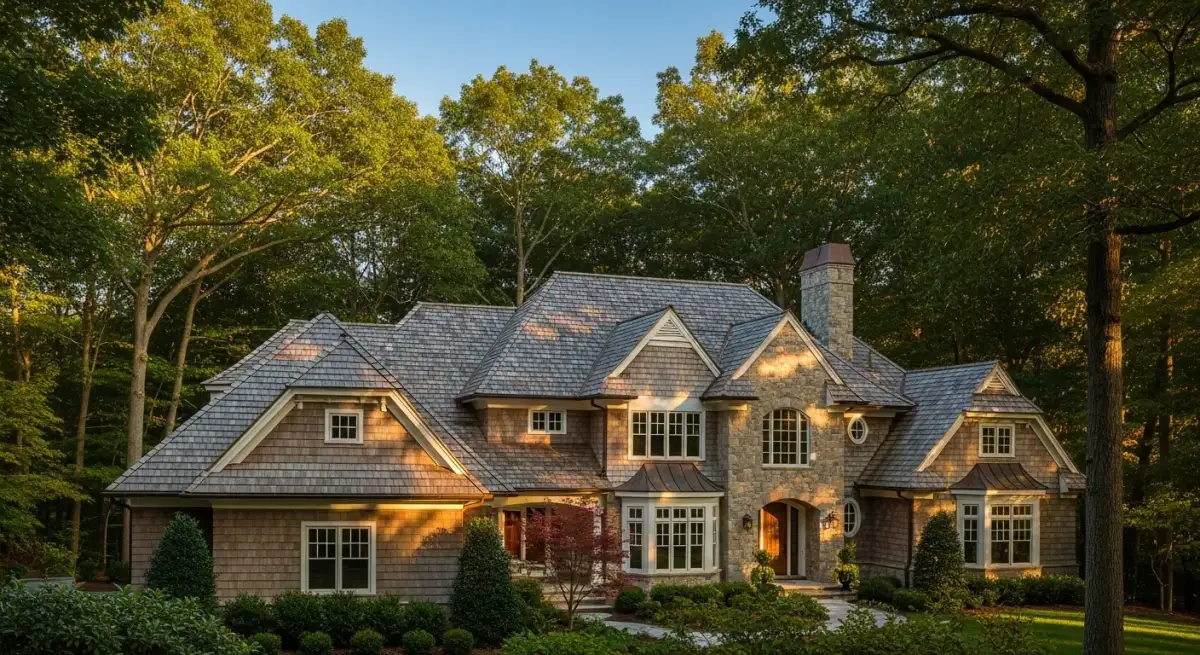
Cedar shake roofs have a devoted following among homeowners who value the natural, rustic aesthetic that no manufactured product fully replicates. You'll find cedar shake roofs on older custom homes in Great Falls, on farmhouse-style properties along Leesburg Pike in McLean, and scattered throughout the established neighborhoods of Vienna and Oakton where mid-century homes were built with cedar as a design statement.
Lifespan and Maintenance Demands
Cedar shake roofs last 25 to 40 years in Northern Virginia when properly maintained. That "properly maintained" qualifier is the critical factor. Cedar is an organic material that absorbs moisture, and Northern Virginia's humidity creates ideal conditions for moss, algae, lichen, and fungal growth that accelerates wood deterioration. Without regular treatment, a cedar shake roof in this climate can show significant degradation within 10 to 15 years.
Maintaining a cedar shake roof in NOVA requires cleaning every two to three years to remove moss and debris, application of preservative and fungicide treatments after each cleaning, prompt replacement of split or curled shakes before water penetration damages the underlayment, and regular clearing of debris from valleys and around dormers where moisture collects. Plan on spending $500 to $1,500 per maintenance cycle, which adds $200 to $750 per year to your total cost of ownership over the roof's lifetime.
Cost of Cedar Shake Installation
A cedar shake roof costs between $15,000 and $28,000 installed on a typical Northern Virginia home. The range depends on the grade of cedar (premium hand-split shakes versus machine-cut shingles), the complexity of your roof geometry, and whether additional fire-resistant underlayment is required by your jurisdiction or HOA. Fairfax County doesn't prohibit cedar shake outright, but the fire code requires a Class A or Class B fire-rated assembly when cedar is used, which means additional underlayment layers and potentially fire-retardant-treated shake products.
Cedar Shake and Northern Virginia HOAs
HOA acceptance of cedar shake varies across Northern Virginia. Some communities in Great Falls and McLean welcome cedar shake as an architecturally appropriate material for the area's estate homes. However, many HOAs in Reston, particularly the cluster and townhome communities managed by the Reston Association, prohibit cedar shake due to fire risk and maintenance concerns. Communities in Herndon, Chantilly, and the newer developments in Ashburn and Brambleton also tend to restrict cedar shake in favor of architectural shingles or synthetic alternatives that require less upkeep.
If your heart is set on cedar shake, verify your HOA's position before getting quotes. If cedar is approved, budget for the ongoing maintenance costs from day one and schedule regular professional treatments to protect your investment.
TPO and PVC Flat Roof Systems
Not every roof in Northern Virginia has a steep slope. Many homes throughout the region have flat or low-slope sections over garages, additions, sunrooms, porches, and row house roofs. Flat roof sections require single-ply membrane systems rather than shingles or panels. The two most common options for residential flat roofs in NOVA are TPO (Thermoplastic Polyolefin) and PVC (Polyvinyl Chloride).
TPO Roofing for Northern Virginia Homes
TPO is the more popular flat roof material in Northern Virginia's residential market due to its lower cost and solid track record over the past 15 years. White TPO membranes reflect solar heat effectively, which is a meaningful benefit for flat roof sections on homes in sun-exposed areas throughout Fairfax, Herndon, and Reston where flat-roofed additions face south or west.
TPO membranes are heat-welded at the seams, creating a monolithic waterproof surface with no adhesive joints that can fail over time. Properly installed TPO lasts 20 to 30 years and handles Northern Virginia's temperature extremes without cracking, splitting, or shrinking. The material carries Class A fire ratings and wind uplift resistance that meets Virginia code requirements for flat roof assemblies.
PVC Roofing for Northern Virginia Homes
PVC membranes cost slightly more than TPO but offer superior chemical resistance and a longer track record in the roofing industry. PVC is the preferred choice for flat roof sections near kitchen exhaust vents, HVAC equipment, or areas where grease or chemical exposure is a concern. Like TPO, PVC seams are heat-welded, and the material carries Class A fire ratings and excellent wind uplift resistance.
PVC membranes typically last 25 to 30 years or more and maintain their flexibility and waterproofing performance across the full temperature range Northern Virginia experiences, from single-digit winter lows to 100-degree summer peaks. For homes with rooftop decks, PVC walkway pads can be installed over the membrane to provide foot traffic protection without compromising the waterproofing system.
Flat Roof Costs in Northern Virginia
TPO and PVC flat roof systems cost between $8,000 and $15,000 for a typical residential flat roof section in Northern Virginia. Per-square-foot pricing runs $8 to $15 depending on membrane thickness, insulation requirements, and the complexity of the roof's drainage design. Flat roofs with inadequate drainage slope may require tapered insulation systems to direct water toward drains or scuppers, which adds to the total cost.
The most common mistake homeowners make with flat roofs is delaying replacement until leaks develop. By the time water is coming through your ceiling, the underlying insulation and decking have already sustained moisture damage that increases the repair scope and cost significantly. If your flat roof section is older than 20 years, schedule a professional inspection to assess its remaining service life before problems develop.
Roofing Material Cost Comparison for Northern Virginia
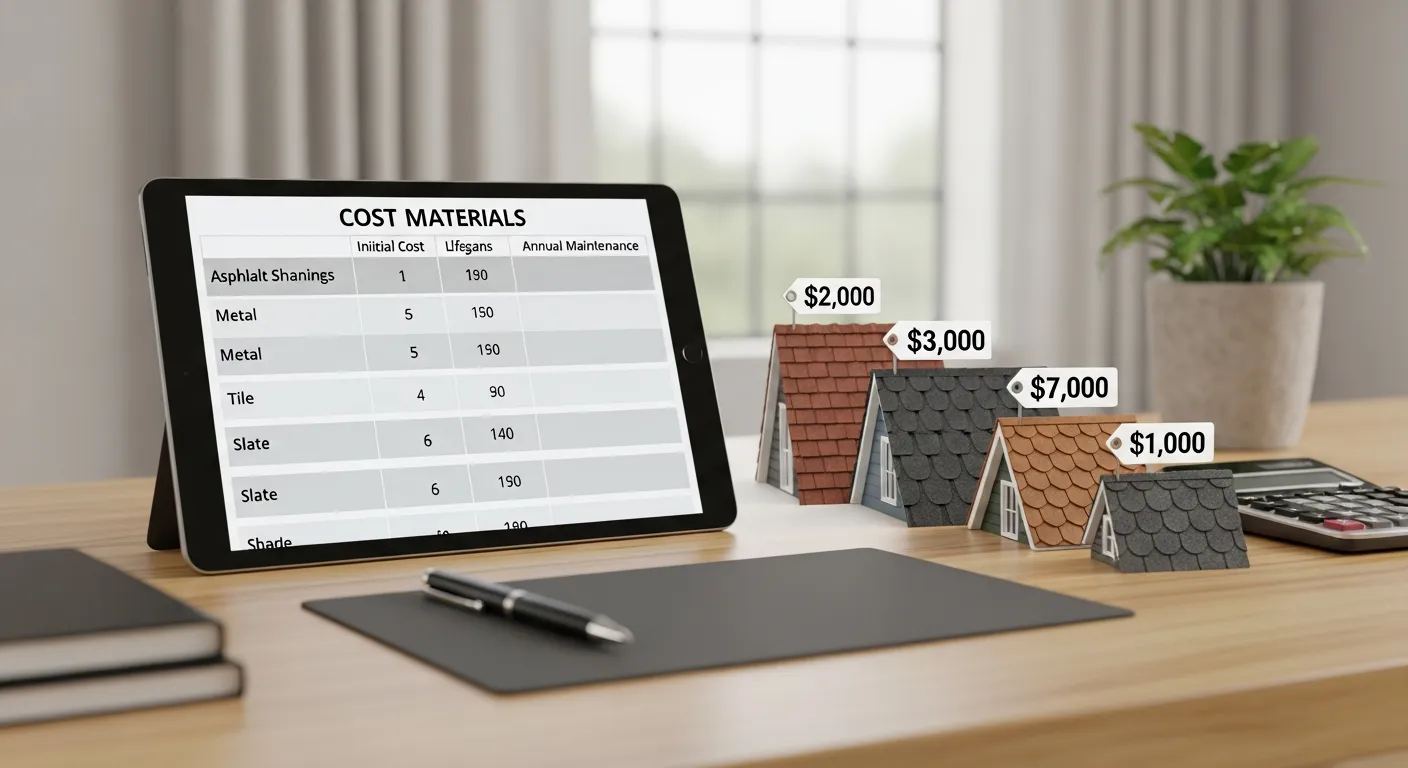
Understanding total cost of ownership requires looking beyond the installation price tag. The table below compares each roofing material's upfront cost, expected lifespan in Northern Virginia conditions, maintenance costs, and cost per year of service to help you make an apples-to-apples comparison.
| Roofing Material | Installed Cost (2,000 sq ft) | Expected Lifespan (NOVA) | Annual Maintenance | Wind Rating | Cost Per Year |
|---|---|---|---|---|---|
| Three-Tab Asphalt Shingles | $6,500 - $10,000 | 15 - 20 years | $0 - $200 | 60 - 70 mph | $433 - $667 |
| Architectural Asphalt Shingles | $8,000 - $15,000 | 25 - 30 years | $0 - $200 | 110 - 130 mph | $320 - $500 |
| Metal Standing Seam | $18,000 - $30,000 | 50+ years | $0 - $100 | 140 - 180 mph | $360 - $600 |
| Natural Slate | $25,000 - $45,000 | 75 - 100+ years | $100 - $400 | 110+ mph | $333 - $450 |
| Synthetic Slate | $15,000 - $25,000 | 40 - 60 years | $0 - $150 | 110 - 130 mph | $375 - $417 |
| Cedar Shake | $15,000 - $28,000 | 25 - 40 years | $200 - $750 | 80 - 110 mph | $600 - $700 |
| TPO Flat Roof | $8,000 - $15,000 | 20 - 30 years | $0 - $200 | Per assembly | $400 - $500 |
| PVC Flat Roof | $9,000 - $16,000 | 25 - 30 years | $0 - $200 | Per assembly | $360 - $533 |
Prices shown are typical ranges for Northern Virginia as of 2026 and vary based on home size, roof complexity, material grade, site accessibility, and current material costs. Structural reinforcement for natural slate is not included in the installed cost shown. Contact us for a free on-site estimate specific to your home.
Energy Efficiency Ratings and Savings by Material
Energy performance is increasingly important to Northern Virginia homeowners dealing with rising utility costs and a growing interest in sustainable building practices. Your roofing material directly affects how much heat enters your home through the roof assembly, which in turn determines how hard your air conditioning system has to work during the five months of the year when cooling is your biggest energy expense.
Solar Reflectance Index (SRI) Comparison
The Solar Reflectance Index measures a material's ability to reject solar heat on a scale of 0 to 100, with higher numbers indicating better heat reflection. Here's how common roofing materials compare:
- White TPO or PVC membrane: SRI 80 to 100. The best heat reflectors available. Ideal for flat roof sections that receive direct sun.
- Light-colored metal standing seam: SRI 50 to 80. Excellent reflectivity with Energy Star-rated finishes. The best option for steep-slope roofs where energy savings matter.
- Natural slate (gray/green): SRI 25 to 40. Moderate reflectivity offset by slate's thermal mass, which absorbs and slowly releases heat rather than transferring it directly into the attic.
- Light-colored asphalt shingles: SRI 20 to 35. Some improvement over dark colors, but asphalt still absorbs significant heat.
- Dark-colored asphalt shingles: SRI 5 to 15. The worst performers for heat rejection. These roofs regularly exceed 160 degrees Fahrenheit surface temperature in summer.
- Cedar shake (weathered): SRI 15 to 25. Moderate heat performance that improves slightly as the wood weathers to a silver-gray tone.
For homes in sun-exposed locations throughout Fairfax, Reston, and Herndon where cooling costs are a major concern, choosing a light-colored metal roof over dark asphalt shingles can reduce annual cooling costs by $300 to $1,000 depending on your home's size, insulation quality, and HVAC efficiency.
HOA Material Restrictions Across Northern Virginia
Navigating HOA roofing restrictions is a reality for most Northern Virginia homeowners. Understanding the general landscape of material approvals across the region's major communities helps you narrow your options before you start getting quotes.
Reston Association Communities
The Reston Association oversees architectural standards for homes across Reston's planned community, including neighborhoods around Lake Anne, North Point, Hunters Woods, South Lakes, and the cluster communities along Wiehle Avenue and Sunset Hills Road. The RA's Design Review Board generally approves architectural asphalt shingles in earth-tone colors, synthetic slate products that match the community's aesthetic standards, and in some cases, metal roofing on detached single-family homes where the architectural style supports it. Cedar shake is restricted in most Reston cluster communities due to fire and maintenance concerns. Natural slate is generally approved but rarely installed due to cost on Reston's mid-range housing stock.
Great Falls Communities
Great Falls operates without an overarching HOA, but individual subdivisions along Georgetown Pike, Walker Road, and Springvale Road have their own architectural covenants. The large lot sizes and estate-style homes in Great Falls make this one of the most permissive areas in NOVA for roofing material choice. Natural slate, metal standing seam, cedar shake, and premium asphalt shingles are all commonly approved. Some Great Falls communities along Utterback Store Road and Beach Mill Road actively encourage natural materials that complement the area's rural-estate character.
Fairfax County Suburban HOAs
The typical HOA in Fairfax County's suburban communities across Burke, Springfield, Centreville, and Chantilly requires architectural asphalt shingles as the minimum standard, restricts metal roofing in townhome and cluster developments, and maintains an approved color palette limited to neutral earth tones. Many of these communities have begun accepting synthetic slate as an upgrade option, particularly in neighborhoods where the HOA wants to maintain a uniform, upscale appearance without the maintenance burden of natural materials.
Herndon and Sterling
Communities in Herndon and Sterling tend to follow similar patterns to Fairfax County's suburban HOAs, with architectural asphalt shingles as the standard and metal roofing restricted in higher-density developments. The newer communities along the Herndon Parkway and around the Herndon Metro station area are more open to modern materials including metal and synthetic options, reflecting the area's ongoing transformation from suburban to mixed-use development.
How to Choose the Right Material for Your Northern Virginia Home
With six major material categories to consider, narrowing down the right choice for your specific situation requires weighing several factors that interact differently for every homeowner. Here's a decision framework based on the most common scenarios we see across Northern Virginia.
If Budget Is Your Primary Concern
Architectural asphalt shingles are your best option. They deliver reliable 25-to-30-year performance at the lowest per-year cost of any material, carry wind ratings that exceed Virginia code requirements, and are universally accepted by every HOA in the region. Choose a quality product line from GAF, CertainTeed, or Owens Corning and make sure your contractor installs proper ventilation to maximize the shingle lifespan.
If You Plan to Stay in Your Home Long-Term
Metal standing seam or synthetic slate offers the best long-term value. Metal's 50-plus year lifespan, energy savings, and zero-maintenance performance make it the smart financial choice if you'll be in the home for 15 or more years. Synthetic slate provides a similar long-term value proposition with the added benefit of a slate-like appearance that enhances curb appeal.
If You Own a Historic or Estate Home
Natural slate is the appropriate choice for historic properties, estate homes in Great Falls and McLean, and any home where architectural authenticity is paramount. The 100-year lifespan and unmatched aesthetic value of genuine slate justify the premium cost on properties where the home itself represents a significant investment.
If Your Home Has Flat Roof Sections
TPO or PVC membranes are the only appropriate choices for flat and low-slope roof sections. TPO offers better value for most residential applications, while PVC is preferred for areas near kitchen exhaust or HVAC equipment. Don't let a contractor install modified bitumen or tar-and-gravel systems when single-ply membrane options exist that last longer and perform better in Northern Virginia's climate.
If You Want the Natural Wood Aesthetic
Cedar shake delivers the look, but commit to the maintenance schedule from day one. If you're not willing to invest $500 to $1,500 every two to three years in professional cleaning and treatment, choose a synthetic shake product instead. Several synthetic options from DaVinci and Brava convincingly replicate cedar's appearance without the moisture and maintenance concerns that Northern Virginia's humidity creates for real wood.
Frequently Asked Questions
How much does a new roof cost in Northern Virginia in 2026?
A new asphalt shingle roof on a typical Northern Virginia home costs between $8,000 and $15,000. Architectural shingles run $10,000 to $18,000. Metal standing seam roofs range from $18,000 to $30,000. Natural slate is the most expensive at $25,000 to $45,000. Your final cost depends on roof size, pitch, material grade, and whether structural repairs are needed during tear-off. Northern Virginia pricing runs 15 to 25 percent above national averages due to higher labor rates, permit fees in Fairfax and Loudoun counties, and material delivery costs to the NOVA market.
What is the best roofing material for Northern Virginia's climate?
Architectural asphalt shingles rated for 130 mph winds offer the best balance of cost and performance for most Northern Virginia homes. Metal standing seam is the top performer for longevity and energy efficiency, lasting 50 or more years while reflecting solar heat. For historic properties in areas like Great Falls or McLean, natural or synthetic slate provides the longest lifespan and matches period architecture. The best material for your specific home depends on your budget, how long you plan to stay, your HOA's requirements, and your roof's geometry.
Do HOAs in Reston and Fairfax restrict roofing materials?
Yes. Most HOAs in Reston, Fairfax, Great Falls, and other Northern Virginia communities have architectural review boards that regulate roofing materials, colors, and styles. The Reston Association's Design Review Board approves architectural shingles and synthetic slate in most cases but restricts cedar shake in cluster communities and evaluates metal roofing on a case-by-case basis. Fairfax County suburban HOAs typically require architectural shingles as the minimum and restrict metal roofing in townhome developments. Always submit an architectural change request to your HOA before signing a roofing contract.
How long do different roofing materials last in Northern Virginia?
Three-tab asphalt shingles last 15 to 20 years. Architectural asphalt shingles last 25 to 30 years. Cedar shake roofs last 25 to 40 years with regular maintenance. Metal standing seam roofs last 50 or more years. Synthetic slate lasts 40 to 60 years. Natural slate is the longest-lasting at 75 to 100 or more years. Northern Virginia's humidity, UV exposure, and freeze-thaw cycles can shorten these lifespans if ventilation and maintenance are neglected. South-facing roof slopes in sun-exposed locations tend to wear faster than shaded north-facing slopes.
Is metal roofing worth the extra cost in Northern Virginia?
Metal standing seam roofing costs roughly double what architectural asphalt shingles cost upfront, but it lasts two to three times longer with almost no maintenance. Metal roofs also reflect solar radiation, which can reduce cooling costs by 10 to 25 percent during Northern Virginia's hot summers. If you plan to stay in your home for 15 or more years, metal roofing often costs less per year of service than asphalt when you factor in the avoided cost of a second asphalt roof replacement and the cumulative energy savings over 30 to 50 years.
Can I install a cedar shake roof in Northern Virginia?
You can install cedar shake in Northern Virginia, but it requires more maintenance than other materials due to the region's humidity. Cedar needs periodic treatment every two to three years with preservatives and fungicides to prevent moss, algae, and rot. Some HOAs in Reston and Fairfax prohibit cedar shake due to fire concerns and maintenance requirements. Check your community's guidelines and be prepared for ongoing upkeep costs of $200 to $750 per year if you choose this material. If you want the wood aesthetic without the maintenance, consider a synthetic shake alternative.
Get Expert Help Choosing Your Roofing Material
Selecting the right roofing material for your Northern Virginia home involves balancing climate performance, budget, aesthetics, HOA requirements, and long-term ownership costs. A decision this significant deserves more than guesswork based on an online comparison guide.
Reston Roofing has installed every material covered in this guide on homes across Reston, Great Falls, Fairfax, Herndon, McLean, and communities throughout Northern Virginia. We'll inspect your roof, evaluate your home's structural capacity, review your HOA's material requirements, and recommend the option that makes the most sense for your situation and budget. Our estimates are detailed, written, and free.
Call us today at (571) 453-6515 or schedule a consultation online. We'll help you choose a roofing material that protects your home and your investment for the decades ahead.