Commercial Roof Maintenance Checklist for Northern Virginia
Commercial roofing systems represent a significant investment for building owners and property managers throughout Northern Virginia. Unlike residential roofs that are typically steep-slope and shed water quickly, commercial roofs are predominantly low-slope or flat systems that require proactive maintenance to perform reliably. A well-executed maintenance program not only prevents costly emergency repairs but can extend your roof's service life by 5-10 years, saving tens of thousands of dollars in premature replacement costs. This comprehensive checklist from Reston Roofing provides Northern Virginia business owners with everything they need to keep their commercial roofs in peak condition throughout the year.
Why Commercial Roof Maintenance Matters
Commercial roofs face unique challenges that make regular maintenance essential. Low-slope designs mean water drains more slowly, increasing the potential for leaks and ponding. Rooftop equipment including HVAC units, exhaust fans, and satellite dishes create penetration points that require ongoing attention. Northern Virginia's climate subjects commercial roofs to UV degradation in summer, freeze-thaw cycles in winter, and severe storm events throughout the year.
The financial case for maintenance is compelling. The average commercial roof replacement in Northern Virginia costs $5 to $12 per square foot, meaning a 10,000-square-foot roof replacement runs $50,000 to $120,000 or more. A comprehensive maintenance program typically costs 1-2% of replacement value annually, a fraction of the expense compared to premature failure. Property managers who invest in regular maintenance also benefit from fewer tenant disruptions, lower energy costs, and maintained property values. Working with experienced Reston roofing professionals ensures your commercial roof receives the expert attention it deserves.
Seasonal Inspection Tasks
Northern Virginia's four distinct seasons each present specific challenges for commercial roofing systems. Organizing your maintenance program around seasonal needs ensures no critical task is overlooked.
Spring: Post-Winter Assessment
Spring inspections are critical for identifying damage from winter weather. After the freeze-thaw cycles, snow loads, and ice events of a Northern Virginia winter, your commercial roof needs a thorough evaluation. Key spring inspection tasks include checking for membrane damage from ice or snow removal activities, inspecting all flashings for separation or cracking caused by thermal cycling, clearing winter debris from drains, scuppers, and gutters, examining seams and laps for signs of stress or peeling, looking for blistering or ridging in the membrane that may indicate trapped moisture, and checking caulk and sealant at all penetrations for deterioration. Spring is also the ideal time to schedule any repairs identified during the inspection, as mild temperatures allow optimal adhesion for patches, sealants, and membrane repairs.
Summer: UV and Heat Damage Monitoring
Northern Virginia summers bring intense UV radiation and temperatures that can cause roof surface temperatures to exceed 170 degrees Fahrenheit on dark-colored membranes. Summer inspection priorities include checking for UV degradation such as chalking, cracking, or embrittlement of the membrane, inspecting expansion joints for proper movement capacity, verifying that reflective coatings remain intact and performing touch-ups where needed, examining HVAC curbs and equipment supports for heat-related deterioration, and monitoring ponding areas that may develop or worsen during summer storms. Addressing UV damage promptly prevents small areas of degradation from expanding into major membrane failures.
Fall: Preparation for Winter
Fall maintenance focuses on preparing your commercial roof to withstand winter conditions. This is your last opportunity to address issues before cold weather makes repairs more difficult and costly. Critical fall tasks include thorough drain clearing to ensure maximum drainage capacity for winter precipitation, removing accumulated debris including leaves, branches, and dirt that can trap moisture and clog drains, inspecting and repairing all flashings before freeze-thaw cycles begin, checking the condition of roof insulation in accessible areas, verifying that all penetration seals are watertight, and trimming overhanging tree branches that could break under snow or ice loads. Our gutter and drainage maintenance services ensure your system handles winter weather effectively.
Winter: Snow Load and Ice Management
Winter maintenance for commercial roofs in Northern Virginia focuses on monitoring and managing snow loads and ice formation. While the region does not typically receive extreme snowfall, occasional heavy events can stress commercial roof structures. Winter tasks include monitoring snow accumulation and arranging professional removal when loads approach structural limits, checking for ice dam formation at roof edges and around drains, inspecting interior ceilings below the roof for signs of leaks during and after precipitation events, ensuring roof access pathways remain safe for any necessary emergency inspections, and documenting any damage or concerns for spring repair scheduling.
Monthly vs. Quarterly Maintenance Tasks
Effective commercial roof maintenance requires both frequent basic checks and periodic comprehensive evaluations. Organizing tasks by frequency ensures nothing falls through the cracks.
Monthly Tasks: Building maintenance staff should perform visual inspections of roof drains to ensure they are clear and functioning, check for obvious ponding water after rainfall, look for visible membrane damage or debris accumulation, inspect interior ceilings for new water stains or damage, and verify that rooftop equipment is properly secured and leak-free around curbs.
Quarterly Tasks: Professional roofing contractors should perform detailed membrane inspections including seam testing, comprehensive flashing evaluation at all walls, curbs, and penetrations, drain and scupper cleaning and flow testing, sealant and caulk condition assessment, and documentation with photographs and written reports. These professional quarterly evaluations catch developing issues that untrained eyes miss, preventing small problems from becoming expensive emergencies.
Critical Maintenance Areas
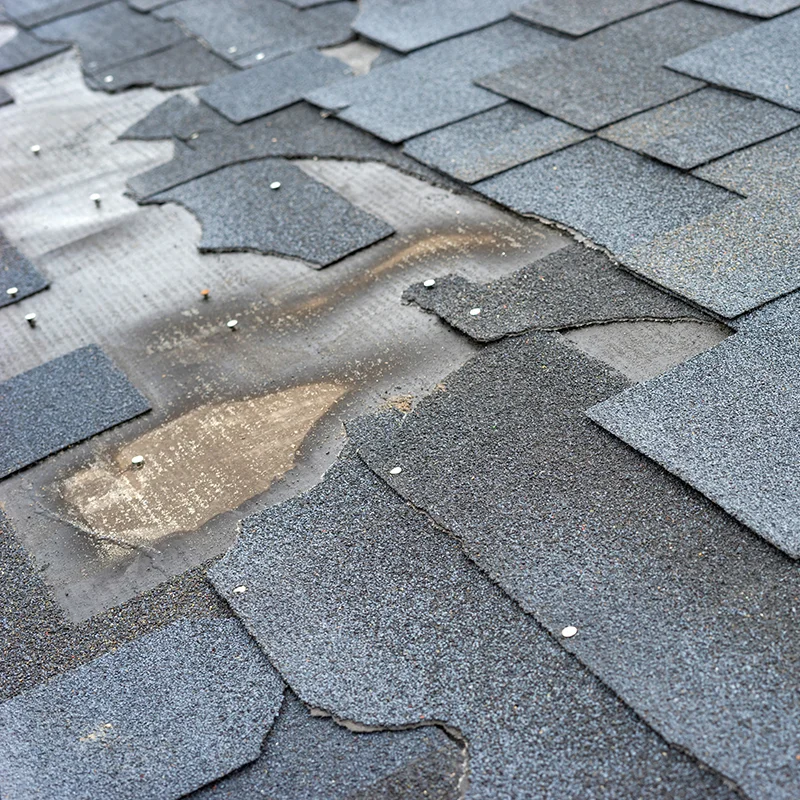
Certain areas of commercial roofing systems require focused attention due to their vulnerability to failure. Understanding these critical areas helps prioritize your maintenance efforts.
Drain Care and Management
Roof drains are the most important maintenance focus on any low-slope commercial roof. Clogged or slow drains lead to ponding water, which accelerates membrane degradation, adds structural loading, and eventually causes leaks. Maintenance includes removing debris from drain baskets and strainers, flushing drain lines to check for interior blockages, inspecting drain flanges and clamping rings for proper seal, verifying that tapered cricket systems around drains are intact, and installing or replacing leaf guards and debris screens where needed. A single clogged drain can cause thousands of dollars in damage during a heavy rain event.
Seam and Lap Inspections
Seams and laps are inherent weak points in any membrane roofing system. Whether your roof features heat-welded TPO seams, adhesive-bonded EPDM laps, or solvent-welded PVC joints, these connections must be checked regularly. Look for edge lifting or peeling at seam edges, voids or channels within the seam that indicate incomplete bonding, fish-mouths where membrane pulls away from the seam line, and cracking or embrittlement of seam adhesives. Professional contractors use probing tools to test seam integrity without causing damage. Early detection of seam failure allows targeted repairs before water infiltrates the roof assembly.
Flashing Inspection
Flashings seal the transitions between the roof membrane and vertical surfaces like parapet walls, equipment curbs, and penetrations. These areas experience differential movement, thermal stress, and concentrated water flow that make them prone to failure. Inspect base flashings for separation from the wall or membrane, check counter-flashings for proper attachment and sealing at the top edge, examine termination bars for secure fastening and intact sealant, and look for bridging or stress cracking at inside and outside corners. Flashing failures account for a significant percentage of all commercial roof leaks. Learn more about flashing repair techniques for commercial applications.
HVAC Curb Maintenance
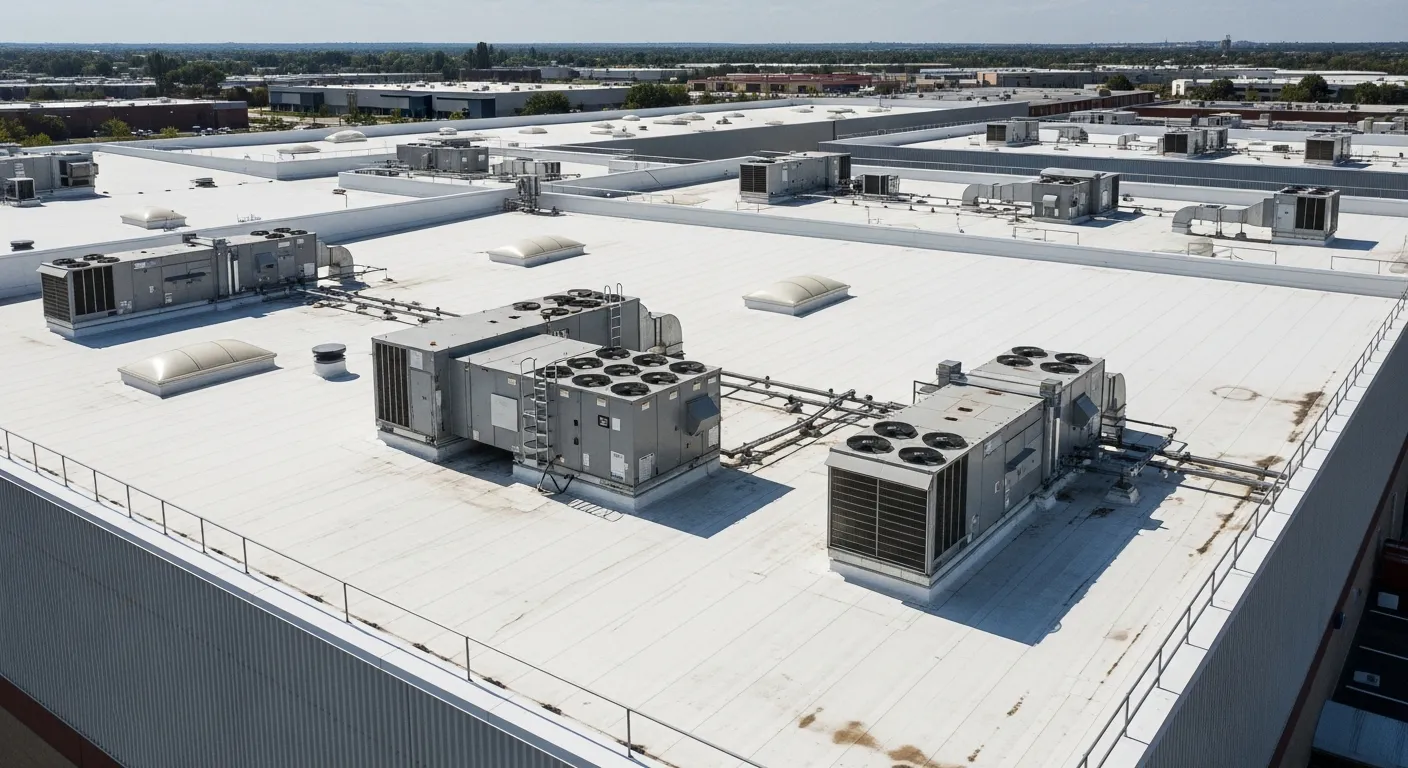
Rooftop HVAC equipment is standard on most commercial buildings in Northern Virginia, and the curbs that support these units are common sources of leaks. HVAC curb maintenance involves inspecting the membrane flashing around each equipment curb for damage from vibration, foot traffic, and thermal movement.
Key HVAC curb maintenance tasks include checking curb flashing for cracks, splits, and separation from the curb walls, inspecting pitch pockets and sealant pans for proper fill levels and condition, verifying that equipment supports and vibration isolators are not damaging the membrane, ensuring condensate drain lines are properly routed and not ponding water on the roof, examining duct penetrations for proper sealing, and clearing debris from around equipment bases that can trap moisture.
HVAC technicians accessing rooftop equipment often inadvertently damage roofing materials. Establish walk paths and equipment access routes to minimize foot traffic on the membrane. Consider installing walk pads or designated maintenance paths to protect vulnerable areas around frequently serviced equipment.
Ponding Water Solutions
Ponding water, defined as water that remains on the roof surface 48 hours after precipitation, is one of the most damaging conditions for commercial roofing systems. Persistent ponding accelerates membrane degradation through UV-magnified thermal cycling, adds unplanned structural loading, provides breeding grounds for biological growth, and voids many manufacturer warranties.
Solutions for ponding water depend on the cause and severity. Common approaches include clearing clogged drains and improving drainage paths to restore designed water flow patterns, installing additional drains or scuppers in chronic ponding areas, applying tapered insulation systems to create positive drainage slopes, building crickets or saddles around large equipment curbs to divert water toward drains, and repairing structural deflection that creates low spots. Addressing ponding water is essential for both roof longevity and warranty compliance. Our flat roof maintenance expertise includes comprehensive ponding water assessment and remediation.
Documentation for Warranty Compliance
Proper documentation is not just good practice; it is a warranty requirement. Virtually all commercial roofing manufacturer warranties require evidence of regular professional maintenance as a condition of coverage. Without proper documentation, even a legitimate warranty claim can be denied.
Your maintenance documentation should include dated inspection reports with the name and credentials of the inspector, photographs documenting the roof's condition at each inspection, records of all repairs performed including materials used and locations, copies of drain clearing and cleaning reports, documentation of any emergency repairs or storm damage, and maintenance program contracts and service agreements.
Reston Roofing provides comprehensive inspection reports that satisfy warranty documentation requirements for all major commercial roofing manufacturers. Our reports include detailed condition assessments, photographic documentation, prioritized repair recommendations, and maintenance history tracking. This documentation protects your warranty rights and provides valuable records for property management, insurance purposes, and capital planning.
Commercial Roofing Materials: TPO, EPDM, and PVC
Each commercial roofing material has specific maintenance needs. Understanding your roof's material type ensures appropriate care.
TPO (Thermoplastic Polyolefin)
TPO has become the most popular commercial roofing membrane in Northern Virginia due to its energy-efficient white reflective surface and heat-welded seams. Maintenance focus areas include monitoring weld integrity at seams and flashings, checking for membrane shrinkage that can stress perimeter details, inspecting for punctures from foot traffic or dropped tools, and cleaning the surface periodically to maintain reflective properties. Learn more about TPO vs EPDM considerations for your building.
EPDM (Ethylene Propylene Diene Monomer)
EPDM is a synthetic rubber membrane valued for its durability and resistance to UV radiation. Maintenance priorities include checking adhesive-bonded seams for edge lifting and peeling, inspecting for membrane shrinkage which is more common with EPDM than other materials, examining the surface for cracking or crazing that indicates aging, and verifying that ballast systems remain properly distributed on ballasted installations.
PVC (Polyvinyl Chloride)
PVC membranes offer excellent chemical resistance, making them ideal for restaurants, laboratories, and other facilities with rooftop chemical exposure. Maintenance includes checking heat-welded seams similar to TPO, monitoring for plasticizer migration which can make the membrane brittle over time, inspecting for chemical damage from grease, oils, or other substances, and ensuring that incompatible materials like asphalt-based products are not in contact with the PVC membrane.
Commercial Roof Maintenance Costs in Northern Virginia
| Service / Item | Low End | High End | Notes |
|---|---|---|---|
| Annual Maintenance Contract | $1,500 | $5,000 | Quarterly inspections + minor repairs |
| Drain Cleaning + Inspection | $200 | $600 | Per visit, quarterly recommended |
| Seam Repair (TPO/EPDM) | $300 | $1,200 | Prevent leaks at membrane joints |
| Roof Coating Application | $2,000 | $5,000 | Extends life 10-15 years |
| Full Commercial Roof Replacement | $40,000 | $120,000 | 10,000-30,000 sq ft building |
Prices shown are typical ranges for Northern Virginia as of 2026 and vary based on home size, material grade, site access, and current material costs. Contact us for a free on-site estimate.
Why Maintenance Extends Roof Life 5-10 Years
The claim that regular maintenance extends commercial roof life by 5-10 years is supported by extensive industry data. The National Roofing Contractors Association reports that proactive maintenance programs consistently deliver significant lifespan extensions compared to reactive repair-only approaches.
Maintenance extends roof life through several mechanisms. Early problem detection addresses issues when they are small and inexpensive to fix, preventing cascade failures where one problem leads to multiple others. Regular drain maintenance prevents ponding water damage, which is a leading cause of premature membrane failure. Seam and flashing maintenance keeps the waterproofing envelope intact, preventing moisture infiltration that deteriorates insulation and structural components. Surface cleaning maintains reflective properties that reduce thermal stress and UV damage.
The return on investment is substantial. A maintenance program costing $2,000-$5,000 annually can delay a $100,000 roof replacement by 5-10 years, representing savings of $500,000 or more over a 30-year building ownership period when accounting for inflation and financing costs. For property managers overseeing multiple buildings, a systematic maintenance program across the portfolio delivers even greater economies of scale.
Frequently Asked Questions
How often should a commercial roof be inspected in Northern Virginia?
Commercial roofs should receive a minimum of two professional inspections per year, ideally in spring and fall. Additional inspections should follow any significant storm event. Monthly visual checks of drains, gutters, and accessible areas by building maintenance staff supplement these professional evaluations and help catch problems between scheduled inspections.
What are the most common commercial roofing materials in Northern Virginia?
The three most common commercial roofing materials in Northern Virginia are TPO, EPDM, and PVC. TPO dominates new installations due to its energy efficiency and heat-welded seam reliability. EPDM remains popular for its proven durability and cost-effectiveness. PVC is preferred for facilities with chemical exposure concerns. Each material has specific maintenance requirements that must be followed for maximum performance.
How much can regular maintenance extend a commercial roof's lifespan?
Industry data consistently shows that comprehensive maintenance programs extend commercial roof lifespans by 5-10 years. A well-maintained TPO or EPDM system can last 25-30 years versus the typical 20-year expectancy without maintenance. The cost of a maintenance program is typically 1-2% of replacement value annually, making it one of the highest-return investments a building owner can make.
What should I do about ponding water on my commercial roof?
Ponding water that persists more than 48 hours after rain should be addressed promptly. Start by clearing all drains and scuppers. If ponding continues, solutions include installing additional drains, applying tapered insulation to improve slope, building crickets around equipment curbs, and repairing structural deflection. Persistent ponding accelerates membrane deterioration and can void your warranty.
Is commercial roof maintenance required for warranty compliance?
Yes, virtually all commercial roofing manufacturer warranties require regular professional maintenance. Most require a minimum of two annual inspections with documented repairs of identified issues. Failure to maintain proper documentation can result in warranty claim denial. Reston Roofing provides detailed reports that satisfy all major manufacturer documentation requirements.
Contact Reston Roofing for Commercial Roof Maintenance
Protect your commercial roofing investment with a professional maintenance program from Reston Roofing. Whether you manage a single building or a portfolio of commercial properties throughout Northern Virginia, our experienced team delivers thorough inspections, expert repairs, and comprehensive documentation that keeps your roofs performing and your warranties intact.
We serve commercial properties throughout Reston, Herndon, Vienna, Fairfax, Sterling, Oakton, McLean, and the greater Northern Virginia region. Our team understands the specific requirements of commercial roofing systems and the local building codes that govern them.
Call us today at (571) 453-6515 or schedule a consultation online. Let Reston Roofing develop a customized maintenance program that protects your roof and your bottom line.