Free Roof Inspection in Reston VA: What to Expect & When to Schedule
Your roof protects everything underneath it, but most Reston homeowners don't think about it until water starts dripping through the ceiling or a neighbor mentions they just replaced theirs. A free roof inspection in Reston VA gives you a clear, honest picture of your roof's current condition without any financial commitment upfront. Whether you live in a 1970s contemporary near Lake Anne, a colonial backing up to the W&OD Trail near Sunrise Valley, or a townhome in the South Lakes area, understanding what's happening on top of your home is the first step toward making smart decisions about repairs, replacement, or simply confirming that everything's in good shape for another few years.
Reston's housing stock spans more than five decades, and the roofing challenges across this planned community vary dramatically from one neighborhood to the next. The original homes built by Robert E. Simon's development team in the late 1960s and early 1970s around Lake Anne Village Center used roofing materials and construction methods that were standard for the era but don't hold up to today's performance expectations. Meanwhile, homes built in the 1990s and 2000s near South Lakes, North Point Village Center, and the Herndon border areas used architectural shingles that are now reaching the 25 to 30 year mark where problems start showing up regularly.
This guide walks you through exactly what happens during a free roof inspection in Reston VA, what the inspector looks for on every part of your roof, when you should schedule one, how the Reston Association's rules affect your roofing decisions, and what the difference is between a free inspection and a paid one. By the time you finish reading, you'll know whether it's time to pick up the phone and schedule your own inspection or whether you can wait a bit longer.
What a Free Roof Inspection in Reston Actually Covers
A free roof inspection isn't a quick glance from the driveway. When a qualified inspector from Reston Roofing visits your home, they're conducting a systematic evaluation of every component that makes up your roofing system. Your roof is more than just the shingles you can see from the street. It's a layered system of materials, ventilation components, and drainage elements that all need to work together to keep water out and your home protected.
Here's a detailed breakdown of what gets checked during a thorough inspection on a Reston home, whether it's a ranch on Lawyers Road, a split-level near Hunters Woods, or a townhome cluster along Glade Drive.
Shingle Condition Assessment
The inspector examines every visible section of your shingles for signs of wear, damage, and aging. This includes looking for curling edges where the shingle tabs lift away from the surface, cracking in the shingle body caused by temperature cycling, missing granules that expose the dark asphalt layer underneath, and any shingles that have blown off entirely during wind events. Granule loss is particularly important because those tiny ceramic pieces are what protect the asphalt from ultraviolet radiation. Once enough granules wash off into your gutters, the shingle deteriorates rapidly.
On older Reston homes, especially those near Lake Anne and the original cluster homes along North Shore Drive, the inspector pays close attention to the overall uniformity of the shingle surface. Inconsistent aging patterns often indicate previous patch repairs or areas where water has been sitting due to poor drainage. If your home still has its original three-tab shingles from the 1990s or early 2000s, the inspector will note their remaining useful life and whether they're worth repairing or past the point where replacement makes more financial sense.
Flashing Inspection
Flashing is the thin metal or rubberized material that seals the joints where your roof meets a wall, chimney, skylight, or plumbing vent. These are the most common leak points on any Reston home, and flashing failures account for a significant percentage of the service calls we handle across the 20190, 20191, and 20194 zip codes.
The inspector checks chimney flashing for separation from the mortar joints, which is extremely common on Reston homes with brick chimneys built in the 1970s and 1980s. They look at step flashing along sidewalls where dormers or upper stories meet lower roof sections. They examine the rubber boots around plumbing vent pipes, which dry out and crack after 12 to 15 years of sun exposure. And they check the flashing in roof valleys where two slopes meet and channel high volumes of water during heavy rain.
Vent and Ventilation System Check
Proper ventilation is one of the most misunderstood parts of a roofing system, but it directly affects how long your shingles last and how much you spend on heating and cooling your Reston home. The inspector evaluates your ridge vents, soffit vents, gable vents, and any powered attic fans to make sure air is flowing correctly from the soffits up through the ridge.
Many homes in the Sunrise Valley and Reston Town Center areas were built with insufficient soffit ventilation or with soffit vents that have been blocked by insulation pushed too close to the eaves. This traps hot air in the attic during summer, which bakes your shingles from underneath and shortens their lifespan by years. In winter, inadequate ventilation leads to ice dams along the eaves when trapped warm air melts snow on the upper roof and the water refreezes at the cold eave edge.
Gutter and Downspout Evaluation
Your gutters are part of your roofing system, and inspecting them is part of any thorough roof evaluation. The inspector checks for proper attachment to the fascia board, correct slope toward downspouts, visible rust or corrosion on metal gutters, separation at seams and corners, and blockages from leaves and debris. In Reston, where mature hardwood trees line most residential streets, gutter clogging is a year-round issue that accelerates fascia rot and can cause water to back up under the roof edge.
Downspouts get checked for proper routing away from the foundation. In neighborhoods like Hunters Woods, North Point, and the areas surrounding Lake Thoreau, the clay-heavy soil doesn't drain well, and improperly directed downspouts create foundation moisture problems that homeowners don't always connect to their roof and gutter system.
Attic Inspection
If accessible, the inspector will look inside your attic for signs of moisture intrusion, daylight showing through the roof deck, water stains on the underside of the plywood sheathing, mold or mildew growth, and inadequate insulation. The attic tells a story that you can't see from outside. Water stains on the decking reveal leak paths. Mold growth indicates chronic moisture problems. And insulation displacement shows where air leaks are occurring.
Reston homes with finished attic spaces or cathedral ceilings present unique inspection challenges because there's no traditional attic cavity to inspect. In these cases, the inspector relies more heavily on exterior clues and may use a moisture meter to check for water trapped beneath the surface in vulnerable areas like valley runs and chimney surrounds.
Structural Assessment
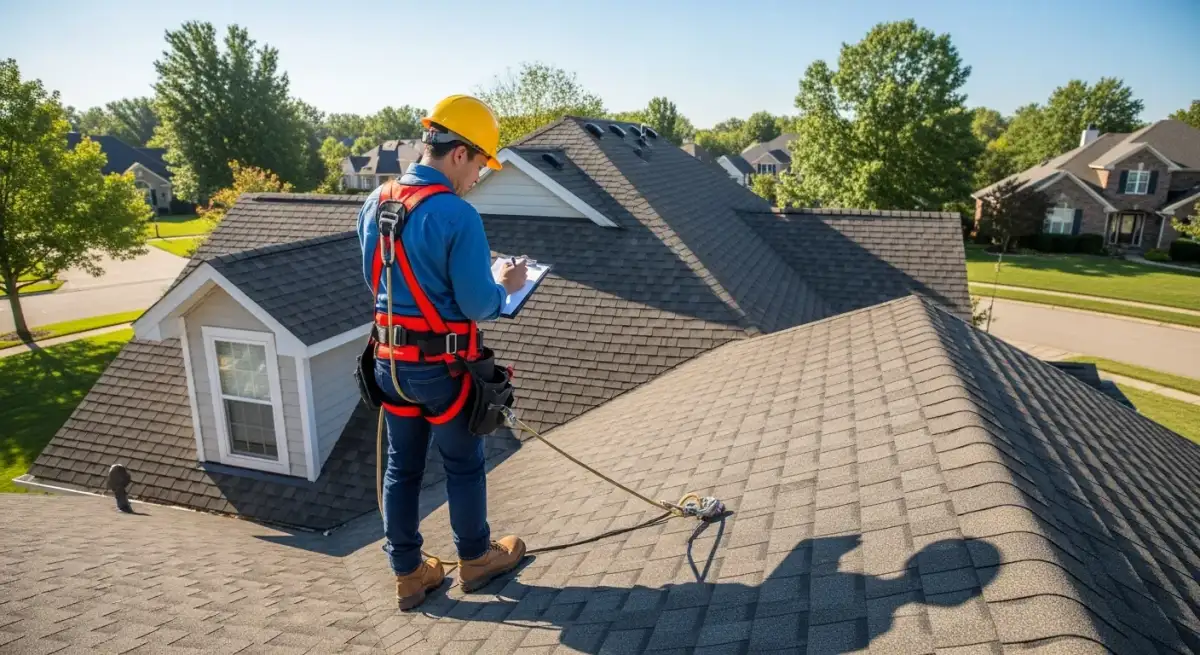
The inspector walks the roof (or uses a drone on steep or fragile surfaces) looking for sagging between rafters, soft spots in the decking, and any signs of structural compromise. Sagging often indicates rotted decking or weakened rafters, both of which require repair before new roofing material can be installed. On older Reston homes, particularly the flat-roof and shed-roof contemporaries from the 1970s near Lake Anne Village Center, structural assessment is critical because those roof designs were built with different load-bearing expectations than conventional gable roofs.
Key Considerations for Reston Roof Inspections
Scheduling and getting value from a roof inspection requires understanding some factors that are specific to Reston and the Northern Virginia market. This isn't a one-size-fits-all process, and knowing what to expect helps you make better decisions with the information your inspector provides.
Reston Association Design Review Rules
Reston is a planned community, and the Reston Association (RA) maintains design guidelines that affect what you can and can't do with your roof. Before you replace roofing material, change the color of your shingles, or add any visible roof component like a vent or skylight, you need to submit a Design Review Board (DRB) application to the RA for approval.
A roof inspection report supports your DRB application by documenting the condition of your existing roof and justifying the need for replacement. If your inspector notes that your shingles are at end of life, that flashing has failed, or that the decking has water damage, that documentation strengthens your case for approval. The RA generally approves like-for-like replacements without issue, but any change in material type or color requires a more detailed review.
If you live in one of Reston's cluster communities near Tall Oaks, Hunters Woods, or along Colts Neck Road, the RA's guidelines may be even more specific about maintaining visual consistency across connected or adjacent townhomes. Your inspector should be aware of these requirements so the inspection report addresses the information the DRB will want to see.
Age-Specific Concerns by Reston Neighborhood
Reston's neighborhoods were built in phases over several decades, and the roofing concerns vary based on when your home was constructed:
- Lake Anne area (late 1960s-1970s): These are some of Reston's oldest homes. Many feature flat or low-slope roof sections, exposed beam construction, and original designs that prioritize aesthetics over conventional roofing efficiency. Inspections here focus on membrane condition on flat sections, structural beam integrity, and water management on unconventional roof geometries.
- Hunters Woods and Tall Oaks (1970s-1980s): Cluster homes and townhomes with interconnected rooflines where one unit's leak can affect adjacent units. Shared drainage systems and party wall flashing need careful evaluation.
- Sunrise Valley and North Point (1980s-1990s): Single-family colonials and split-levels with conventional gable roofs. Original three-tab shingles have been replaced at least once. Second-generation roofs are now aging. Ventilation and decking condition are primary concerns.
- South Lakes area (1990s-2000s): Architectural shingles reaching the 25 to 30 year window. Generally better ventilation than older neighborhoods but still susceptible to storm damage and flashing deterioration around skylights and dormers.
- Reston Town Center vicinity (2000s-2010s): Newer construction with more modern materials and building codes. Inspections focus on warranty-period defects, settling-related cracking, and ensuring builder-grade materials are performing as expected.
Timing Your Inspection Right
The timing of your inspection matters more than most homeowners realize. Certain conditions make inspections more revealing and more useful:
After a storm: This is the most urgent reason to schedule. Northern Virginia gets severe thunderstorms from May through September, and the corridor between Herndon and Reston along the Dulles Toll Road sees some of the highest wind speeds during these events. Hail damage, wind-lifted shingles, and debris impact are best documented while the damage is fresh. Waiting too long can make it harder to file a successful insurance claim because the insurer may argue the damage worsened due to delayed response.
Before selling your home: Reston's real estate market is competitive, and buyers working with experienced agents will request a roof inspection as part of their due diligence. Getting ahead of this by having your roof inspected before listing allows you to address minor issues, set your asking price with confidence, and avoid surprises that derail negotiations at the eleventh hour. Homes near the Wiehle-Reston East Metro station and Reston Town Center are particularly scrutinized because of their higher price points.
Annually in spring or fall: A routine annual inspection catches small problems before they become expensive ones. Spring inspections reveal damage from winter ice, snow loads, and freeze-thaw cycles. Fall inspections ensure your roof is ready to handle another Northern Virginia winter, with its unpredictable mix of ice storms, heavy wet snow, and temperature swings between the 20s and 50s within the same week.
When your roof hits 15 years: Once any roof passes the 15-year mark, you should be inspecting it regularly even if it looks fine from the ground. Shingle deterioration accelerates in the back half of a roof's lifespan, and early detection of problems gives you time to budget for replacement rather than scrambling when a leak appears.
What Happens After the Inspection
After completing the inspection, your inspector should provide you with a clear summary of findings, either verbally on-site or in a written report depending on the type of inspection. A free visual inspection typically includes a verbal walkthrough of what was found along with photos taken during the inspection. A paid comprehensive inspection includes a formal written report with photos, condition ratings, estimated remaining lifespan, and recommended actions ranked by urgency.
If the inspection reveals issues, you'll receive recommendations that fall into one of three categories: immediate repairs needed to prevent active water intrusion, maintenance items that should be addressed within the next 6 to 12 months, and monitoring items that don't require action now but should be tracked during future inspections. This prioritized approach helps you allocate your budget sensibly rather than feeling overwhelmed by a long list of findings.
Free vs. Paid Roof Inspections: Your Options
Not all roof inspections are the same, and understanding the difference between what's available helps you choose the right level of service for your situation. Here's a breakdown of the inspection options available to Reston homeowners.
Free Visual Inspection
A free roof inspection from Reston Roofing includes a thorough visual assessment of your roof's exterior condition, gutter system, and visible attic space. The inspector climbs onto the roof (weather and safety permitting), examines all major components, takes photos of any concerns, and discusses findings with you in person. This type of inspection is ideal when you're considering a roof replacement, want a post-storm damage assessment, or need a general condition check to plan ahead.
Free inspections are offered by reputable contractors as a service to homeowners and as a way to build a relationship based on honest assessment rather than high-pressure sales. At Reston Roofing, our free inspections are genuinely no-obligation. If your roof is in good shape, we'll tell you that and suggest when to check back. We don't manufacture problems to generate unnecessary work.
Paid Comprehensive Inspection
A paid inspection goes deeper. It includes everything in the free inspection plus a formal written report with detailed documentation, moisture meter readings in suspect areas, a thorough attic interior inspection, insulation evaluation, ventilation airflow assessment, and a condition rating system that gives you a clear picture of where your roof stands on the lifecycle curve. Paid inspections typically cost $200 to $400 in the Reston area depending on the size and complexity of your home.
Paid inspections are most valuable when you're buying a home and need independent documentation of roof condition, when you're filing an insurance claim and need a professional report to support your case, or when you need a detailed baseline assessment of a roof that's 15 years or older and you want to track its deterioration over time.
Insurance Claim Inspections
If your Reston home has been damaged by a storm, you need an inspection specifically focused on documenting insurable damage. This type of inspection is typically free when performed by a contractor who will handle the repair work. The inspector meticulously photographs and measures all storm-related damage, creates documentation that matches the format insurance adjusters use, and can be present during the adjuster's visit to ensure nothing is missed.
Insurance claim inspections require a different skill set than general condition inspections. The inspector needs to distinguish between storm damage and pre-existing wear, identify damage that's not visible from the ground, and document everything in a way that supports a legitimate insurance claim. This is where working with a contractor experienced in the Northern Virginia insurance claim process makes a measurable difference in your settlement amount.
Pre-Sale Inspections
If you're preparing to sell your Reston home, a pre-sale roof inspection provides documentation that reassures buyers and their agents about the roof's condition. This is especially important for homes in the older sections of Reston near Lake Anne, Tall Oaks, and Hunters Woods, where buyers may have concerns about the age of the roofing system. A clean inspection report can be included in your listing materials and shown during open houses to differentiate your property from others on the market that don't have this documentation.
New Homeowner Inspections
If you've recently purchased a home in Reston, scheduling a roof inspection within the first year of ownership gives you a baseline condition report that you can reference going forward. Even if the home inspector checked the roof during the purchase process, a dedicated roof inspection by a roofing specialist goes into far more detail than a general home inspection and may reveal issues that were missed during the buying process. This is particularly relevant for homes purchased in the competitive Reston market where buyers sometimes waive inspection contingencies to win bidding wars.
Roof Inspection and Related Costs in Reston and Northern Virginia
Understanding the cost landscape for roof inspections and common follow-up services helps you budget appropriately. While the inspection itself may be free, knowing what typical repairs and replacements cost in the Reston area gives you context for evaluating whatever your inspector recommends. Here are the current ranges for inspection and roofing services in Northern Virginia as of 2026:
| Service / Item | Low End | High End | Notes |
|---|---|---|---|
| Free Visual Roof Inspection | $0 | $0 | No-obligation assessment from Reston Roofing |
| Paid Comprehensive Inspection | $200 | $400 | Written report with photos and condition ratings |
| Insurance Claim Inspection | $0 | $0 | Free when contractor handles the repair |
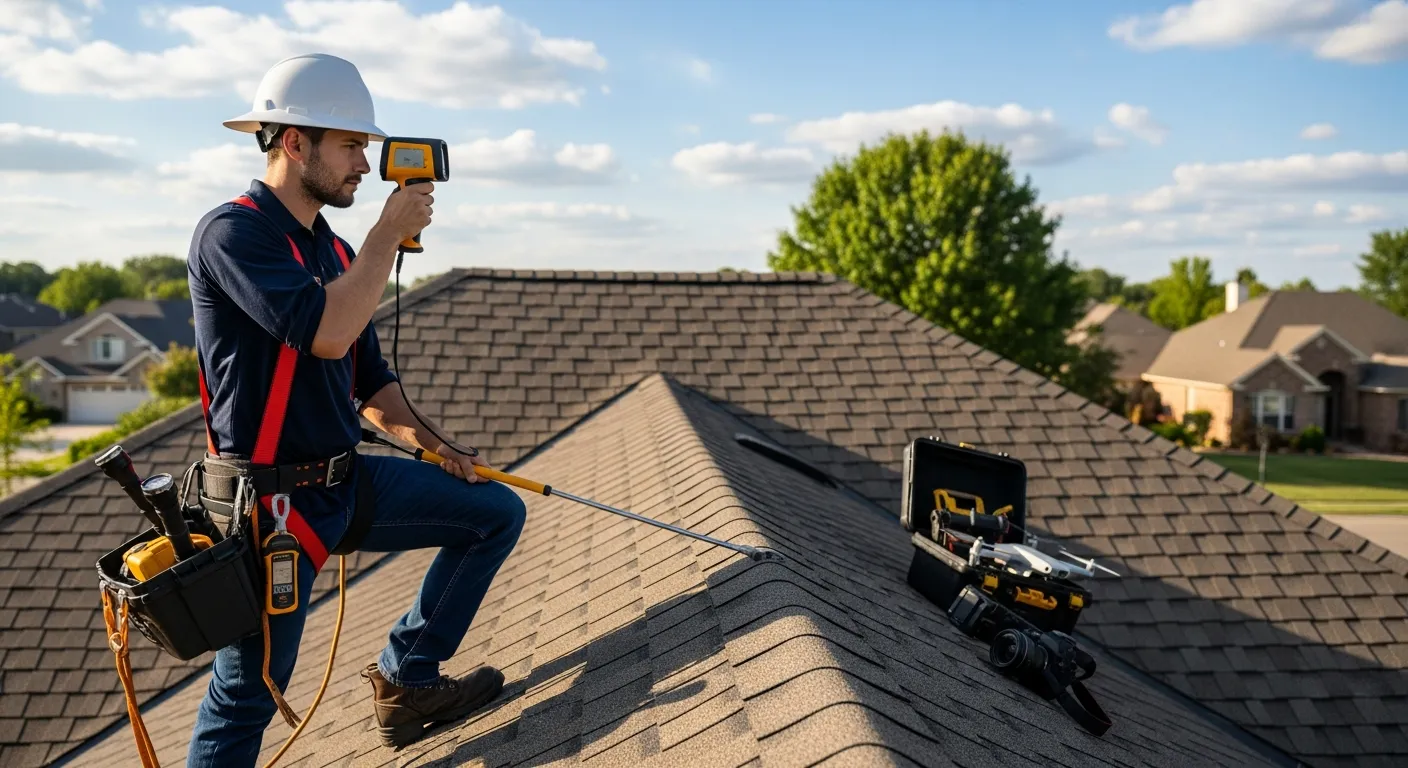
| Drone Roof Inspection | $150 | $350 | For steep or inaccessible roofs |
| Minor Roof Repair (post-inspection) | $350 | $1,500 | Missing shingles, small leaks, flashing fixes |
| Flashing Repair or Replacement | $200 | $800 | Chimney, skylight, or vent pipe flashing |
| Gutter Repair or Replacement | $300 | $2,500 | Seamless aluminum, includes downspouts |
| Full Roof Replacement (asphalt) | $8,500 | $15,000 | Three-tab shingles, standard Reston home |
| Full Roof Replacement (architectural) | $10,000 | $18,000 | Dimensional shingles with underlayment |
| Attic Ventilation Upgrade | $300 | $1,500 | Ridge vents, soffit vents, or power fans |
| Decking Replacement (per sheet) | $75 | $150 | Rotted plywood discovered during tear-off |
| Fairfax County Building Permit | $150 | $300 | Required for full roof replacements |
Prices shown are typical ranges for Reston and Northern Virginia as of 2026 and vary based on home size, material grade, roof complexity, and current material costs. Contact us for a free on-site estimate specific to your property.
Understanding Inspection Value vs. Cost
A free inspection costs you nothing but an hour of your time, and the information it provides can save you thousands. Catching a small flashing leak before it causes ceiling damage and mold remediation means addressing a $300 repair instead of a $5,000 problem. Identifying a failing roof section before winter means scheduling a controlled repair on your timeline rather than dealing with emergency tarping and water extraction after the first heavy snow.
For Reston homeowners on the fence about scheduling an inspection, consider this: the average cost of emergency water damage repair in Northern Virginia runs $3,000 to $8,000 when you factor in the roofing repair, interior drywall replacement, painting, and potential mold remediation. A proactive inspection that catches the problem early eliminates that risk entirely.
When Repairs Make Sense vs. When Replacement Is Smarter
Your inspection report will help you determine whether repairs or replacement is the better investment. As a general guideline for Reston homes:
- Repair makes sense when the damage is localized to a small area, the rest of the roof has significant remaining life (10+ years), and the repair cost is less than 30 percent of a full replacement.
- Replacement makes sense when the roof is past 20 years and showing widespread deterioration, when multiple areas need repair simultaneously, or when the total repair cost exceeds 40 to 50 percent of a replacement. At that point, you're investing heavily in a roof that's likely to need additional repairs within a few years.
- Partial replacement is sometimes an option for larger Reston homes where one roof section (like a south-facing slope) deteriorates faster than others due to sun exposure. Your inspector can advise whether this approach makes practical and financial sense for your specific situation.
The Inspection Process Step by Step
Knowing what to expect before the inspector arrives helps you prepare and ensures you get the most value from the visit. Here's the typical process for a free roof inspection with Reston Roofing.
Step 1: Scheduling the Visit
Call us at (571) 453-6515 or schedule online. We'll set up a time that works for your schedule. Someone should be home during the inspection so the inspector can discuss findings with you in person, access the attic if needed, and answer your questions about anything they observe. Most inspections take 45 minutes to an hour depending on the size and complexity of your roof.
Step 2: Exterior Ground Assessment
The inspector starts by walking the perimeter of your home, looking at the roof from ground level for obvious issues like sagging ridgelines, missing shingles visible from below, stained or damaged fascia boards, gutter problems, and the general condition of the roofline. They'll also note the landscaping and access conditions for crews if repair or replacement work is needed later.
Step 3: Roof Surface Inspection
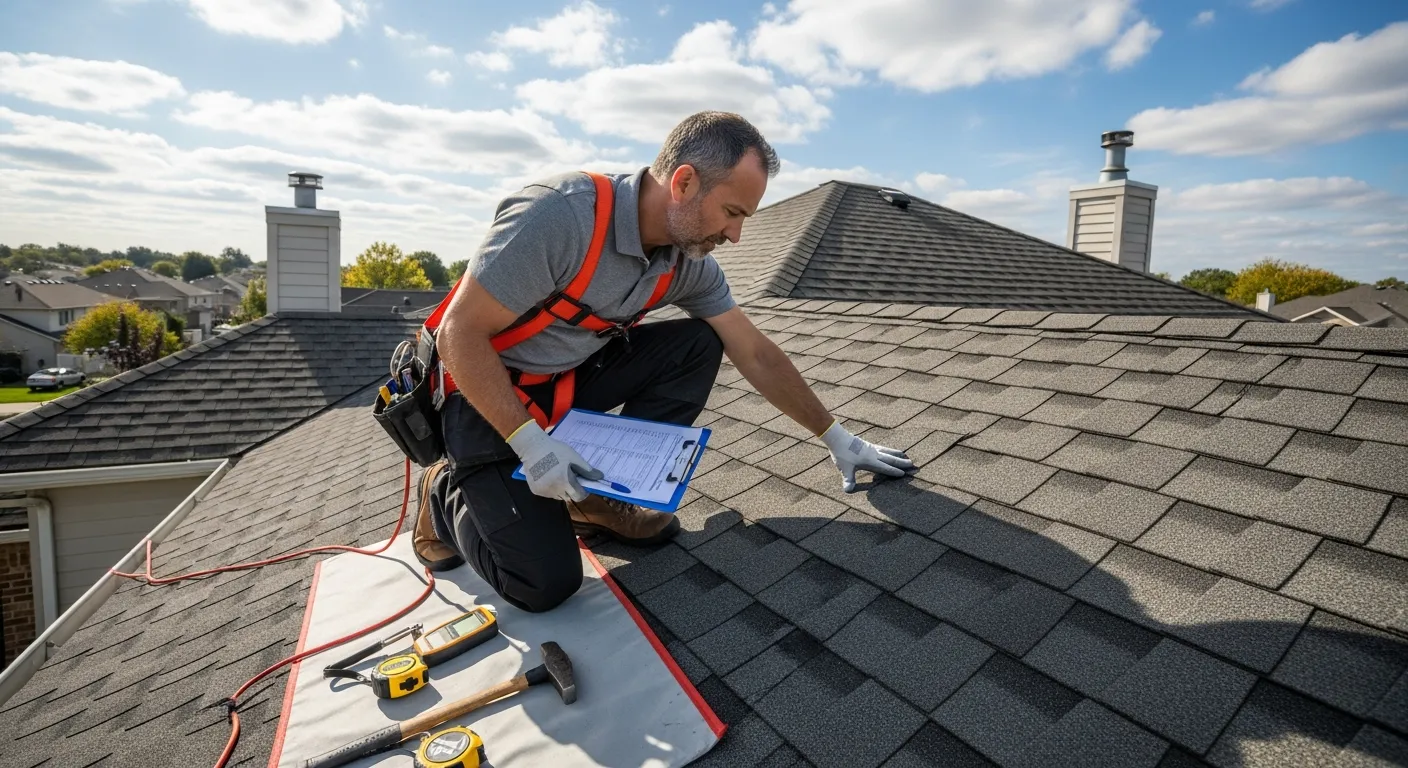
Using a ladder, the inspector accesses the roof surface and walks the entire area (on roofs safe to walk). They examine shingles row by row, check all flashing points, inspect ridge caps and hip caps, evaluate the condition of pipe boots and vent covers, and look for signs of ponding water on flat or low-slope sections. On steep roofs or roofs with fragile materials, binoculars or a drone may be used instead of walking the surface.
Step 4: Gutter and Drainage Check
While on the ladder and roof, the inspector evaluates the gutter system for proper attachment, slope, and condition. They check inside the gutters for debris accumulation, standing water, and granule buildup (a sign of shingle deterioration). Downspout outlets are checked for blockages and proper ground-level routing away from the foundation.
Step 5: Attic Interior Inspection
If your attic is accessible, the inspector enters through the attic hatch and examines the underside of the roof deck for water stains, daylight penetration, mold growth, and structural integrity. They check insulation levels and distribution, ventilation baffles at the soffits, and the condition of any attic-mounted exhaust fans or ventilation equipment. This step is especially revealing in older Reston homes where previous repairs may have been made from the inside and aren't visible from the exterior.
Step 6: Findings Discussion and Recommendations
The inspector reviews everything they found with you, shows you photos taken during the inspection, explains what each issue means in practical terms, and outlines your options. There's no pressure to commit to anything during this conversation. The goal is to make sure you have clear, accurate information about your roof's condition so you can make a decision that's right for your situation and budget.
Reston-Specific Roofing Challenges Your Inspector Will Look For
Every market has its own roofing quirks, and Reston is no exception. Your inspector will be looking for issues specific to the local climate, building styles, and environmental conditions that affect homes across this area.
Tree Canopy Damage and Debris
Reston is known for its tree-lined streets and wooded common areas, and while the mature canopy is one of the things that makes this community attractive, it creates real problems for roofs. Overhanging branches drop leaves and debris that clog gutters and trap moisture on the roof surface. Fallen branches during storms cause direct impact damage. And shade from dense tree cover keeps portions of the roof damp, which promotes moss and algae growth that deteriorates shingles over time.
Homes near the Reston pathways system, along Glade Drive, around Lake Thoreau, and in the wooded sections near Twin Branches Road are especially susceptible to tree-related roof damage. Your inspector will note any overhanging branches that should be trimmed back and identify areas where moss or algae growth indicates chronic moisture problems that need attention.
Flat Roof Sections on Contemporary Homes
Reston's original architectural vision embraced contemporary and modern home designs, and many homes in the Lake Anne, Waterview Cluster, and Hickory Cluster neighborhoods feature flat or extremely low-slope roof sections. These flat sections use membrane roofing systems (EPDM, TPO, or modified bitumen) rather than conventional shingles, and they require specialized inspection knowledge.
Common problems on Reston flat roofs include membrane shrinkage that pulls seams apart, ponding water in areas where drainage has settled or been blocked, blister formation in the membrane surface, and deteriorated edge flashing where the flat section meets a vertical wall or transitions to a sloped section. If your home has a flat roof section, make sure your inspector has specific experience with membrane systems and doesn't just focus on the shingle portions of your roof.
Ice Dam Susceptibility
Northern Virginia winters aren't as harsh as New England, but Reston gets enough ice and snow to create ice dam problems on vulnerable roofs. Ice dams form when heat escaping through inadequate attic insulation melts snow on the upper roof, and the meltwater refreezes along the colder eave edge, creating a dam that forces water back up under the shingles.
Your inspector will evaluate your roof's ice dam risk by checking insulation levels, ventilation adequacy, and whether ice and water shield membrane was installed along the eaves during the last roofing project. Homes on north-facing slopes in neighborhoods like Hunters Woods, Shadowood, and the areas along Soapstone Drive are more prone to ice dam formation because they get less direct sunlight to melt accumulated snow and ice.
Storm Damage Patterns in the Reston Corridor
Reston sits in a corridor between the Blue Ridge foothills and the Chesapeake Bay that channels severe weather through the area during spring and summer months. The Dulles Toll Road corridor between Herndon and Reston experiences particularly strong wind events during thunderstorms, and homes along Sunrise Valley Drive, Sunset Hills Road, and near the Wiehle-Reston East Metro station are more exposed to wind-driven rain and debris than homes sheltered deeper within wooded neighborhoods.
Your inspector will look for storm damage patterns specific to your home's exposure, including wind-lifted shingles on the windward side, hail dimpling on metal flashing and vent covers, and impact marks from airborne debris. If you're scheduling an inspection after a specific storm event, mention the date so the inspector can distinguish between fresh storm damage and pre-existing wear.
Frequently Asked Questions
How much does a roof inspection cost in Reston VA?
Many Reston roofing contractors, including Reston Roofing, offer free visual roof inspections for homeowners considering repairs or replacement. A free inspection covers the full exterior assessment, gutter check, and accessible attic review at no cost and no obligation. If you need a paid comprehensive inspection with a formal written report, moisture meter readings, and detailed condition ratings, that typically runs $200 to $400 depending on your home's size and roof complexity. Insurance claim inspections are free when the contractor handles your repair or replacement work.
What do roof inspectors check during a free inspection in Reston?
A thorough free inspection covers every major component of your roofing system. The inspector checks shingle condition including granule loss, curling, cracking, and missing tabs. They examine flashing around chimneys, skylights, plumbing vents, and wall intersections. They evaluate gutter attachment, slope, and drainage. They inspect ridge caps, hip caps, valley runs, and drip edges. If your attic is accessible, they'll look at the underside of the decking for water stains, mold, and structural issues. They also assess ventilation components including soffit vents, ridge vents, and any powered fans. The goal is a complete picture of your roof's health and remaining useful life.
How often should I schedule a roof inspection in Reston VA?
Schedule an inspection at least once per year, with spring and fall being the best timing. Spring inspections catch winter damage from ice, snow loads, and freeze-thaw cycling. Fall inspections ensure your roof is prepared for the coming winter season. Beyond annual inspections, schedule one after any major storm that brings hail, high winds, or heavy rain to the Reston area. If your roof is over 15 years old, consider biannual inspections in both spring and fall. And always schedule an inspection if you notice interior signs of roof problems like water stains on ceilings, damp spots in the attic, or granules accumulating in your gutters.
Does the Reston Association require roof inspections?
The Reston Association doesn't require routine roof inspections, but they do enforce design guidelines through the Design Review Board (DRB) that affect any roofing project. Before replacing your roof, you need DRB approval for the materials and colors you plan to use. Having a current inspection report that documents the condition of your existing roof supports your DRB application by showing the work is necessary. The RA generally approves like-for-like replacements without extensive review, but any change in material type, color, or visible roof components requires a more detailed submission. Your roofing contractor should be familiar with the RA process and help you navigate it.
Can a free roof inspection help with my insurance claim in Reston?
A professional roof inspection is the foundation of a successful insurance claim after storm damage. The inspector documents all damage with photos and measurements, distinguishes storm-related damage from normal wear, and provides the evidence your insurer needs to process the claim. Having your contractor present during the insurance adjuster's visit is equally important because adjusters sometimes miss damage that's visible only from certain angles or in specific lighting conditions. Reston Roofing provides free storm damage inspections and works directly with your insurance company through the entire claims process to ensure you receive a fair settlement for the damage to your home.
Should I get a roof inspection before selling my Reston home?
Getting a roof inspection before listing your Reston home is one of the smartest pre-sale investments you can make. In Reston's competitive market, particularly for homes near the Metro, Reston Town Center, and the South Lakes area, buyers expect properties to be well-maintained and transparent about their condition. A clean inspection report included in your listing materials eliminates buyer uncertainty about the roof, which is one of the most common negotiation sticking points during home sales. If the inspection reveals minor issues, you can address them before listing so they don't become bargaining chips that reduce your sale price by more than the repair would have cost.
Schedule Your Free Roof Inspection in Reston VA
Whether you live near Lake Anne, along Sunrise Valley Drive, in the South Lakes area, or anywhere else in the 20190, 20191, or 20194 zip codes, Reston Roofing is here to give you an honest, thorough assessment of your roof's condition at no cost and no obligation. We've inspected thousands of Reston roofs across every neighborhood and every era of construction in this community, and we'll give you straight answers about what your roof needs today and what to plan for down the road.
A free roof inspection takes about an hour of your time and gives you information that could save you thousands in avoided emergency repairs, better insurance claim outcomes, and smarter budgeting for your home's long-term maintenance. There's no downside to knowing where your roof stands, and there's real risk in not knowing.
Don't wait for a leak to tell you there's a problem. The damage is already done by the time water reaches your ceiling. Get ahead of it with a professional inspection from a team that knows Reston's homes, Reston's weather, and Reston's community rules inside and out.
Call us today at (571) 453-6515 or schedule a consultation online. We'll get you on the calendar and give your roof the attention it deserves before the next storm rolls through Northern Virginia.