Patch Roofing vs Full Roof Replacement: When Is Patching Enough?
Patch roofing versus full replacement is one of the most consequential decisions Northern Virginia homeowners face when roof problems develop. The cost difference between a $500 patch repair and a $12,000 complete replacement creates a powerful incentive to patch. But choosing poorly, either patching when replacement makes sense or replacing when a patch would suffice, wastes money and creates ongoing problems that compound over time. A roof patch on a fundamentally deteriorated 25-year-old roof buys you two years of anxiety before the next leak appears. A full replacement on a 10-year-old roof with one storm-damaged section wastes $10,000 you didn't need to spend.
This guide helps homeowners across Reston, Herndon, Fairfax, and the broader Northern Virginia region make the right call. We'll cover when patch roofing provides an adequate long-term solution, when full replacement proves necessary despite the cost, how to evaluate your roof's true condition, and realistic pricing for both options in the 2026 NOVA market.
What Is Patch Roofing and How Does It Work?
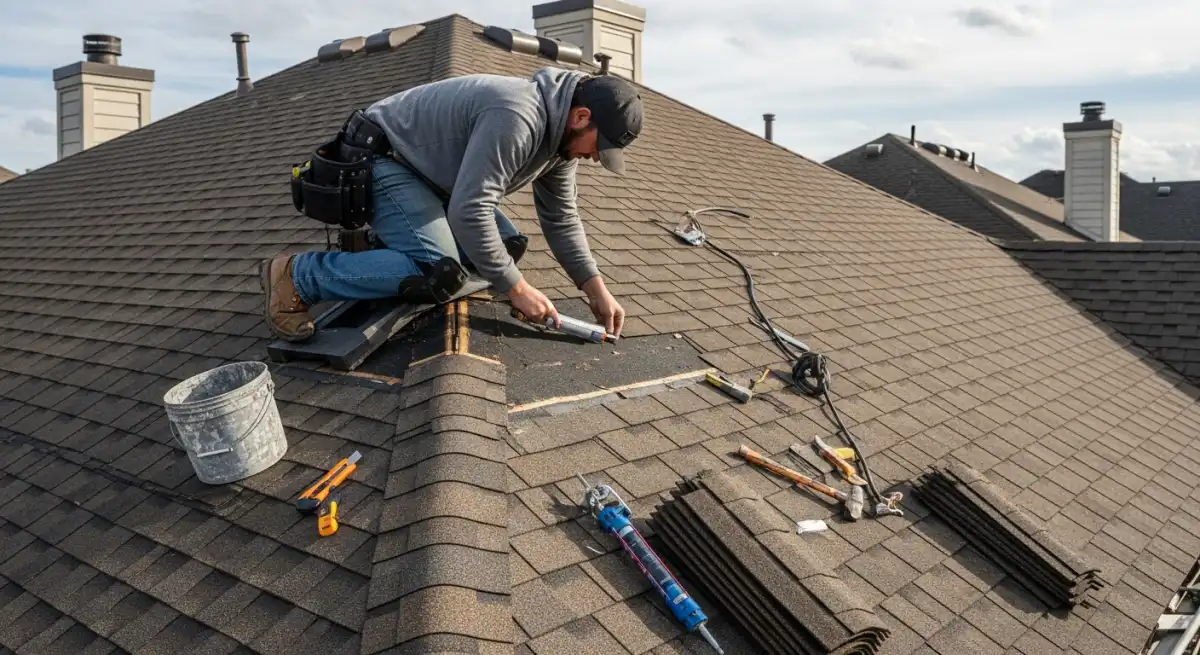
Patch roofing repairs isolated roof damage by replacing or repairing small sections rather than the entire roofing system. Patches address specific problems: missing shingles blown off during storms, localized leak areas around failed flashing, damaged sections from fallen tree limbs, or small areas where materials have deteriorated prematurely. Quality patches integrate new materials with the existing roof, restoring weatherproofing in the affected area without the expense and disruption of a complete tear-off and replacement.
The patch process begins with identifying the full extent of damage, which often extends beyond the visible problem area. Professional contractors remove damaged shingles around the affected zone, inspect the underlayment and deck beneath for moisture damage, replace any compromised decking or underlayment, and install new shingles that integrate with the existing roofing pattern. Proper patching requires overlapping new shingles under existing ones above the repair area to maintain water-shedding continuity.
Successful patches require realistic expectations about longevity. Patched areas typically last 3 to 10 years depending on the condition of surrounding materials and the quality of the patch installation. Patches work best as targeted repairs on otherwise healthy roofs with isolated damage, or as temporary solutions that extend roof life until a planned replacement. Understanding roof repair fundamentals helps homeowners set appropriate expectations about what patching can and cannot accomplish.
When Patch Roofing Makes Sense
Patch roofing is the right choice when damage affects less than 10 to 15 percent of total roof area and the surrounding materials remain in solid condition with significant useful life remaining. Storm damage that creates isolated problems on otherwise healthy roofs represents the ideal patching scenario. A tree branch that damages a 10-foot section on a 7-year-old roof doesn't justify replacing the entire 2,500-square-foot roofing system.
Roofs under 10 years old with localized problems are strong patching candidates because most of the roof retains 15 to 20 years of remaining service life. Budget constraints sometimes make patching the only viable option; choosing between a quality patch now versus delaying replacement for two to three years while you save makes patching the responsible choice. Homeowners planning to sell within one to three years often benefit from patching visible damage rather than investing $10,000 to $15,000 in a full replacement that primarily benefits the buyer.
Single-source leaks around plumbing vents, chimneys, or other roof penetrations frequently respond well to targeted patches that replace flashing and the surrounding shingles. Valley leaks where two roof slopes meet can sometimes be resolved by re-flashing and re-shingling just the valley area. These focused repairs address the specific failure point without disturbing the intact roofing on either side.
When Full Replacement Is Necessary
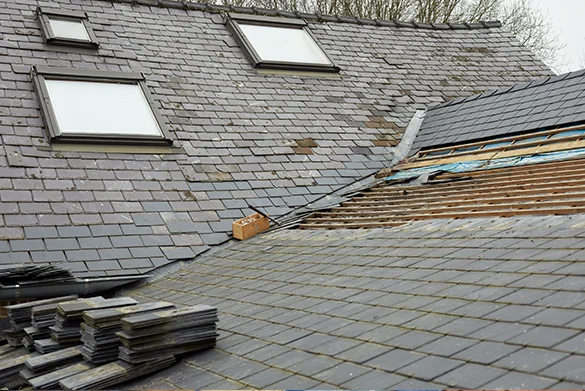
Replace rather than patch when your roof approaches or exceeds its expected lifespan. Asphalt shingle roofs in Northern Virginia typically last 20 to 30 years depending on ventilation quality, attic insulation levels, and the degree of UV exposure on south-facing and west-facing slopes. Roofs on homes in sun-exposed locations throughout Fairfax and along the Route 7 corridor in Sterling often show significant wear by year 18 to 22. At this age, the entire shingle system is approaching failure simultaneously, making patches temporary fixes on a fundamentally worn-out roof.
Replace when damage exceeds 25 to 30 percent of total roof area. At this threshold, patch costs approach replacement costs while delivering far less value. Multiple leak locations scattered across the roof indicate systemic deterioration that no amount of patching can resolve. Widespread granule loss visible in gutters and downspout splash areas, curling or cupping shingles across multiple roof planes, and brittleness when handling existing shingles all signal end-of-life conditions demanding complete replacement.
Underlying deck damage discovered during inspection makes replacement the only responsible option. Patches address surface materials but cannot fix rotted plywood, deteriorated OSB, or compromised rafter connections beneath the roofing system. These structural problems require removing roofing materials to access and repair the structure underneath, at which point re-roofing the exposed area with new materials is the logical next step. The decision parallels choosing between repairing versus replacing any building system that has reached the end of its functional life.
Patch Roofing vs Replacement Cost Comparison
The cost difference between patching and replacement drives most of the decision-making tension for homeowners. The table below compares typical costs for both approaches in the Northern Virginia market, along with the expected service life for each option.
| Repair Scenario | Patch Cost | Replacement Cost | Patch Lifespan | Replacement Lifespan |
|---|---|---|---|---|
| Small Area (10-20 sq ft) | $300 - $800 | $8,000 - $12,000 | 5 - 10 years | 25 - 30 years |
| Medium Area (50-100 sq ft) | $800 - $2,000 | $8,000 - $12,000 | 3 - 8 years | 25 - 30 years |
| Large Area (200+ sq ft) | $2,000 - $5,000 | $10,000 - $15,000 | 3 - 5 years | 25 - 30 years |
| Multiple Leak Locations | $1,500 - $4,000 | $10,000 - $15,000 | 2 - 5 years | 25 - 30 years |
| Partial Roof (One Slope) | $3,000 - $6,000 | $8,000 - $15,000 | 5 - 15 years | 25 - 30 years |
| Storm Damage (Scattered) | $1,000 - $3,500 | $8,000 - $15,000 | 3 - 7 years | 25 - 30 years |
Prices reflect Northern Virginia market rates as of 2026 for architectural asphalt shingle roofs on typical residential homes. Replacement costs include tear-off, underlayment, new shingles, flashing, ventilation, and cleanup. Patch lifespans assume the surrounding roof is in fair to good condition. Roofs already near end-of-life will see shorter patch performance.
Evaluating Your Roof's Condition
Accurate condition assessment determines whether patching makes financial and structural sense. A professional roof inspection identifies not just visible damage but the underlying problems that influence the repair-versus-replace decision. Inspectors check shingle condition across the entire roof, probe decking integrity at multiple points, assess ventilation adequacy, evaluate flashing systems at every penetration and transition, and examine the attic side for signs of moisture intrusion or inadequate insulation.
Key factors include the roof's age relative to expected lifespan, the extent and pattern of granule loss, the number and distribution of damaged areas, the condition of underlayment visible from inside the attic, and the history of previous repairs. A roof with three previous patches in five years tells a different story than a roof with no repair history that just sustained its first storm damage event.
Professional inspections cost $200 to $500 in the Northern Virginia market but provide decision-making information worth far more than the fee. The inspection report documents current conditions with photos, identifies all areas requiring attention, and provides an honest assessment of remaining service life. Getting multiple expert opinions provides balanced perspectives when the patch-versus-replace decision isn't clear-cut.
Insurance Considerations for Patch vs Replacement
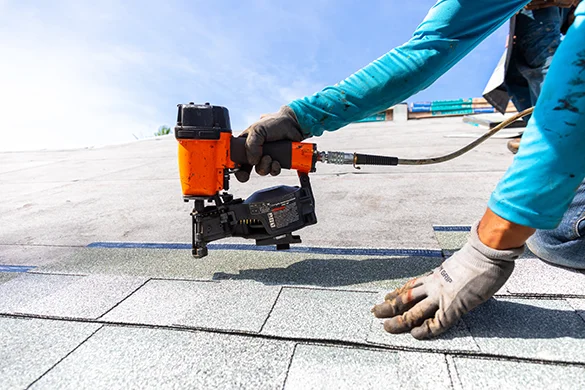
Insurance coverage significantly impacts the patch-versus-replace decision and can change the financial equation entirely. Storm damage from wind, hail, and fallen trees often qualifies for homeowner's insurance coverage that may fund complete replacement when damage exceeds policy thresholds. Many insurance policies include "matching" provisions that cover the cost of replacing larger areas or entire roof slopes when patch materials cannot reasonably match the existing roof's appearance.
However, insurance companies sometimes pressure homeowners toward the least expensive repair option to minimize claim payouts. Understanding your policy's actual replacement cost versus actual cash value provisions matters. Replacement cost policies pay for new equivalent materials. Actual cash value policies deduct depreciation, which can reduce your payout substantially on an older roof. Consider hiring a public adjuster or getting an independent contractor assessment when the insurance company's proposed settlement seems inadequate.
Document all damage thoroughly with dated photos and professional inspection reports before filing claims. Never accept a settlement or authorize repairs until you understand the full extent of damage and your policy's coverage terms. Accepting an inadequate settlement that funds patches when replacement is structurally necessary creates future problems that insurance won't cover because the damage will be classified as pre-existing or maintenance-related rather than storm-caused.
Long-Term Cost Analysis: Total Lifecycle Approach
The smartest way to evaluate patch versus replacement is through total lifecycle cost analysis rather than immediate expense comparison. A roof requiring $1,500 in patches every two to three years for ten years costs $5,000 to $7,500 in repairs while providing inconsistent protection and ongoing worry about the next leak. A one-time replacement costing $12,000 delivers 25 to 30 years of warranty-backed, worry-free performance.
Spread over its full lifespan, a $12,000 replacement costs $400 to $480 per year. Recurring patches costing $1,500 every 2.5 years on a roof that still eventually needs replacement cost $600 per year in patches alone, plus the eventual replacement cost. The lifecycle math consistently favors replacement for roofs that have passed the halfway point of their expected service life and are experiencing recurring problems.
Property value impacts deserve consideration as well. A new roof adds 60 to 70 percent of its cost to your home's appraised value and makes the property significantly more attractive to buyers. A visibly patched roof with mismatched shingles detracts from curb appeal and raises red flags during buyer inspections. For homeowners in competitive Northern Virginia real estate markets across Reston, McLean, Great Falls, and Fairfax, roof condition directly affects marketability and sale price.
Getting Honest Contractor Opinions
Contractor bias can significantly skew patch-versus-replace recommendations. Some contractors prefer the larger revenue of replacement projects and steer homeowners toward full replacement regardless of whether it's truly necessary. Others lack the equipment, insurance, or crew size for major replacement projects and push patches even when replacement makes better long-term sense. Finding honest, unbiased guidance requires careful contractor selection and critical evaluation of the advice you receive.
Seek contractors who offer both repair and replacement services and earn your trust through transparent communication rather than high-pressure sales tactics. Ask for detailed explanations of their recommendations, including the specific conditions they observed that justify their advice. Request that they show you photos or walk you through the damage they found during their inspection so you can see for yourself.
Get at least three opinions from different contractors and compare their assessments and recommendations. If two contractors recommend patching and one pushes for replacement, ask the replacement advocate to explain specifically what they see that the others don't. Significant discrepancies between professional opinions warrant an additional independent inspection from a home inspector or roofing consultant who doesn't perform installations and has no financial interest in the outcome. Quality contractors prioritize your best interests, recommending patches when appropriate and replacement when necessary, regardless of which option generates more revenue for their company. Look for this integrity when selecting roofing professionals for major decisions.
Frequently Asked Questions
How much does a roof patch repair cost in Northern Virginia?
Roof patch repairs in Northern Virginia cost between $300 and $800 for small repairs covering 10 to 20 square feet, $800 to $2,000 for medium patches of 50 to 100 square feet, and $2,000 to $5,000 for large patch projects exceeding 200 square feet. Costs depend on material type, roof pitch, accessibility, and whether underlying deck damage needs repair. Northern Virginia pricing runs 10 to 20 percent above national averages due to higher labor rates in the DC metro market.
When should I patch my roof instead of replacing it?
Patch your roof when damage affects less than 10 to 15 percent of the total roof area and the surrounding materials remain in good condition. Roofs under 10 years old with isolated storm damage, localized leaks from failed flashing, or small areas of missing shingles are ideal patching candidates. Patching also makes sense when you plan to sell within one to three years and need to address visible damage without investing in a full replacement you won't benefit from long-term.
When is full roof replacement necessary instead of patching?
Full replacement is necessary when your roof is approaching or past its expected lifespan of 20 to 30 years for asphalt shingles, when damage exceeds 25 to 30 percent of the total roof area, when you find multiple leak locations scattered across the roof, when shingles show widespread granule loss or curling, or when inspection reveals underlying deck rot or structural damage beneath the roofing materials. At these thresholds, patching costs approach replacement costs while delivering far less long-term value.
How long does a roof patch last compared to a full replacement?
A quality roof patch typically lasts 3 to 10 years depending on the condition of the surrounding roof and the quality of the patch installation. A full roof replacement with architectural shingles lasts 25 to 30 years in Northern Virginia conditions. While patches cost significantly less upfront, recurring patch repairs every few years can approach or exceed replacement costs over a 15 to 20-year period while providing inferior protection throughout.
Will my insurance cover roof patching or require full replacement?
Insurance coverage depends on your specific policy, the cause of damage, and the extent of damage. Storm damage often qualifies for coverage that may pay for full replacement when damage exceeds policy thresholds. Many policies include matching provisions that fund larger repairs or replacement when patch materials cannot match the existing roof. Insurance companies sometimes push for patching to minimize claim costs. Get an independent assessment and understand your policy's replacement cost provisions before accepting a settlement amount.
Expert Patch Roofing and Replacement in Northern Virginia
Reston Roofing provides honest, unbiased assessments for every patch-versus-replacement decision across Northern Virginia. Our experienced estimators inspect your roof thoroughly, document all damage with photos, and recommend the option that makes the most sense for your situation, budget, and long-term plans. We perform both targeted patch repairs and complete roof replacements with equal attention to quality, ensuring every project delivers lasting value.
Call Reston Roofing today at (571) 453-6515 or schedule a consultation for a free on-site assessment. We'll give you an honest evaluation of your roof's condition, detailed cost comparisons for patching versus replacement, and a clear recommendation based on what we find, not what generates the most revenue.