Should I Remove Snow From My Roof? Expert Guide for Northern Virginia Homeowners
Snow can transform Northern Virginia into a winter postcard, but that beautiful blanket of white sitting on your roof represents real weight, real moisture, and real risk if it isn't managed properly. Every winter, homeowners across Reston, Herndon, Fairfax, and the broader NOVA region face the same question: should I remove the snow from my roof, or is it better to leave it alone?
The answer depends on several factors including your roof's pitch, its structural capacity, the type and depth of snow, and whether ice dams are forming at the eaves. Getting this decision wrong in either direction can cause problems. Leaving excessive snow on a vulnerable roof risks structural damage. Removing snow carelessly can damage shingles, void warranties, and put you in serious physical danger on a slippery, elevated surface.
This guide gives you a clear, practical framework for making the right decision about roof snow removal based on Northern Virginia's specific winter conditions. You'll learn how to assess snow load risk, recognize the warning signs that demand action, understand ice dams and their prevention, and know when to handle things yourself versus when to call a professional.
Understanding Snow Load on Northern Virginia Roofs
Not all snow is created equal when it comes to the weight sitting on your roof. Fresh, fluffy snow that falls during a cold, dry storm weighs roughly 3 to 5 pounds per square foot per foot of depth. Wet, heavy snow from a warmer storm event can weigh 10 to 20 pounds per square foot per foot of depth. And snow that has been sitting on your roof for days, compacting and absorbing moisture, falls somewhere in between.
Most residential roofs in Northern Virginia are engineered to support 20 to 30 pounds per square foot of live load, which is the Virginia building code minimum for the NOVA region. That means a typical roof can handle roughly 4 to 6 feet of fresh, light snow or 2 to 3 feet of heavy, wet snow before approaching structural limits. These numbers provide a reasonable safety margin for the snowfall events Northern Virginia normally experiences, which rarely exceed 24 inches in a single storm.
The challenge comes when storms stack up. Back-to-back snowfall events that don't fully melt between storms create layered accumulation where fresh snow sits on top of packed, heavier snow from previous events. The February 2010 "Snowmageddon" storms that hit the DC metro area demonstrated exactly this scenario, dumping over 40 inches of snow across Fairfax County in less than a week and collapsing numerous flat roofs and older structures that couldn't handle the combined weight.
How Roof Pitch Affects Snow Accumulation
Roof pitch is one of the most important factors in determining snow risk. Steep-slope roofs with a pitch of 6/12 or higher shed snow naturally through gravity as the snow pack warms and loosens. Most colonial, Cape Cod, and newer construction homes throughout Reston's neighborhoods along Wiehle Avenue and the communities around Lake Audubon have sufficient pitch for natural snow shedding.
Flat and low-pitch roofs are a completely different story. Snow sits on these surfaces indefinitely until it melts or is removed. Homes with flat roof sections over garages, additions, sunrooms, and row house roofs are particularly vulnerable. Commercial buildings along the Dulles Toll Road corridor and in the Reston Town Center area face the same risk at a larger scale. If your property has flat or low-slope roof sections, proactive snow management is essential during significant accumulation events.
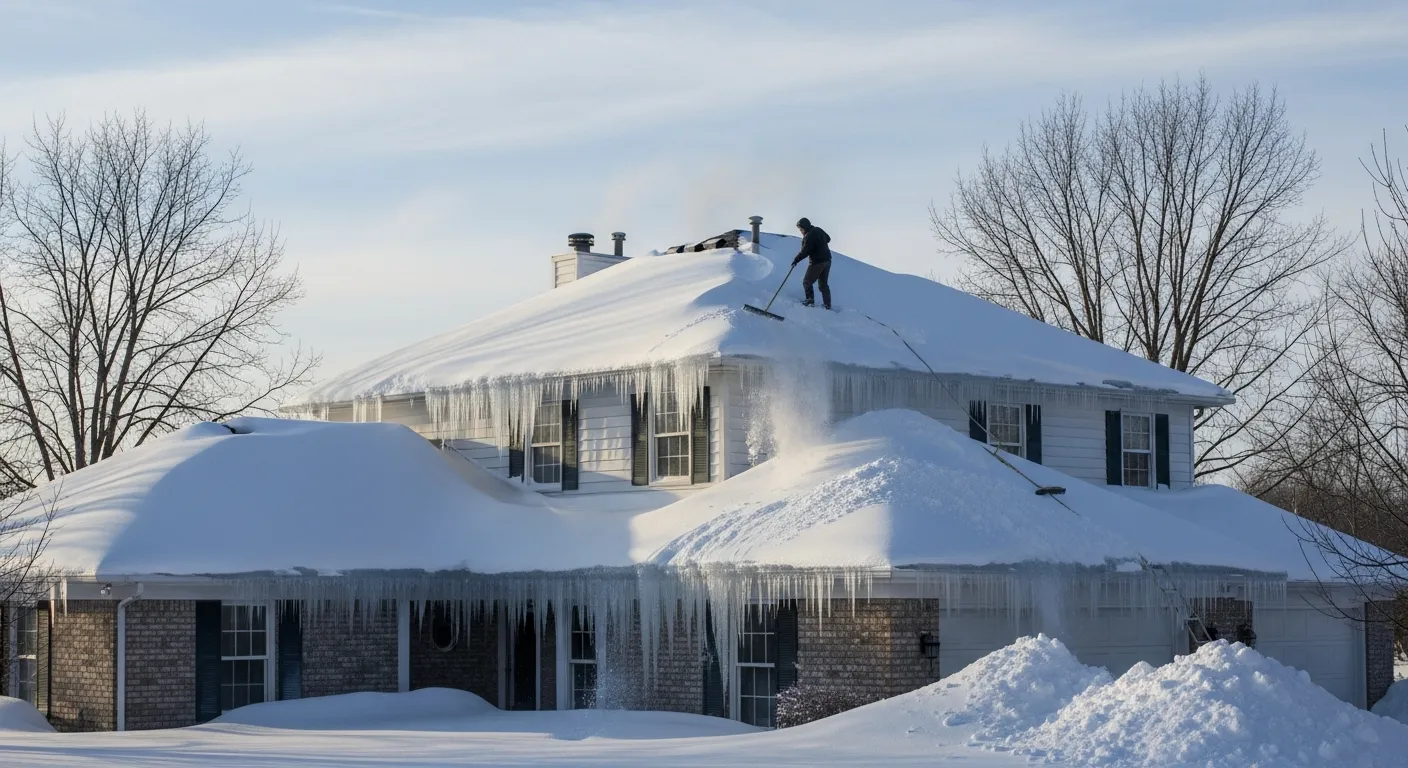
Warning Signs That Snow Removal Is Urgent
Your home will tell you when it's struggling under snow load if you know what to look for. These warning signs indicate that the structural load is approaching or exceeding safe limits and demand immediate attention.
Unusual Sounds from the Structure
Cracking, popping, or groaning sounds from the ceiling, walls, or attic area indicate structural members under excessive stress. These sounds typically come from rafters, trusses, or joists deflecting under the weight. If you hear these sounds during or after heavy snowfall, evacuate the area directly beneath the noise and arrange for emergency snow removal immediately.
Visible Ceiling or Wall Distortion
Sagging ceiling panels, new cracks in drywall near the ceiling line, or doors and windows that suddenly stick or jam can all indicate that the roof structure is deflecting under snow weight. These are serious warning signs that shouldn't be dismissed as normal settling.
Ice Dam Formation at the Eaves
Ice dams are ridges of ice that form along the lower edge of a roof when heat escaping from the attic melts snow on the upper roof surface. The meltwater flows down to the colder eave area where it refreezes. Over time, this ice ridge grows and traps water behind it, which then backs up under shingles and leaks into the home.
Ice dams are extremely common in Northern Virginia's older homes, particularly in neighborhoods built in the 1960s through 1980s along Hunter Mill Road in Oakton, the established areas of Vienna, and the original cluster communities in Reston that were built with attic insulation levels well below current standards. If you see icicles hanging from your eaves or ice buildup along the roof edge, you likely have an ice dam problem that needs both immediate attention and long-term correction.
Water Stains or Active Leaks During Winter
Water appearing on interior ceilings or walls during winter almost always traces back to ice dam activity rather than a roof leak in the traditional sense. The water from melting snow is being trapped behind the ice dam and forced under shingles where it penetrates the roof deck. This type of leak won't stop until the ice dam is removed and the underlying insulation and ventilation problems are corrected.
How to Safely Remove Snow From Your Roof
If snow removal is necessary, the method you use matters as much as the decision to remove. Improper technique can damage shingles, break flashing seals, crack skylights, and create injury risks that far exceed the danger of the snow itself.
Using a Roof Rake from the Ground
A roof rake is a long-handled tool with a flat blade designed to pull snow off the roof while you stand safely on the ground. This is the recommended method for homeowners. Extend the rake up to the eave area and pull snow downward in manageable strips, working from one side of the roof to the other. Focus on clearing the first 3 to 4 feet from the eaves, which is the zone where ice dams form and where snow load puts the most stress on the structure.
Do not scrape the roof rake all the way down to the shingle surface. Leave an inch or two of snow to avoid catching shingle edges with the blade, which can tear shingles loose and create new leak points. The goal is to reduce weight and eliminate the ice dam zone, not to achieve a perfectly clean roof surface.
What to Avoid During Snow Removal
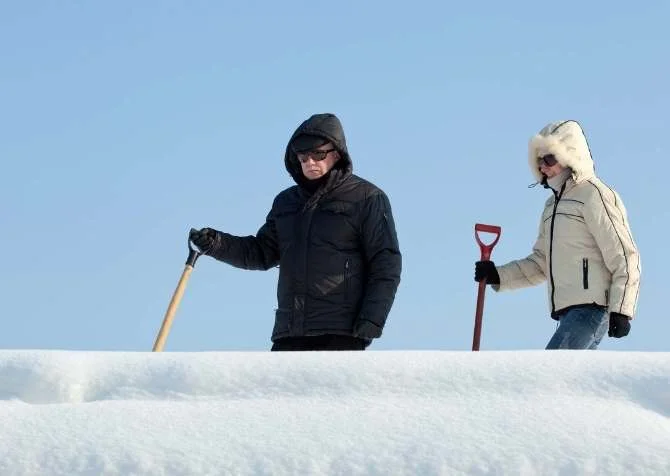
Never climb onto a snow-covered roof. The combination of hidden ice patches, snow-obscured roof edges, and the inherent instability of walking on a pitched surface makes this one of the most dangerous activities a homeowner can attempt. Every winter, emergency rooms across the DC metro area treat serious injuries from falls during amateur roof snow removal.
Never use salt, calcium chloride, or chemical de-icers on your roof. These products can corrode metal flashing, degrade shingle composition, stain siding, and damage landscaping when the runoff reaches ground level. Never use a shovel, hammer, pick, or any sharp tool to chip ice from the roof surface. These tools damage shingles and can puncture the roof membrane on flat roof sections.
Ice Dams: Prevention Is Better Than Removal
Ice dams are a symptom of a building performance problem, not just a weather event. They form because heat is escaping from the living space through an inadequately insulated ceiling into the attic, warming the roof deck enough to melt snow. The solution isn't annual ice dam removal. The solution is fixing the heat loss that causes ice dams to form in the first place.
Attic Insulation
Northern Virginia falls in climate zone 4A, which calls for attic insulation at R-38 to R-49 according to current energy code. Many older homes in the region have R-19 or less, which allows significant heat transfer from the living space into the attic. Adding insulation to bring the attic floor up to R-49 dramatically reduces the heat loss that drives ice dam formation. This single improvement often eliminates ice dam problems entirely while also reducing winter heating costs by 15 to 25 percent.
Attic Ventilation
Proper attic ventilation works with insulation to keep the roof deck cold during winter. Intake vents at the soffits and exhaust vents at the ridge create natural airflow that carries away any heat that does escape through the insulation. This keeps the entire roof surface at a uniform, cold temperature so snow melts evenly and doesn't create the hot-spot and cold-spot pattern that drives ice dam formation.
Virginia code specifies a minimum 1:150 ratio of net free ventilation area to attic floor area. Many older homes don't meet this minimum, and some have had their soffit vents blocked by insulation that was installed without proper baffles. During any roof replacement project, have your contractor evaluate and upgrade ventilation to meet or exceed current standards.
Snow Removal Costs in Northern Virginia
Professional snow removal services provide the safest, most effective way to clear heavy snow from your roof without damaging the roofing system or putting anyone at risk.
Prices reflect typical Northern Virginia ranges. Actual costs vary based on roof size, pitch, accessibility, and snow conditions. Emergency and after-hours services carry premium pricing due to safety considerations and high demand during major storm events.
When to Call a Professional for Roof Snow Removal
While a roof rake from the ground handles routine snow clearing, several situations call for professional intervention. If snow accumulation exceeds 12 inches of packed snow or 18 inches of fresh snow, professional removal reduces the load safely without shingle damage. If ice dams have formed and water is leaking into your home, professional steam removal is the only safe and effective method.
If you hear structural sounds like cracking or popping, or if you notice ceiling sagging or door frames shifting, these are emergency situations that require immediate professional response. And if your home has flat or low-pitch roof sections that cannot shed snow naturally, proactive clearing after every significant snowfall prevents the progressive weight accumulation that leads to structural problems.
Homeowners in Reston, Herndon, Sterling, and throughout Northern Virginia can contact Reston Roofing for both emergency snow removal and proactive winter maintenance programs that protect your roof through the entire cold season.
Protecting Your Roof Before Winter Arrives
The best time to prepare for winter snow is before the first flake falls. Schedule a fall roof inspection to identify and repair any existing damage that could worsen under snow load. Clean gutters and downspouts so spring meltwater drains properly. Verify that attic insulation meets current standards and that ventilation is balanced and unobstructed.
Check flashing at chimneys, skylights, and wall transitions for sealant deterioration that could allow meltwater infiltration. Inspect flat roof drains and scuppers to ensure they're clear and functional. These preventive steps cost a fraction of the emergency repairs that result from entering winter with a roof that has existing vulnerabilities. For more winter preparation advice, read our comprehensive roofing and repairs 101 guide.
Long-Term Solutions for Snow-Prone Roofs
If your property experiences recurring snow problems every winter, consider long-term improvements that reduce or eliminate the need for annual snow removal. Upgrading attic insulation to R-49 and installing proper ventilation baffles eliminates most ice dam problems. Installing heat cables along eave lines provides supplemental ice prevention during extreme events. And for properties with flat roof sections, improving drainage slope during the next membrane replacement ensures water from snowmelt evacuates efficiently rather than ponding.
Frequently Asked Questions
How much snow can a Northern Virginia roof hold?
Most residential roofs in Northern Virginia are engineered to support 20 to 30 pounds per square foot of live load, which translates to roughly 4 to 6 feet of fresh snow or 2 to 3 feet of packed, wet snow. However, older homes built before modern building codes may have lower load capacities. Flat and low-pitch roofs are more vulnerable because snow doesn't slide off naturally. If you're unsure about your roof's capacity, consult a structural engineer or roofing professional.
What are ice dams and how do they damage roofs?
Ice dams form when heat escaping from a poorly insulated attic melts snow on the upper portion of the roof. The meltwater flows down to the colder eaves where it refreezes, creating a ridge of ice that traps subsequent meltwater behind it. This trapped water backs up under shingles and penetrates the roof deck, causing leaks, wet insulation, stained ceilings, and potential mold growth. Preventing ice dams requires proper attic insulation and ventilation, not just snow removal.
Is it safe to remove snow from my roof myself?
Using a roof rake from the ground to clear the first 3 to 4 feet of snow from the eaves is generally safe for homeowners. Never climb onto a snow-covered roof, which is extremely dangerous due to hidden ice patches, obscured roof edges, and slippery surfaces. Professional snow removal services have the equipment, insurance, and training to safely clear entire roof surfaces. The risk of personal injury from DIY roof snow removal far outweighs the cost of professional service.
How much does professional roof snow removal cost in Northern Virginia?
Professional roof snow removal in Northern Virginia typically costs $200 to $600 for a standard residential home. Prices vary based on roof size, pitch, accessibility, snow depth, and whether ice dam removal is included. Emergency removal after major storms may cost more due to high demand. Some roofing companies offer seasonal contracts that include snow removal as part of a winter maintenance package.
When should I call a professional to remove snow from my roof?
Call a professional when snow accumulation exceeds 12 inches of packed snow or 18 inches of fresh snow, when you notice ice dams forming at the eaves, when interior signs of stress appear such as cracking sounds, sagging ceilings, or jammed doors and windows, or when you have a flat or low-pitch roof section that cannot shed snow naturally. Also call a professional if your home was built before 1980 and you are unsure about the roof's structural load capacity.
Protect Your Roof This Winter with Reston Roofing
Whether you need emergency snow removal, ice dam treatment, or a comprehensive winter inspection to prepare your roof for the cold months ahead, Reston Roofing is here to help. Our team understands Northern Virginia's winter conditions and provides safe, effective snow management services that protect your roof and your family.
We serve homeowners throughout Reston, Herndon, Fairfax, McLean, Vienna, Sterling, and communities across Northern Virginia.
Call us today at (571) 453-6515 or schedule a consultation online. Don't wait for the next storm to find out if your roof can handle the load. Get ahead of winter weather and keep your home safe and dry all season long.