Standing Seam Metal Roofing: Top Benefits for Northern Virginia Homes
Standing seam metal roofing has evolved from a material associated primarily with commercial buildings and agricultural structures into one of the most sought-after residential roofing options across Northern Virginia. Homeowners in Reston, Great Falls, McLean, Herndon, and communities throughout Fairfax and Loudoun counties increasingly recognize that standing seam systems offer a combination of durability, energy efficiency, and aesthetic refinement that traditional asphalt shingles simply cannot match. The interlocking vertical panels with raised seams create a continuous weather barrier with no exposed fasteners, delivering protection that lasts two to three times longer than even the best architectural shingles.
The upfront investment for standing seam metal roofing exceeds asphalt shingles by a significant margin, and that price difference is the primary reason homeowners hesitate. But the calculation changes dramatically when you look beyond the installation invoice. A standing seam roof installed on a home in Reston or Fairfax today will still be protecting that home in 2076, while an asphalt shingle roof installed at the same time will need its second full replacement by then. Factor in energy savings from reflective metal surfaces during Northern Virginia's brutally hot summers, near-zero maintenance costs over decades, and measurable increases in property value, and standing seam metal roofing emerges as one of the smartest long-term investments a NOVA homeowner can make.
This guide explores the benefits that make standing seam metal roofing the premium choice for quality-focused homeowners in Northern Virginia. We cover real-world performance data, honest cost comparisons for the NOVA market, maintenance expectations, weather resistance capabilities, and the factors you need to evaluate before deciding whether standing seam is the right fit for your home, your budget, and your HOA.
Exceptional Durability and Longevity
Standing seam metal roofing lasts 40 to 70 years depending on the material choice, far outlasting any asphalt shingle product on the market. Galvalume steel panels, which are the most common material for residential standing seam installations in Northern Virginia, typically deliver 40 to 50 years of reliable service. Aluminum systems extend that range to 50 to 60 years. Copper and zinc roofs, which develop distinctive patinas that many homeowners prize, can exceed 70 years with minimal intervention. For most homeowners in Reston, Herndon, or Fairfax, a standing seam roof is a once-in-a-lifetime installation.
The concealed fastener system is what separates standing seam from other metal roofing products and drives much of its durability advantage. Screws attach to the roof deck through hidden clips beneath the panel surface, completely protected from weather exposure. This eliminates the fastener corrosion, rubber washer degradation, and screw-back-out problems that plague exposed-fastener metal roof systems and create leaks within 10 to 15 years. The vertical panel orientation sheds water with extreme efficiency, and the raised seams sit above the drainage plane so water never contacts a penetration point or joint. These engineering advantages make standing seam ideal for Northern Virginia's demanding climate, where roofs must handle heavy rain, ice, snow, UV exposure, and high winds across every season. When comparing roof replacement options, the longevity calculation overwhelmingly favors standing seam for homeowners planning to stay in their homes long term.
Superior Energy Efficiency for NOVA Summers
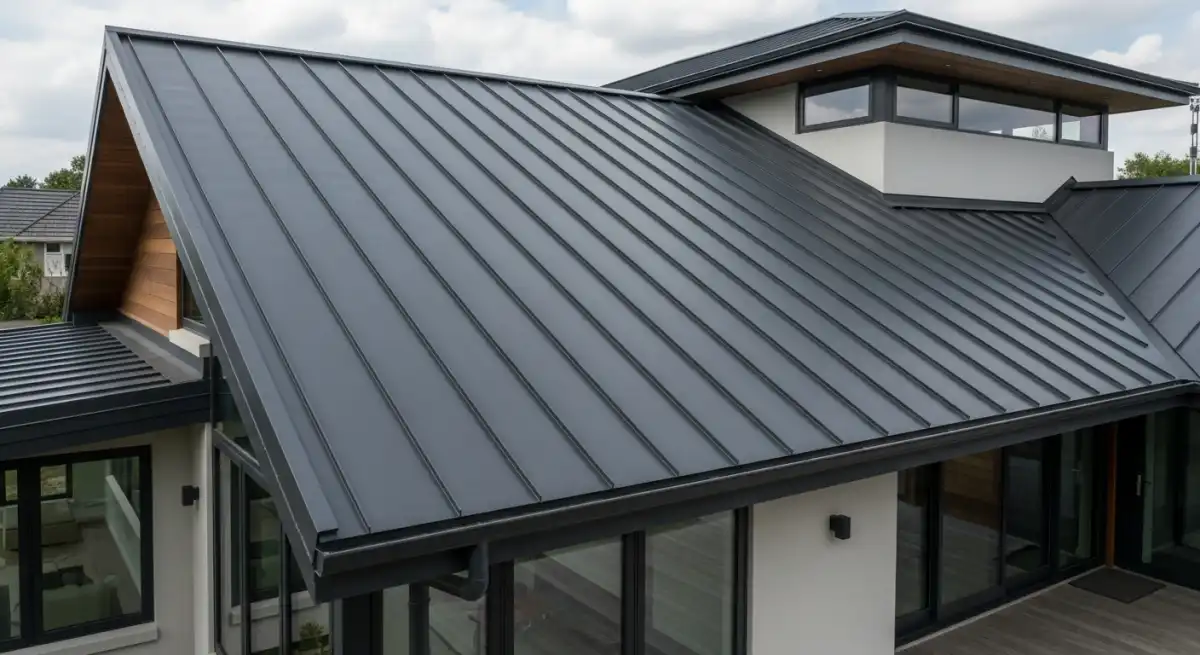
Standing seam metal roofs reflect solar radiation rather than absorbing it the way dark asphalt shingles do, and this single property delivers measurable cooling cost reductions that Northern Virginia homeowners feel directly in their electric bills from May through September. Premium Kynar 500 painted finishes with high solar reflectance values can reduce cooling energy consumption by 10 to 25 percent compared to a conventional asphalt shingle roof on the same home. The reflective surface keeps roof surface temperatures 50 to 60 degrees Fahrenheit cooler than dark shingles, which translates directly to lower attic temperatures and reduced heat transfer into your living space.
For a typical Northern Virginia home spending $200 to $400 per month on electricity during peak summer, that 10 to 25 percent cooling reduction translates to $240 to $1,200 in annual energy savings. Over the 50-plus year lifespan of a standing seam roof, those savings compound to $12,000 to $60,000 depending on your home's size, insulation quality, HVAC efficiency, and how much your roof faces south and west. Homes in sun-exposed neighborhoods along Wiehle Avenue in Reston, the open-plan developments near Fairfax Corner, and the newer communities along the Herndon Parkway see the most dramatic cooling benefits because their roofs absorb direct sunlight for more hours per day.
Many standing seam systems qualify for ENERGY STAR certification and cool roof ratings. Light-colored finishes in white, light gray, or light tan maximize reflectivity, but even darker colors like charcoal or forest green reflect significantly more solar energy than comparable asphalt shingles because the metal substrate conducts and re-radiates heat more efficiently than the porous asphalt matrix.
Minimal Maintenance Requirements
Standing seam roofs require almost no maintenance compared to every other residential roofing material available in Northern Virginia. The durable Kynar and SMP paint finishes resist fading, chalking, and degradation for decades without recoating. Concealed fasteners never need tightening, retorquing, or replacement because they are protected from weather exposure. The smooth metal surface prevents leaf and debris accumulation in ways that textured shingle surfaces cannot, and the non-porous material discourages the moss and algae growth that stains and degrades asphalt shingles on shaded north-facing slopes throughout Reston's wooded neighborhoods.
The entire maintenance program for a standing seam roof consists of an annual visual inspection to check sealant condition around penetrations and clear any debris from valleys or transitions. That takes a qualified contractor 30 to 45 minutes. Compare that to asphalt shingle roofs that require periodic shingle replacement as individual units fail, re-sealing of exposed nail heads, treatment for algae and moss growth, and monitoring for granule loss that indicates aging. Over a 50-year period, the maintenance cost difference between standing seam and asphalt easily reaches $5,000 to $15,000 in favor of metal. This maintenance-free performance appeals especially to homeowners with steep roofs, multi-story homes, or properties in difficult-to-access locations where getting a crew on the roof for routine repairs is expensive and disruptive. Learn more about the maintenance differences when comparing roofing materials for Northern Virginia.
Outstanding Weather Resistance for Northern Virginia
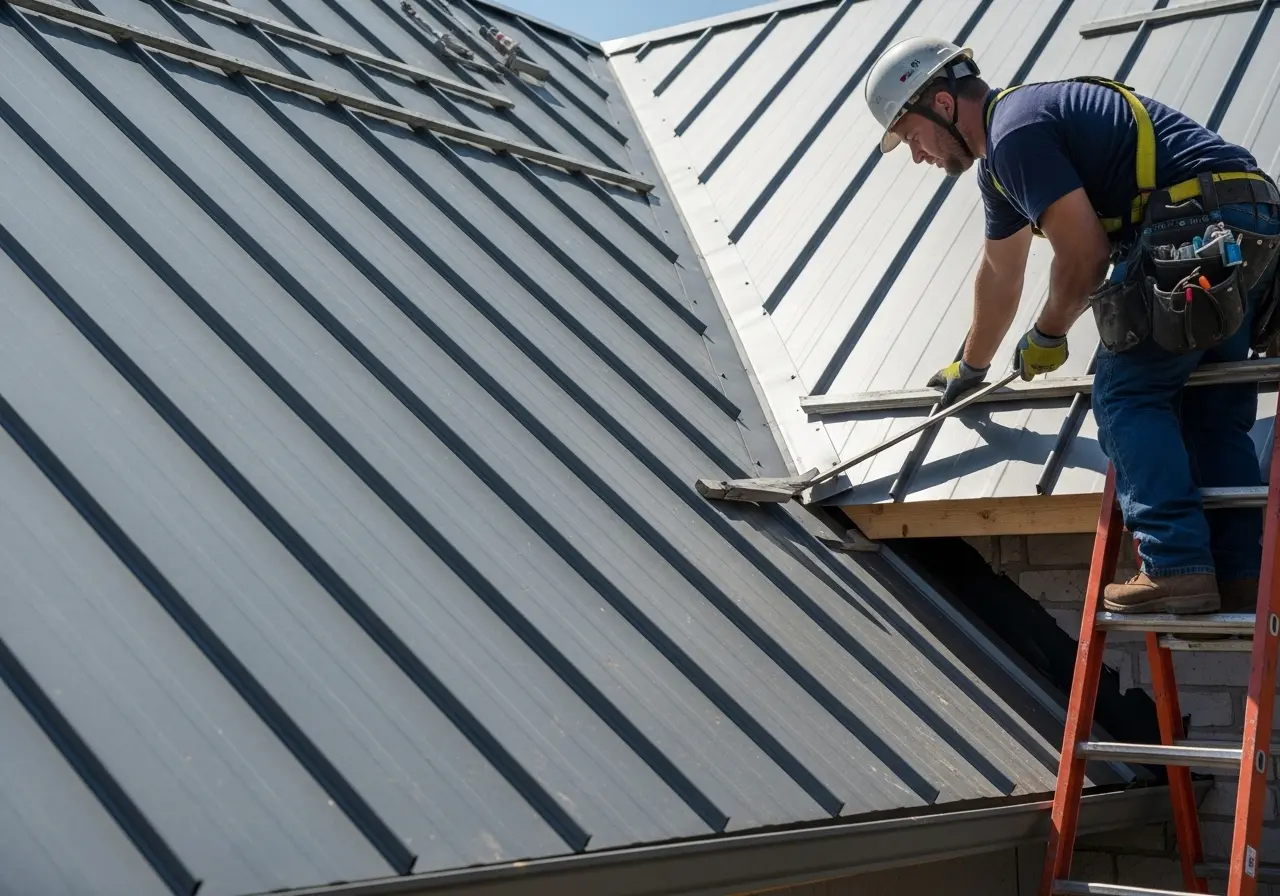
Northern Virginia's climate throws a diverse and punishing range of weather at your roof across every season, and standing seam metal handles all of it better than any other residential roofing material. The interlocking vertical seams create watertight barriers that resist wind-driven rain during the intense thunderstorms that roll along the Dulles corridor from June through September. Wind resistance ratings on quality standing seam systems typically exceed 140 mph when properly installed, far surpassing the 110 to 130 mph ratings of premium architectural shingles and providing substantial safety margin against the 60 to 80 mph gusts that severe storms regularly bring to Reston, Sterling, Ashburn, and the broader NOVA region.
Metal's inherent fire resistance earns Class A ratings, the highest fire safety classification available. Impact resistance protects against hail damage that cracks and bruises asphalt shingles during the hail events that hit Fairfax and Loudoun counties several times during storm season. Snow and ice slide off the smooth metal surface naturally, which prevents the dangerous accumulations and ice dam formations that plague asphalt shingle roofs on older homes with inadequate attic insulation across Vienna, Oakton, and Falls Church during Northern Virginia winters.
Lightning concerns about metal roofing are entirely unfounded. Metal roofs do not attract lightning. In the rare event a lightning strike does hit a metal roof, the non-combustible material provides safer dissipation than an asphalt shingle roof that can ignite from the thermal energy. These superior weather resistance capabilities reduce insurance claims, lower the risk of emergency repair costs, and may qualify your home for premium discounts from insurance carriers that recognize standing seam's documented performance advantages.
Increased Property Value and Curb Appeal
Standing seam metal roofing significantly enhances curb appeal with the clean vertical lines and contemporary aesthetic that today's buyers find attractive. The wide range of factory-applied color options spans traditional metallics, earth tones, bold modern hues, and matte finishes that complement any architectural style from colonial to contemporary. Unlike aging asphalt shingles that develop dark algae streaks, lose granules, and curl at the edges as they deteriorate, standing seam panels maintain their like-new appearance for decades with only minimal fading that actually enhances the weathered metal aesthetic many homeowners prefer.
National real estate studies consistently show that metal roofing increases both property value and marketability. Buyers recognize that a quality standing seam roof eliminates replacement concerns for decades, which removes one of the largest potential maintenance expenses from their ownership calculation. The combination of appearance, documented longevity, energy efficiency, and environmental sustainability appeals to the growing segment of Northern Virginia buyers who are both environmentally conscious and financially savvy. Homes with standing seam roofing in competitive NOVA markets like Reston, Great Falls, and McLean often sell faster and command premium prices compared to similar homes with aging asphalt shingle roofs.
Cost Comparison: Standing Seam vs. Other Roofing Materials
The upfront cost of standing seam metal roofing is the primary consideration that gives Northern Virginia homeowners pause. Understanding how that initial investment compares to alternatives over the full ownership period puts the numbers in perspective.
| Roofing Material | Installed Cost (NOVA 2026) | Expected Lifespan | Annual Maintenance | Cost Per Year of Service |
|---|---|---|---|---|
| Standing Seam (Galvalume Steel) | $18,000 - $28,000 | 40 - 50 years | $0 - $100 | $360 - $560 |
| Standing Seam (Aluminum) | $22,000 - $32,000 | 50 - 60 years | $0 - $100 | $440 - $533 |
| Standing Seam (Copper) | $35,000 - $55,000 | 70+ years | $0 - $150 | $500 - $786 |
| Architectural Asphalt Shingles | $10,000 - $18,000 | 25 - 30 years | $0 - $300 | $400 - $600 |
| Designer Asphalt Shingles | $15,000 - $22,000 | 30 - 35 years | $0 - $250 | $500 - $629 |
| Synthetic Slate | $15,000 - $25,000 | 40 - 60 years | $0 - $150 | $375 - $417 |
Prices reflect typical ranges for Northern Virginia homes with 2,000 to 2,500 square feet of roof area as of 2026. Actual costs vary based on panel gauge, finish type, roof pitch, complexity, structural modifications, and current material pricing. Energy savings of $240 to $1,200 per year from reflective metal finishes are not included in the cost-per-year calculation but further improve standing seam's financial advantage over time.
Understanding Standing Seam Panel Varieties
Not all standing seam roofing performs identically, and understanding the differences between panel types helps you match the right product to your home and budget. Panel profiles vary from 12-inch to 24-inch widths, with seam heights ranging from 1 inch to 3 inches. Wider panels cover roof area faster and require fewer seams, but they show more oil-canning, which is the visible waviness in flat metal surfaces caused by thermal expansion and manufacturing tolerances. Narrower panels minimize oil-canning but increase material and labor costs. Taller seams provide better water-shedding capacity but use more material per linear foot.
Material choices for standing seam panels include Galvalume steel, aluminum, copper, and zinc. Galvalume, which is a steel substrate coated with an aluminum-zinc alloy, offers the best combination of strength, corrosion resistance, and value for most Northern Virginia residential applications. Aluminum weighs less and resists corrosion better, making it the preferred choice for homes in high-humidity environments or coastal areas, though it costs 20 to 40 percent more than Galvalume. Copper develops a distinctive green patina over time that many homeowners on estate properties in Great Falls and McLean find architecturally desirable, but copper panels cost three to four times more than Galvalume.
Panel gauge directly affects durability and performance. Twenty-four-gauge steel is the standard for quality residential installations, providing the rigidity needed to resist oil-canning and withstand foot traffic during maintenance. Twenty-six-gauge offers modest cost savings but feels noticeably thinner and shows more oil-canning. Twenty-nine-gauge panels are too thin for residential standing seam applications and should be avoided despite the lower price point. Understanding these specifications helps you evaluate contractor proposals and match standing seam installation details to your specific requirements.
Environmental Benefits of Standing Seam Metal Roofing
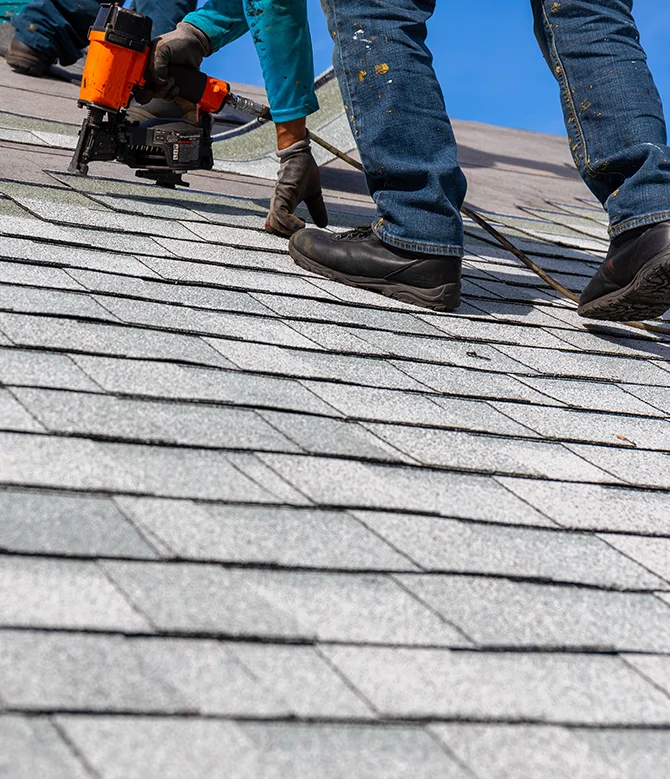
Standing seam metal roofing delivers environmental advantages that increasingly matter to Northern Virginia homeowners who prioritize sustainability alongside performance. Metal roofing panels contain 25 to 95 percent recycled content depending on the material type, and they are 100 percent recyclable at end of life. When a standing seam roof finally reaches the end of its 50 to 70 year service period, every panel goes back to the metal recycling stream rather than into a landfill. Contrast that with asphalt shingles, which send approximately 20 billion pounds of waste to American landfills every year when they are torn off and replaced.
The exceptional lifespan of standing seam means dramatically fewer replacement cycles over a home's existence. A home built in 2026 might need three or four asphalt shingle roofs over the next 100 years, but only one or two standing seam installations. Each avoided replacement cycle eliminates the manufacturing energy, transportation fuel, installation waste, and landfill burden associated with producing and installing a new roof system. Add the ongoing energy savings from reflective surfaces that reduce power generation demand during peak summer months and the overall environmental footprint of a standing seam roof is a fraction of what asphalt shingles produce over the same time period.
Many standing seam systems also support solar panel installation without requiring any penetrations through the roof surface. Specialized mounting clamps attach directly to the raised seams, holding solar arrays securely without drilling holes that create potential leak points. This compatibility makes standing seam the ideal base layer for homeowners who plan to add solar generation now or in the future.
Warranty Coverage and Long-Term Protection
Standing seam manufacturers typically offer 30 to 40 year paint finish warranties covering fading and chalking, plus 20 to 25 year substrate warranties protecting against perforation from corrosion. Premium panel systems from manufacturers like Sheffield Metals, Drexel Metals, and Pac-Clad include non-prorated warranty coverage that maintains full replacement value throughout the entire warranty period rather than depreciating over time. Workmanship warranties from your installer should cover at least 10 years, with quality contractors offering 15 to 25 years of labor coverage on standing seam installations.
Read warranty terms carefully before signing a contract. Some manufacturer warranties exclude installations within a specific distance of saltwater or industrial facilities. Others require documentation of annual maintenance inspections to maintain coverage. Verify whether the warranty transfers to a new owner if you sell your home, because transferable warranties add real value for buyers and strengthen your negotiating position at sale time. Register your warranty promptly after installation, as many manufacturers require registration within 30 to 60 days of project completion for full coverage to apply. Keep all installation documentation, photos, and inspection reports in a permanent file. This paperwork protects your investment if warranty issues arise 15 or 20 years down the road when memories have faded and contractor personnel may have changed.
Frequently Asked Questions
How long does a standing seam metal roof last in Northern Virginia?
A standing seam metal roof lasts 40 to 70 years in Northern Virginia depending on the material. Galvalume steel panels typically last 40 to 50 years. Aluminum systems reach 50 to 60 years. Copper and zinc roofs can exceed 70 years with minimal maintenance. Proper installation with concealed fasteners and quality underlayment is essential to achieving these lifespans in NOVA's demanding climate with its combination of UV exposure, freeze-thaw cycles, humidity, and severe storm events.
How much does standing seam metal roofing cost in Northern Virginia?
Standing seam metal roofing costs between $18,000 and $32,000 installed on a typical Northern Virginia home with 2,000 to 2,500 square feet of roof area. Pricing varies based on panel gauge, finish type, roof complexity, and whether structural modifications are needed. While the upfront cost is roughly double that of architectural asphalt shingles, the 50-plus year lifespan and near-zero maintenance make standing seam cost-competitive on a per-year basis over the long term.
Does standing seam metal roofing reduce energy costs?
Yes. Standing seam metal roofs with reflective finishes reduce cooling costs by 10 to 25 percent during Northern Virginia's hot summers. Light-colored metal panels can lower roof surface temperatures by 50 to 60 degrees compared to dark asphalt shingles. For a typical NOVA home spending $200 to $400 per month on summer electricity, this translates to $240 to $1,200 in annual cooling savings that compound over the roof's 50-plus year lifespan into $12,000 to $60,000 in total energy savings.
Are standing seam metal roofs noisy during rain?
No. Properly installed standing seam metal roofs with solid plywood or OSB decking and standard attic insulation produce no more noise during rain or hail than asphalt shingle roofs. The roof deck and insulation layers effectively dampen sound transmission. The noise concern stems from agricultural metal buildings with open framing and no insulation, which is a completely different construction type than a residential standing seam system installed over solid decking with a finished attic below.
Do Northern Virginia HOAs allow standing seam metal roofing?
HOA acceptance varies across Northern Virginia. Communities in Great Falls and McLean are generally permissive about metal roofing on detached single-family homes. Many Reston Association communities evaluate metal roofing on a case-by-case basis through the Design Review Board. Suburban HOAs in Burke, Springfield, and Centreville often restrict metal in townhome and cluster developments. Always submit an architectural change request with material samples and photos to your HOA before signing a roofing contract.
Is Standing Seam Right for Your Northern Virginia Home?
Standing seam metal roofing makes excellent financial and practical sense for homeowners who value durability, energy efficiency, and long-term cost savings over the lowest possible upfront price. The ideal candidate plans to stay in the home for 15 or more years, appreciates the clean contemporary aesthetic of vertical metal panels, and prefers a roof that requires virtually no maintenance over its multi-decade lifespan. Homes in areas with severe weather exposure, high summer cooling costs, or difficult roof access benefit especially from standing seam's combination of weather resistance and maintenance-free performance.
Reston Roofing has installed standing seam metal roofing systems on homes throughout Herndon, Sterling, Oakton, Vienna, and communities across Northern Virginia. Our team includes installers with specific metal roofing certifications and years of experience with the concealed-fastener systems and mechanical seaming equipment that standing seam demands. We provide detailed written estimates that explain materials, panel specifications, installation steps, timeline, and warranty coverage so you understand exactly what you are getting before work begins.
Call us today at (571) 453-6515 or schedule a consultation online. We'll evaluate your home, discuss your goals and budget, and help you determine whether standing seam metal roofing is the right investment for your property.