Roof Repair Guide: Asphalt Shingles, Flashing, and Flat Roof Repairs
That drip from the ceiling during a rainstorm is your roof sending an urgent message. Ignore it, and you are looking at water damage, mold growth, and repair bills that multiply faster than rabbits. The good news? Most roof problems are fixable when you catch them early and know what you are dealing with. This guide walks you through everything from identifying leaks to completing repairs on asphalt shingle, flashing, and flat roof systems.
What to Do First When You Notice a Roof Leak
Spotting a leak calls for quick action. Water follows gravity, but not always in obvious ways. A stain on your living room ceiling might trace back to a problem twenty feet away on the roof. Start by containing the damage inside your home, then work backward to find the source.
Place buckets under active drips and move furniture away from wet areas. If water is pooling behind the ceiling, puncture it with a screwdriver to control the release. Yes, making a hole sounds counterintuitive, but a controlled drain beats a ceiling collapse. Once the immediate crisis is handled, head to the attic with a flashlight. Look for wet insulation, water trails on rafters, and daylight peeking through the roof deck.
Asphalt Roof Repair: Most Common Problems and Fixes
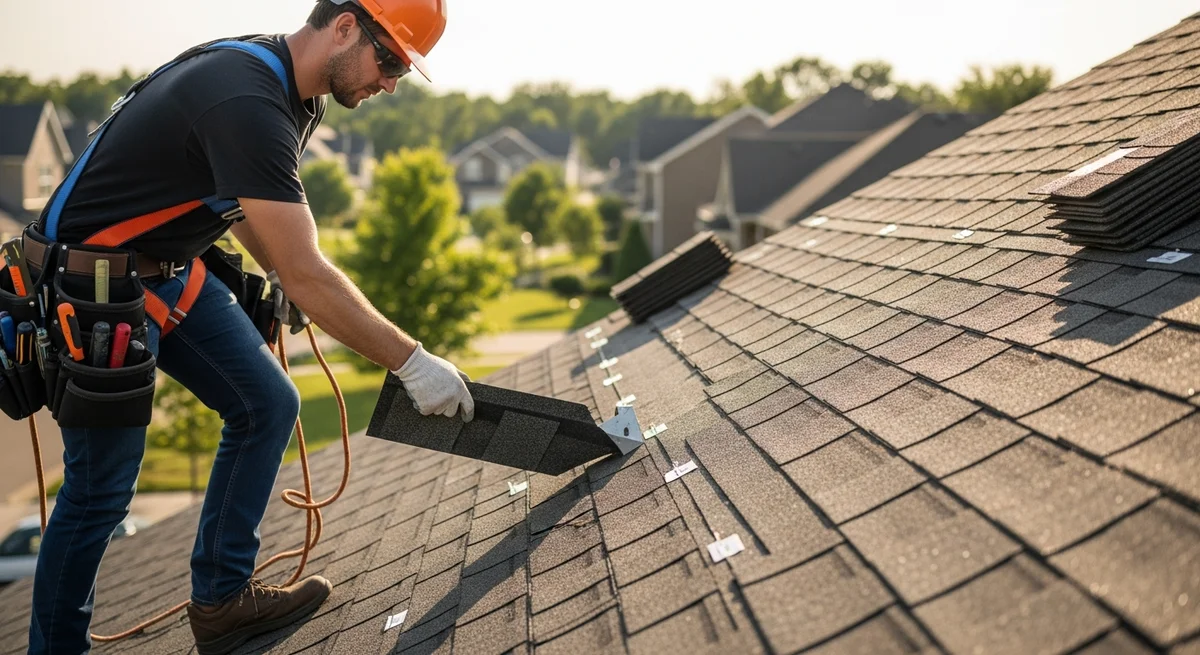
Asphalt shingles cover about 80% of American homes, making asphalt roof repair the most common roofing work out there. These shingles handle weather well when installed correctly, but they have predictable failure points you should understand.
Cracked and Split Shingles
Temperature swings cause shingles to expand and contract constantly. Over years, this thermal cycling creates cracks that start small and grow with each season. Hairline cracks can be sealed with roofing cement. Larger splits or multiple cracks in one shingle mean replacement is the better choice. Apply a thick bead of roofing sealant under the crack edges, press firmly together, then seal the top surface for good measure.
Curling and Cupping
Shingles curl in two directions. Cupping happens when edges lift while the center stays flat. Clawing occurs when the center rises while edges stay down. Both conditions expose your roof to wind damage and water infiltration. Minor curling can be addressed by carefully applying roofing cement under the lifted portions and pressing them flat. Extensive curling across multiple shingles signals it is time to consider replacement rather than spot repairs.
Missing Shingles
High winds are the usual culprit for missing shingles. The good news is that replacing individual shingles ranks among the simpler roof repairs. Slide a flat bar under the shingle above to break the adhesive seal. Remove the nails holding the damaged shingle (usually four to six nails). Slide a new shingle into position, nail it down, and seal the edges. Check our detailed guide on fixing roofing shingles for step-by-step instructions.
Granule Loss
Those tiny colored pebbles on your shingles do serious work protecting the underlying asphalt from UV rays. Granule loss shows up as bald patches on shingles and granules collecting in your gutters. Some granule loss is normal during the first year after installation. Excessive loss on older roofs indicates the shingles are aging out. Localized granule loss from hail damage can sometimes be addressed with spot repairs, but widespread loss means the roof is approaching the end of its useful life.
Fixing Roofing Shingles: Missing, Lifted, Cracked, Nail Pops
Each shingle problem has a specific fix. Understanding these techniques helps you evaluate what you can handle yourself and when to call roofing repair specialists.
Lifted Shingle Repair
A shingle that has lifted but is not damaged can often be reseated. Wait for a warm afternoon when the adhesive strips are pliable. Apply roofing cement under the lifted portion, press the shingle firmly into place, and weight it down temporarily with a brick or sandbag. The adhesive will cure and bond within a few hours of warm weather.
Cracked Shingle Repair
Minor cracks that have not separated the shingle can be sealed in place. Apply roofing cement under the crack to fill any gaps below. Apply another bead on top of the crack and spread it smooth. This creates a waterproof seal while avoiding the work of full shingle replacement.
Nail Pop Repair
Nails work themselves up over time due to wood expansion and contraction. A popped nail creates a bump that water can work around. Do not just hammer it back down. Instead, remove the popped nail entirely, drive a new nail an inch to the side of the old hole, and seal both the old hole and new nail head with roofing cement.
Roof Flashing Repair: Chimneys, Valleys, Skylights, Walls
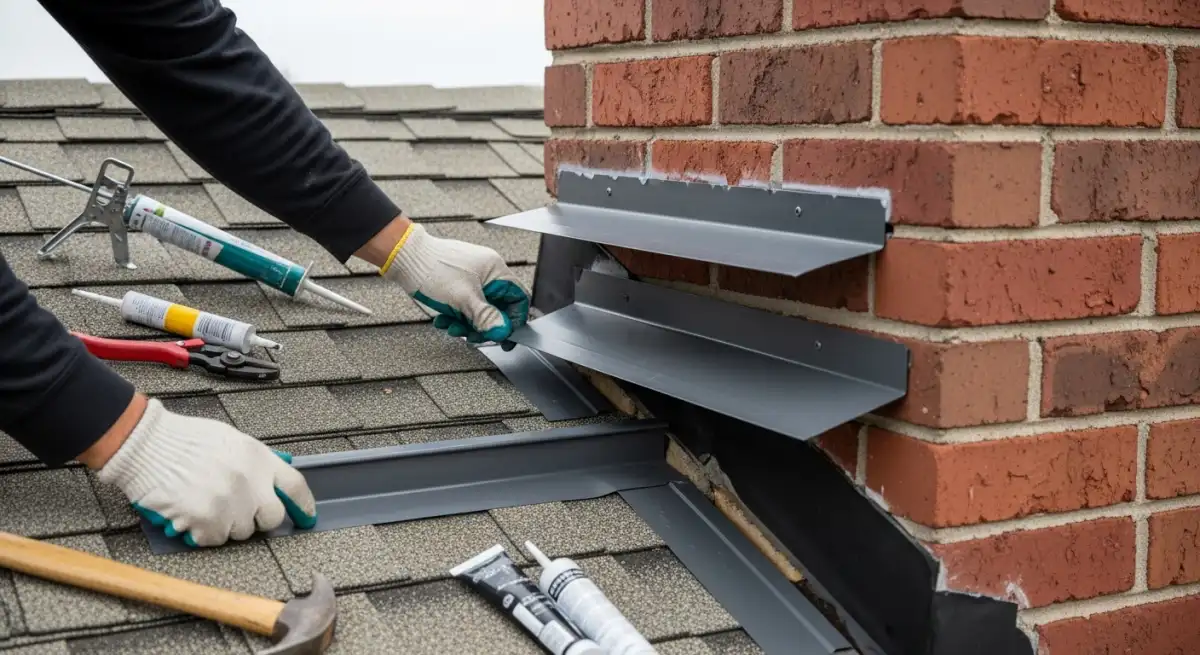
Flashing is the unsung hero of your roof. These metal pieces seal the vulnerable junctions where roof planes meet walls, chimneys, vents, and each other. Roof flashing repair prevents more leaks than any other single fix, yet homeowners often overlook it. For detailed techniques, check our complete guide on roof flashing repair.
- Chimney flashing involves step flashing along sides and counter-flashing embedded in mortar joints
- Valley flashing channels water where two roof planes meet
- Skylight flashing creates a watertight seal around roof windows
- Wall flashing protects where roofs meet vertical walls
- Vent flashing seals around pipe penetrations
Common Flashing Problems
Flashing fails for several reasons. Caulk and sealant dry out and crack over years of sun exposure. Metal rusts or corrodes, especially where dissimilar metals contact each other. Poor installation leaves gaps from day one. Thermal expansion and contraction work fasteners loose. Whatever the cause, failed flashing means water is getting where it should not go.
When to Reseal vs. Replace
If the flashing metal is still in good shape but the sealant has failed, scrape away the old caulk and apply fresh roofing sealant. Use a sealant rated for your climate zone and apply generously. If the flashing itself is rusted, bent, or separated from the roof, replacement is the only lasting fix. Chimney flashing repair is particularly important since chimneys are a common leak source.
Flat Roof Repairs: Ponding Water, Blisters, Seam Failures, Drains
Flat roofs repairs require different techniques than sloped roofs. These low-slope systems rely on membrane integrity rather than water shedding, making certain problems unique to flat roof construction.
Ponding Water
Water that remains on a flat roof 48 hours after rain indicates a drainage problem. Ponding accelerates membrane deterioration, adds structural weight, and creates leak opportunities. Improving drainage through additional drains, scuppers, or tapered insulation often solves the problem. Small areas of ponding can be addressed with roof coating products that build up low spots.
Membrane Blisters
Blisters form when trapped moisture or air expands under the membrane during hot weather. Small, intact blisters cause no immediate harm and are often best left alone. Large or broken blisters allow water infiltration and need repair. Cut the blister open, let it dry completely, apply adhesive, press flat, and patch over the cut with compatible membrane material.
Seam Failures
Flat roof membranes are joined at seams through heat welding, adhesive, or tape. These seams can separate over time due to membrane shrinkage, poor installation, or movement in the building structure. Seam repairs involve cleaning the area, applying primer, and installing new seam tape or adhesive. Extensive seam failures may indicate the membrane is reaching the end of its useful life.
Drain and Scupper Problems
Clogged drains cause ponding, which causes more problems. Keep drains clear of debris with regular cleaning. Check drain flanges for cracks or separation from the membrane. Scupper openings through parapet walls should slope slightly outward and remain unobstructed. Many flat roof leaks trace back to drainage issues rather than membrane failures.
Repair vs Replace: How to Decide
Every homeowner faces this question eventually. Understanding when repairs make sense and when replacement is the smarter choice saves money in the long run. Consider these factors when making your decision:
- Roof age: Asphalt shingles last 20 to 30 years. Repairing a 25-year-old roof buys time but does not reset the clock.
- Damage extent: Repairs work well when problems affect less than 30% of the roof surface.
- Recurring issues: If you have fixed the same area multiple times, underlying problems need addressing.
- Cost comparison: When repair costs approach 50% of replacement cost, replacement usually makes more sense.
- Future plans: Planning to sell soon? Major repairs may be wise. Staying long-term? Replacement provides better value.
Roof Repair Cost Factors (What Changes the Price)
Understanding what drives repair costs helps you budget realistically and evaluate contractor quotes. Several variables affect the final number:
Damage Severity
A few missing shingles cost far less to fix than a section of rotted decking. Surface repairs stay affordable. Structural repairs involving decking replacement, rafter repair, or insulation work jump into a different price category entirely.
Roof Accessibility
Steep pitches require additional safety equipment and slow down work. Multi-story homes need longer ladders and sometimes scaffolding. Complex roof designs with multiple valleys and dormers take more time than simple gable roofs. All these factors affect labor costs.
Material Costs
Matching existing materials sometimes means premium pricing. Architectural shingles cost more than three-tab. Metal flashing costs more than rubber alternatives. If your roof uses specialty materials, expect higher repair prices.
Regional Labor Rates
Roofing labor rates vary significantly by location. Urban areas typically cost more than rural. Areas with strong construction demand see higher prices. Get multiple quotes to understand your local market.
How to Prevent Repeat Leaks (Maintenance Checklist)
The best repair is one you never need. Regular maintenance catches small problems before they become expensive emergencies. Follow this seasonal checklist to keep your roof in top condition:
Spring Inspection
Check for winter damage after the last freeze. Look for loose or missing shingles, damaged flashing, and debris accumulation. Clean gutters and downspouts. Check attic ventilation for any blockages.
Summer Maintenance
Trim tree branches that overhang the roof. Check for signs of heat damage like excessive granule loss or blistering. Ensure attic ventilation is working to reduce heat buildup.
Fall Preparation
Clear leaves and debris before winter. Clean and inspect gutters thoroughly. Check flashing seals around all penetrations. Repair any damage before cold weather makes work difficult.
Winter Monitoring
Watch for ice dams forming at eaves. Check for icicle formation that indicates heat loss. Remove heavy snow accumulation if it exceeds local building code requirements. Avoid walking on frozen shingles.
When to Call a Professional
Some repairs belong in professional hands. Consider calling a trusted roofing contractor when you encounter:
- Damage affecting more than 25% of the roof
- Active leaks you cannot trace to the source
- Steep roof pitches (greater than 6:12 slope)
- Structural damage to decking or rafters
- Flashing repairs around chimneys or skylights
- Any work on roofs over 20 years old
- Situations where warranty coverage matters
Professional roofers bring experience, proper equipment, and insurance coverage that DIY repairs lack. They spot hidden problems that homeowners miss. For significant repairs, the investment in professional work pays off through better results and lasting solutions.
Local Roof Repair Resources
Every region has unique roofing challenges. Check out our local guides for area-specific information:
- Columbus Roof Repairs - Midwest weather patterns and emergency repair steps
- Dayton Roof Repair - Emergency checklist and repair vs replacement guidance
- Roof Repair Reston VA - Northern Virginia specific roofing solutions
Frequently Asked Questions
How much does asphalt roof repair cost?
Asphalt roof repair typically costs $150 to $1,000 depending on the extent of damage. Minor shingle repairs run $150 to $400, while larger repairs covering multiple sections can reach $600 to $1,000. Factors like roof pitch, accessibility, and hidden damage affect the final price.
Can I repair roof flashing myself?
Simple flashing repairs like resealing edges can be done by experienced homeowners. However, replacing step flashing around chimneys or fixing valley flashing requires professional expertise. Improper flashing repair often causes bigger leaks than the original problem.
How long do flat roof repairs last?
Quality flat roof repairs typically last 5 to 15 years depending on the repair type and materials used. Patch repairs have shorter lifespans than seam restorations or coating applications. Proper drainage and regular maintenance extend repair longevity significantly.
Should I repair or replace my roof?
Repair makes sense when damage affects less than 30% of the roof and the structure is under 20 years old. Replace when damage is widespread, the roof shows multiple failure points, or repair costs approach 50% of replacement cost. A professional inspection provides the clearest answer.
What causes roof leaks most often?
The most common leak causes are damaged flashing (40%), missing or damaged shingles (25%), clogged gutters causing water backup (15%), and age-related deterioration (20%). Storm damage accelerates all these issues. Regular inspections catch problems before they become expensive repairs.
Need Professional Roof Repair?
Whether you are dealing with a small leak or major storm damage, our team provides expert assessment and lasting repairs throughout Northern Virginia. We handle asphalt roof repair, roof flashing repair, and flat roofs repairs with the skill and attention your home deserves.
Schedule Your Free Inspection