EPDM in Sterling: one wide rubber sheet for porch, dormer and garage roofs
EPDM is the simple, repairable choice for small flat roofs on Sterling houses. Here is what a wide rubber sheet does well, what Loudoun's winter numbers mean for it, and where it does not fit.
Winter first: what a Sterling flat roof has to carry
Loudoun County posts a design ground snow load of 30 psf, a residential design wind speed of 115 mph and a frost depth of 24 inches, all under the 2021 Virginia code with no local amendments listed. The National Weather Service table for Dulles shows a 1991 to 2020 normal of 21.0 inches a season, a record of 73.2 inches in 2009 to 2010, and 11.7 and 15.5 inches in the last two full seasons. Dulles is a regional station, not a Sterling reading.
One Loudoun permit record from April 2026, for a house in the Sterling Park area, describes a porch roof damaged in the last snowstorm and rebuilt. It is a single owner-written description, not a trend. Still, it shows what small flat roofs go through: snow sits longer on them, and meltwater has to find a drain.
Why a wide sheet suits a small roof
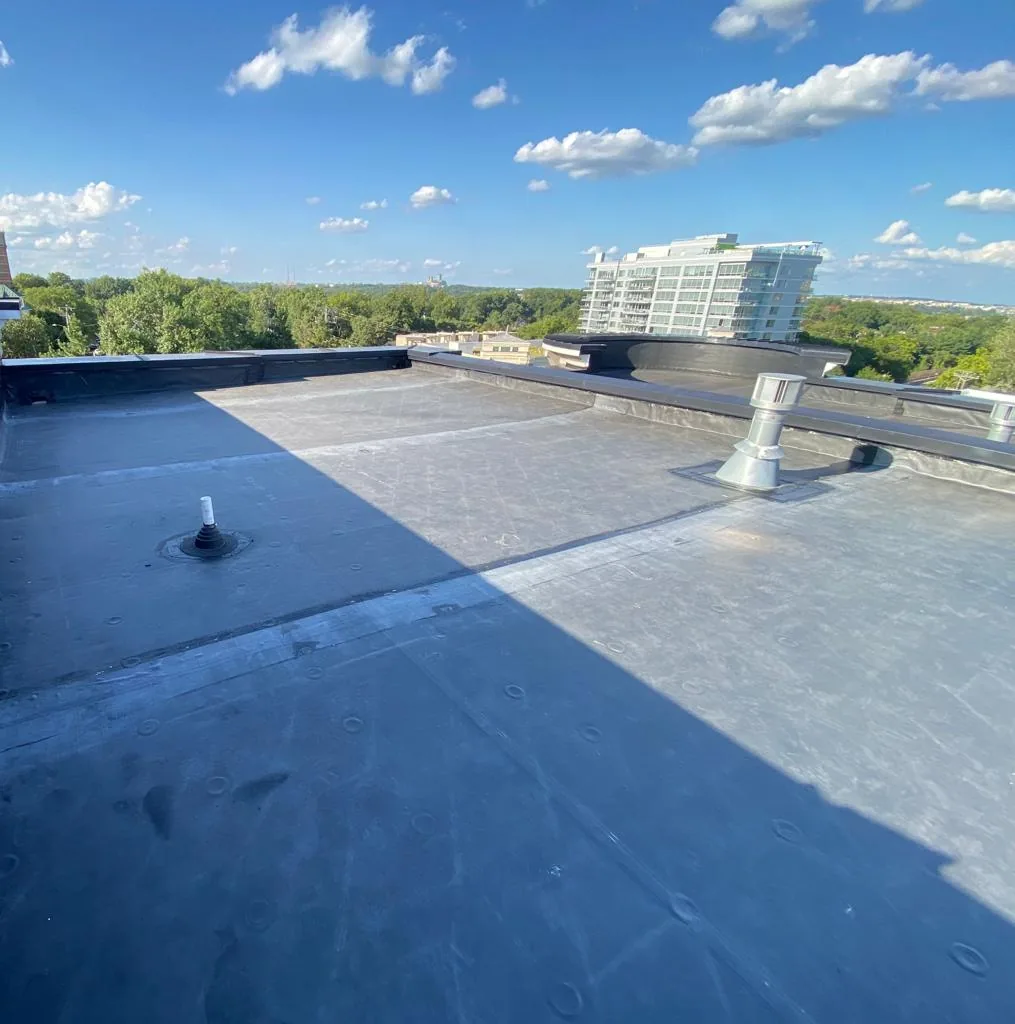
EPDM is cured rubber, not plastic, so it is never heat-welded. Seams are made with primer and tape or splice adhesive. The trick on a small roof is to avoid seams altogether: one maker lists rolls from 7.5 up to 50 feet wide and 100 feet long, and another sells sheets to 10 feet wide with factory-applied seam tape. A sunroom or dormer top can often be covered in a single piece, and that leaves only the edges and the wall flashing to get right.
Where EPDM roofs go wrong
- Seams made over dust, damp or talc from the sheet, which is why seam prep matters more than the brand.
- Shrinkage at the edges. A typical maker figure is about half a percent for 45 mil sheet, so terminations and flashings are built to allow for it.
- Fats, oils and petroleum products on the surface, which makers say to keep off the sheet.
- Punctures in thin sheet, usually from branches or a ladder foot.
Four kinds of Sterling building, four EPDM questions
The 1960s and 1970s houses
Sterling Park, started in 1961 and sold from 1963, anchors the older end, and the census counts 1,541 homes from the 1960s and 2,653 from the 1970s across the census place. Park View High School on West Laurel Avenue serves that area. Rear additions and enclosed porches on houses this old tend to hide framing questions, so a corner is worth opening before anyone quotes.
Colonials from the 1980s
Countryside was built mostly between 1981 and 1991 in colonial style, according to a general reference, and its census median is 1986. Garage tops and porch roofs on a colonial are the usual candidates for rubber, and a roof under branches needs its drain checked first.
Attached homes in Sugarland Run and Cascades
Both are separate census places with about 38 percent attached homes. The Sugarland Run association's Architectural Review Committee requires an application before roof replacement, so the sheet color and the plan go to it first. For Cascades, ask the association before work starts.
Newer homes in Lowes Island and Dulles Town Center
Lowes Island's census median year built is 1997 and Dulles Town Center's is 2004. A flat roof that young and already leaking usually points to a detail, such as a wall joint or a vent boot, so a leak hunt makes more sense than a replacement quote.
Two typical Sterling EPDM projects
A sunroom addition on a 1970s house
The roof is about 10 by 15 feet, and rolled roofing along the siding wall has lifted where a downspout from the main roof dumps onto it. We would strip the old covering, check the wall corner for rot, add a splash path for the downspout, and lay one adhered EPDM sheet with new flashing up the siding. The owner sees a photo of the framing before it is covered.
A flat-topped dormer on a 1980s colonial
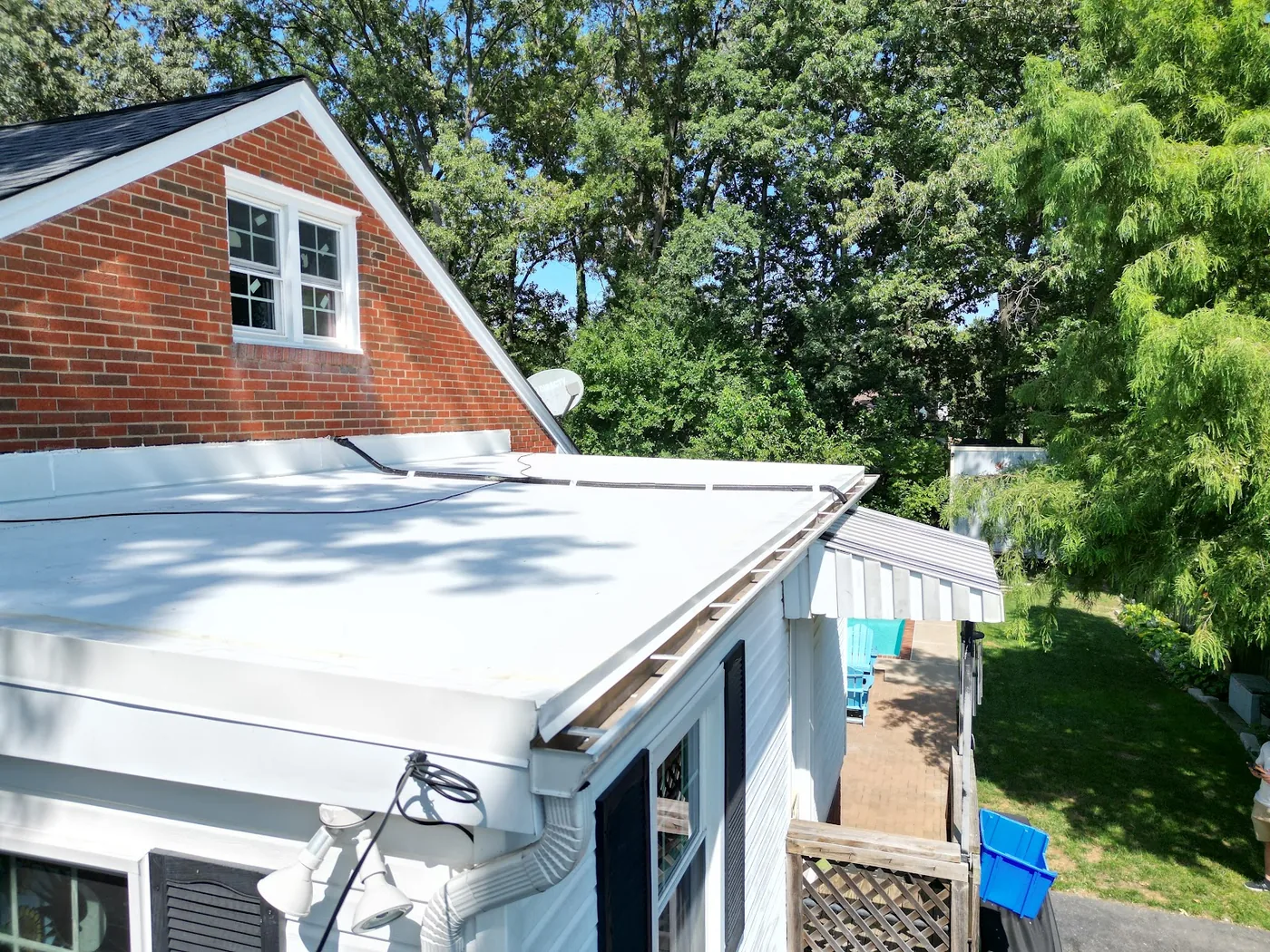
The dormer top is only about 6 by 10 feet, and the patch on it fails every other winter. We would replace the surface with a single sheet, rebuild the step flashing at the cheeks, and note the age of the main-roof shingles beside it, since matching a repair to a roof near its end can save a second tear-off at the joint.
When we would steer you elsewhere
- Grease, animal fat or petroleum will reach the roof: PVC or a chemical-rated sheet is the better call.
- The plane is steep and visible from the street: shingles or metal.
- Heavy, regular foot traffic and no wish for walk pads: a thicker sheet of TPO or a heavier EPDM gauge deserves a look.
- The substrate has sharp edges or deep voids, which must be corrected first; makers ask for a clean, dry, smooth deck.
Permits: Sterling answers to Loudoun's Department of Building and Development, whose pages say nothing about re-roofing. State code exempts replacing roof covering on houses, but not roof decking beyond 256 square feet, so we confirm your scope with the county before starting. See the roof leak repair guide and the guide to flat roof repairs.
Frequently Asked Questions
Loudoun designs for 30 psf of snow. Does that decide whether EPDM works on my porch roof?
Not directly. The 30 psf ground snow load is a structural design figure for the framing under the roof, while the rubber itself stays flexible in cold: one maker says its sheet remains flexible to minus 40 degrees Fahrenheit. On an older addition the real question is whether the rafters and decking are sound. That is checked from below or from an attic hatch, not from the street.
Is a black rubber roof a poor choice for a house with air conditioning?
It is a judgment call. Standard EPDM is black, and standard black sheet does not meet the ENERGY STAR reflectance bar. White EPDM exists, with one product listing 0.77 initial reflectance. One maker argues that a dark sheet helps in colder climates, which is a manufacturer claim, and Sterling has real winters and real summers. For a small porch roof the effect is modest, so color often comes down to association rules and looks.
Can a leaking rubber roof over my sunroom be patched instead of replaced?
Sometimes. Small punctures and open seam edges are repaired with primer, patch and seam tape on a clean, dry surface. Whether that is worth doing depends on the sheet's age, how many seams are failing and whether the insulation below is wet. A moisture survey answers the last part. Patching over wet board only delays the real repair.
Does 45 mil versus 60 mil rubber matter on a small roof?
A little. Makers sell both 45 and 60 mil, and one also sells 90 mil, which it uses for its 30 year guarantee tier. Thicker sheet weighs more and resists punctures better, which matters where branches drop or someone walks to a roof hatch. A dormer flat top that nobody visits may be fine at 45 mil. A garage roof under shedding trees is a better candidate for the heavier sheet.
How long do EPDM roofs really last?
The numbers come from interested parties. One maker offers guarantee terms of 15 to 30 years, with 90 mil sheet for the longest. The EPDM Roofing Association, a trade group, cites an expected 38 years for well-installed, maintained roofs and reports 17 to 32 year old samples still watertight. Treat all of it as a published range, not a promise.
Rubber roof visits from Sterling Park to Cascades Parkway
Reston Roof, based in Reston, visits Sterling Park, Countryside and the Cascades Parkway side, and reaches addresses near Route 28 and Route 7 as well. Claude Moore Park on Old Vestal's Gap Road is a park, not a neighborhood, so give us a street address and we will do the parcel lookup. The service areas page lists the rest.
Porch, dormer or garage roof giving trouble in Sterling?
Send us the rough size, the age of the roof and what the surface looks like today. We will say whether EPDM fits. Call (571) 453-6515.
Book a Phone Consultation