PVC Roofing in Reston, VA: For Roofs That Get Greasy, Crowded or Chemical
PVC is not the default flat roof. It fits a short list of Reston roofs, usually the ones below a kitchen exhaust or covered in pipes and curbs. This page helps you work out whether yours is one of them.
Three Tests That Decide Whether PVC Makes Sense
Test one: what lands on the roof? Cooking grease, oils and some chemical exhaust are hard on certain membranes. PVC makers describe their sheets as resistant to oils and grease, and one maker lists enhanced chemical resistance. The word is resistant, not immune, and it depends on the exact product and exposure, so we read the maker's chemical chart against what you actually have.
Test two: how crowded is the roof? Vents, curbs, conduit and units mean many details, and details are where flat roofs usually leak. Prefabricated accessories help there.
Test three: what is already up there? Old rubberized asphalt or similar flashing compounds can pull plasticizers out of PVC, so the existing roof gets identified before anything is ordered.
If none of the three applies, the TPO page or EPDM page may describe a simpler answer.
Talk to Reston Roof
Phone ConsultationWhere Reston's Busy Rooftops Are
Reston Town Center, whose first four blocks opened in 1996, mixes a hotel, restaurants, a cinema and offices. Restaurant kitchens exhaust onto roofs, and that is the classic PVC question. Lake Anne's plaza has mixed commercial-residential buildings, though Lake Anne Village Center is a County historic overlay district, so design and color choices there start with a call to the County. Along roads such as Sunset Hills Road and Sunrise Valley Drive, larger buildings are common, and the Wiehle-Reston East station on the Silver Line sits in the same Dulles Toll Road corridor.
Reston has roughly 14,000 homes in buildings of five or more units, including about 6,900 in buildings of 50 or more. Roofs on buildings that large are rarely one owner's decision, and they are often full of penetrations. Shape and construction vary building by building, so the first step is a walk on the roof itself.
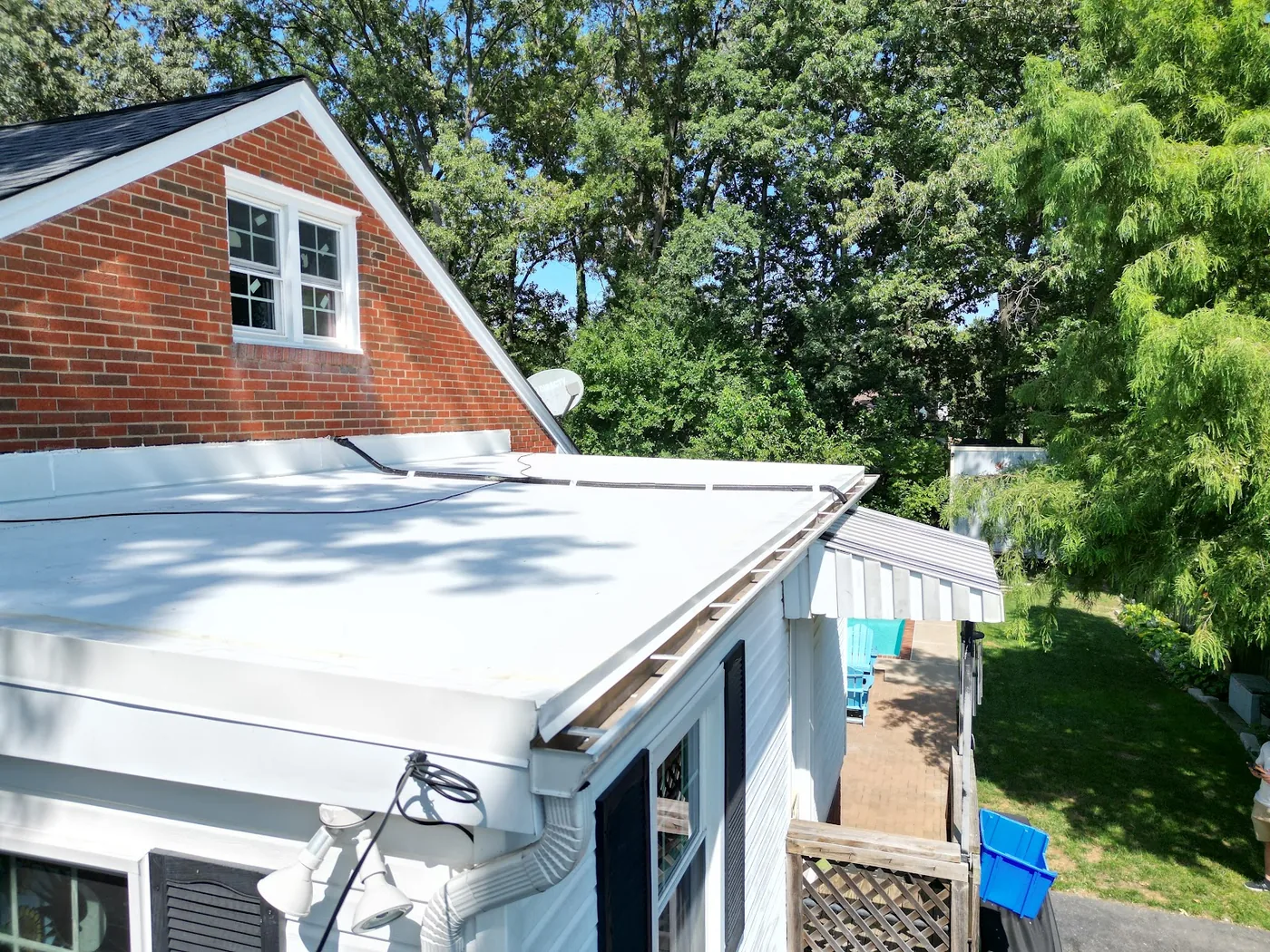
What We Walk the Roof For
- Exhaust fans and where their discharge lands, and what is stained or softened below them.
- Every penetration, curb and pipe boot, counted and photographed.
- Old flashing compounds, patches and mastics, and whether any contain rubberized asphalt.
- Drains and scuppers, and whether water is still sitting a day or two after rain.
- Access: ladder or hatch, hoisting space, and the delivery route from Reston Parkway or Wiehle Avenue to the loading spot.
- What the building's staff already do to the roof: smoking areas, storage, foot traffic to equipment.
After the walk, we write down what we found and what we recommend, including when the answer is a different membrane. A single-ply roof stays watertight partly through habits. One maker recommends checking flashings, drains and sealants at least twice a year and after each storm, a sensible rhythm for any single-ply roof.
When PVC Is the Wrong Choice
PVC is the wrong choice when its contact list is wrong: rubberized asphalt without separation, and any material the maker warns against. It is also wrong when a plain roof with no exposure can be done well with something simpler. And it is not for steeper roofs that the street can see, where shingles or metal belong.
Manufacturer warranties vary by system, and any warranty depends on the maker's components and details. Ask for the terms in writing before work starts.
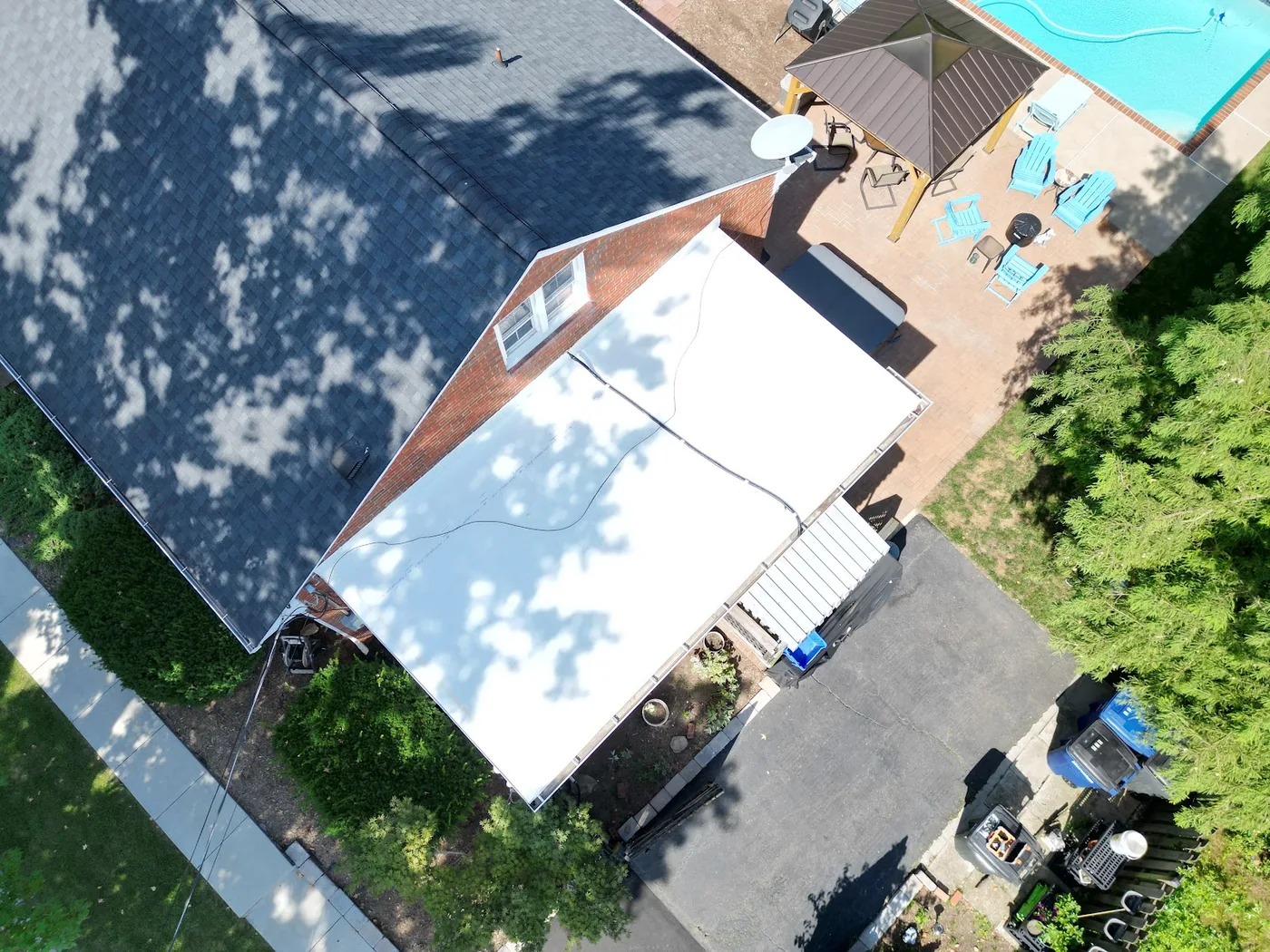
Two PVC Roofs in Reston Terms
A 1980s retail building with a restaurant tenant, near Baron Cameron Avenue. Grease from the kitchen fan has left a film on the old roof near one corner, and the membrane there has softened. We would check the maker's chemical chart for the exhaust, replace the affected area and the insulation under it, and weld a PVC sheet with prefabricated boots around the penetrations. Because the replacement is far beyond 100 square feet, we would settle the permit with Land Development Services first. The owner sees a written scope and photos of the removed insulation.
A 1970s condo building off Sunset Hills Road. The roof has more than a dozen vents and pipes, and the leaks cluster at them. We would count and photograph each, identify any rubberized asphalt flashing and separate it from the PVC, and replace the membrane section by section so the building stays dry. Before a permit application, we would also ask the County whether the asbestos inspection rule for pre-1985 buildings applies. The board sees a plan that explains the order of work and who to call on the day.
Frequently Asked Questions
How do I know whether my building's kitchen exhaust rules out TPO or EPDM?
Start with what actually lands on the roof. Maker guidance says to keep grease, fats and oils away from EPDM, while one TPO maker states resistance to restaurant exhaust for its own sheet, and PVC makers describe their sheets as resistant to oils and grease. Results depend on the product and the exposure, so we read the maker's chemical chart against your exhaust before recommending any membrane.
Can PVC go over old rubberized asphalt flashing on my roof?
Not without separation. One maker states that rubberized asphalt can pull plasticizers out of flexible PVC, which can leave the membrane brittle and prone to cracking, and the fix is to isolate the two with metal or a compatible sealant. On roofs with old patches, mastic or flashing compounds, we identify what is there first. Any contact with polystyrene insulation or bitumen is something we confirm with the maker.
Is PVC overkill for a Reston condo roof with no restaurant?
Often, yes. If the roof has no grease exposure and few penetrations, TPO or EPDM may meet the need. PVC fits roofs crowded with vents, curbs and pipes, where prefabricated boots help, or where chemical exposure is real. We tell owners when a simpler membrane is the better value for their roof, and the decision in a condo building usually sits with the association or board.
How often should a PVC roof be inspected, and who does it after the job?
One maker's data sheet recommends checking flashings, drains and termination sealants at least twice a year and after each storm, which is a sensible rhythm for any single-ply roof. You can ask us about periodic roof checks. Between visits, building staff can clear leaves and trash from drains and report any ponding or torn flashing they see from the access hatch.
Does an older Reston building need an asbestos check before a re-roof permit?
Fairfax County's asbestos form says the inspection requirement applies to buildings built before 1985 and does not apply to single-family dwellings or housing of four or fewer units unless the work is for commercial or public development. Whether it applies to a roof-only permit on a particular building is something we confirm with Land Development Services, because the form does not say.
Related Services
Other membranes and Reston pages to compare:
PVC pages for nearby communities:
Unsure whether grease rules out your membrane?
Tell us what vents onto the roof and what the roof is made of now. We will point you to the membranes that fit and the ones to avoid. Call (571) 453-6515.
Book a Phone Consultation