TPO roofing in Oakton: for the flat part of the roof, not the whole house
Most Oakton roofs are pitched, and TPO is the wrong tool for those. It is a white, heat-welded sheet meant for flat or nearly flat roofs: the rear section of a townhouse, a bump-out over a family room, a porch, a garage or the low roof of a small building. This page covers where it fits in Oakton, where it does not and who reviews the work.
Which flat roof are you looking at? Start here
- A townhouse with a flat rear or middle section. TPO is a strong candidate, and the first thing we look at is the deck underneath. About 28 percent of Oakton homes are attached, and the county treats fire-rated townhouse roof decking as one of its permit triggers.
- A condo or apartment building. The roof belongs to the association, and the board decides. About 35 percent of Oakton homes are in buildings of five or more units. TPO is worth considering for these roofs, but if a kitchen or other exhaust vents onto them, read our PVC page first.
- An addition on a house from the 1970s or 1980s. The median Oakton home dates from 1983, and the 1970s are the largest decade at roughly 31 percent. Sunrooms and family-room additions from those years may have a small flat roof wearing an old membrane, and TPO often fits.
- A pitched roof you see from the street. Not TPO. A single-ply sheet is a low-slope system, so look at metal or shingles instead.
- A roof where water sits for days. Fix the drainage first. A new sheet laid over a pond is still a pond.
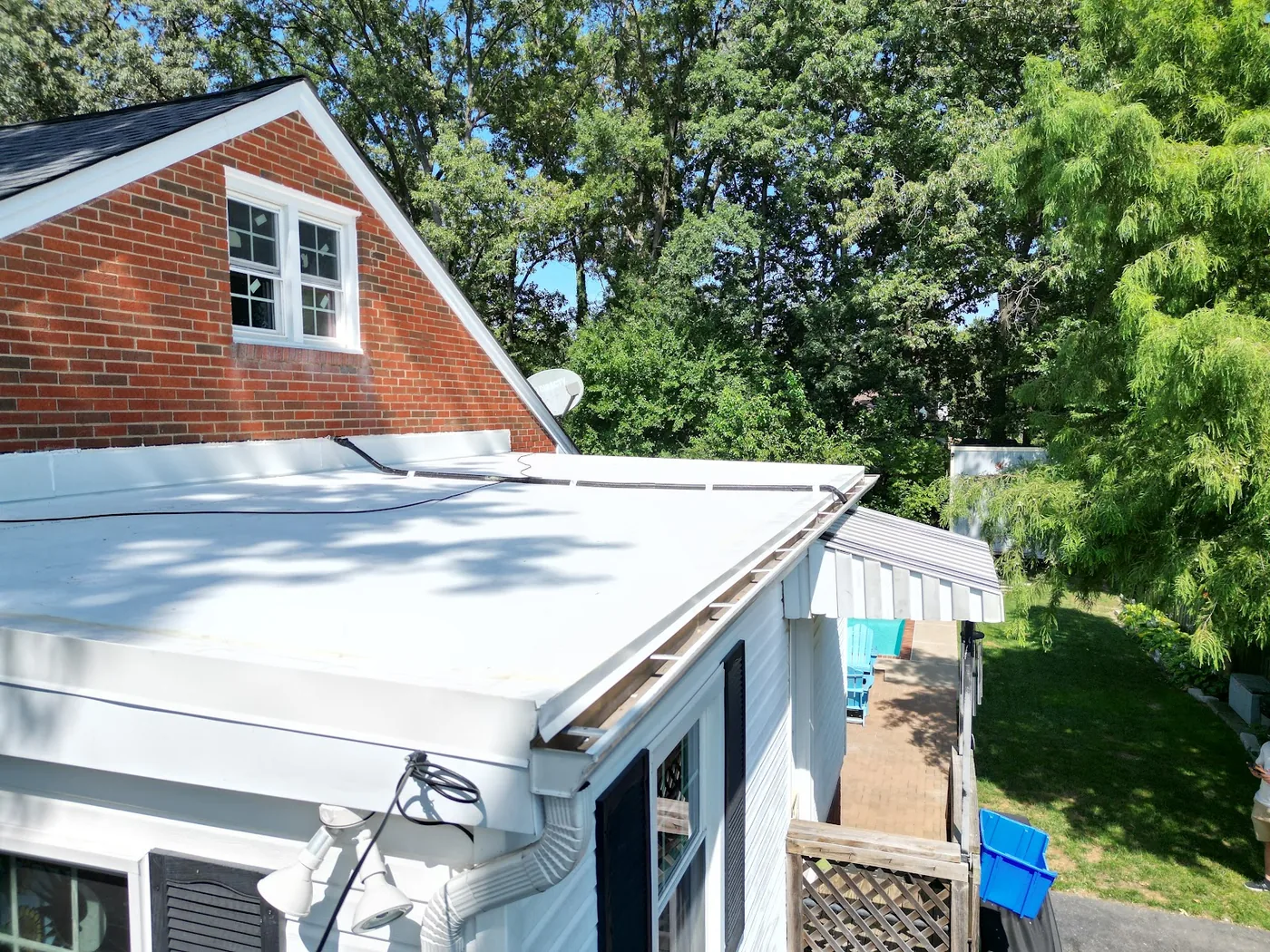
Where the flat roofs are, and how we reach them
Oakton is an unincorporated community of about 36,700 people in Fairfax County, and its housing splits almost three ways: roughly 35 percent detached houses, 28 percent attached homes and 35 percent units in buildings of five or more. Flat membrane roofs are more likely in the last two groups, plus the porches and additions on houses. Roof age shows only on the roof, so it gets checked by opening it and looking.
We get to these roofs the way residents get everywhere: Chain Bridge Road, which is Route 123 through Oakton, then Blake Lane, Jermantown Road or Sutton Road, with Interstate 66 and the Waples Mill Road overpass nearby. Neighborhood names include Oakton Mill Estates, a wooded community of about 80 single-family homes, and English Oaks near Hibbard Street off Blake Lane. Each roof in either is read as it is, not assumed from the neighborhood.
Two typical Oakton TPO projects
A townhouse rear section over a kitchen bump-out
The flat roof is about 160 square feet and butts up against a brick wall. The old membrane has blistered, and a stain appears on the kitchen ceiling after hard rain. We would cut a small test square to see whether the insulation is wet, note what the deck is made of and whether it is fire rated, and remove anything soaked. Tapered insulation would carry water to the scupper, a 60 mil sheet would be adhered, and the edges would be welded and flashed up the wall. The owner sees photos of the bare deck before it is covered, and receives the maker's data sheet and a written scope.
A flat sunroom roof on a 1980s colonial
The roof is about 350 square feet, with one skylight and a single drain that clogs with leaves from the wooded lot. Wet insulation around the skylight curb has softened the edge of the deck. We would replace the damaged deck and insulation, raise the curb flashing, set a prefabricated corner at the skylight and weld a 45 mil sheet, since nobody walks there. A larger drain strainer goes in, and the owner gets a note to clear it each fall.
Three TPO details we explain before you sign
- Thickness is a real choice. TPO comes in 45, 60 and 80 mil. Thicker sheets test tougher against punctures in the lab, and at some makers a longer guarantee term goes with them. A quiet porch roof can use less than a roof people cross to reach equipment.
- Water should leave within about 48 hours. Roofing trade guidance treats ponding past that mark as a drainage problem, and makers differ on whether it affects the guarantee. That clause is worth reading before you sign.
- White is optional. Listing as ENERGY STAR is product specific, so we name the exact sheet and color, and we never describe all TPO that way.
Who reviews a TPO roof here
Oakton has no town or city government. Fairfax County Land Development Services is the building official, even when your mailing address says Vienna or Fairfax. County guidance lists replacing roof shingles as work that needs no building permit, but roof repairs, chimney repairs and solar panels appear on its permit list. Replacing a flat membrane is a different job from swapping shingles, so confirm your exact scope with the county before work starts.
Inside the Town of Vienna the county remains the building official while the Town reviews zoning. No Fairfax County Historic Overlay District carries the name Oakton, but whether a given parcel sits inside an overlay is a question for the county, so check the parcel instead of assuming. Our Fairfax County roofing permits guide covers the county side, and flat roof maintenance explains the yearly checks.
Frequently Asked Questions
Does the flat section of my Oakton townhouse need a permit before TPO goes on?
It might. County guidance lists replacing roof shingles as work that needs no building permit, but it names roof repairs as permit work, and fire-rated roof decking, which can apply to townhouses, can bring a permit too. A membrane replacement is not a shingle swap, so we describe your exact scope to Fairfax County Land Development Services and pass along what they say before we begin.
My mailing address says Vienna. Who reviews a TPO job on my roof?
Parcel location decides, not the mailing city. Oakton is unincorporated Fairfax County, and many Oakton houses carry Vienna or Fairfax addresses, so the county is usually the office that matters. If your lot is inside the Town of Vienna, the county is still the building official and the Town reviews zoning. We check the parcel before we quote.
Is white TPO worth choosing for a rear addition in Oakton?
Often, but it is a choice rather than a rule. Some white and tan TPO products are ENERGY STAR listed, though listing is product by product and a gray sheet can fall short. Virginia's 2021 energy code does not require a cool roof in Fairfax County's climate zone. On a shaded addition under trees the benefit is smaller.
Which TPO thickness suits a flat roof I step onto to service an air handler?
Lean toward the thicker end. TPO is sold at 45, 60 and 80 mil, and the thicker sheets post higher puncture figures in lab tests. A lab number is not field immunity, so we also lay walk pads along the path to the equipment and keep tools and ladders off bare membrane. A roof nobody walks on can use a thinner sheet.
Can a new TPO sheet go over my old flat roof, or must the old one come off?
Sometimes it can stay, but not always. The residential code does not allow a recover over a roof that is water-soaked or that already carries two or more coverings. A membrane also traps moisture below it, so we test the old roof first and follow the maker's recover rules. If the insulation is wet, it comes out.
Nearby places we also answer from
We field TPO questions from Oakton and the places around it: Vienna to the east is an incorporated Town where the county is still the building official, Fair Oaks to the west and Wolf Trap to the north are unincorporated county ground, and the City of Fairfax to the south keeps its own permit office. Send a few photos of the flat section first if that is easier. Our service area page lists the rest.Flat section leaking over a bump-out?
Send the street, the approximate size of the flat part and a photo of the ceiling stain and the roof edge. We will say whether TPO is the right sheet or whether another material suits it better. Call (571) 453-6515.
Book a Phone Consultation