PVC Roofing in Annandale, VA: A Specialist Sheet for a Few Specific Roofs
Here is the straight answer first: most houses in Annandale do not need PVC. It is worth a look for roofs with exhaust, crowded penetrations, or several units under one membrane. This page explains which roofs those are.
What We Look at on the Roof Before Suggesting PVC
- Where exhaust lands. A kitchen or dryer vent that blows onto the roof is the strongest argument for PVC.
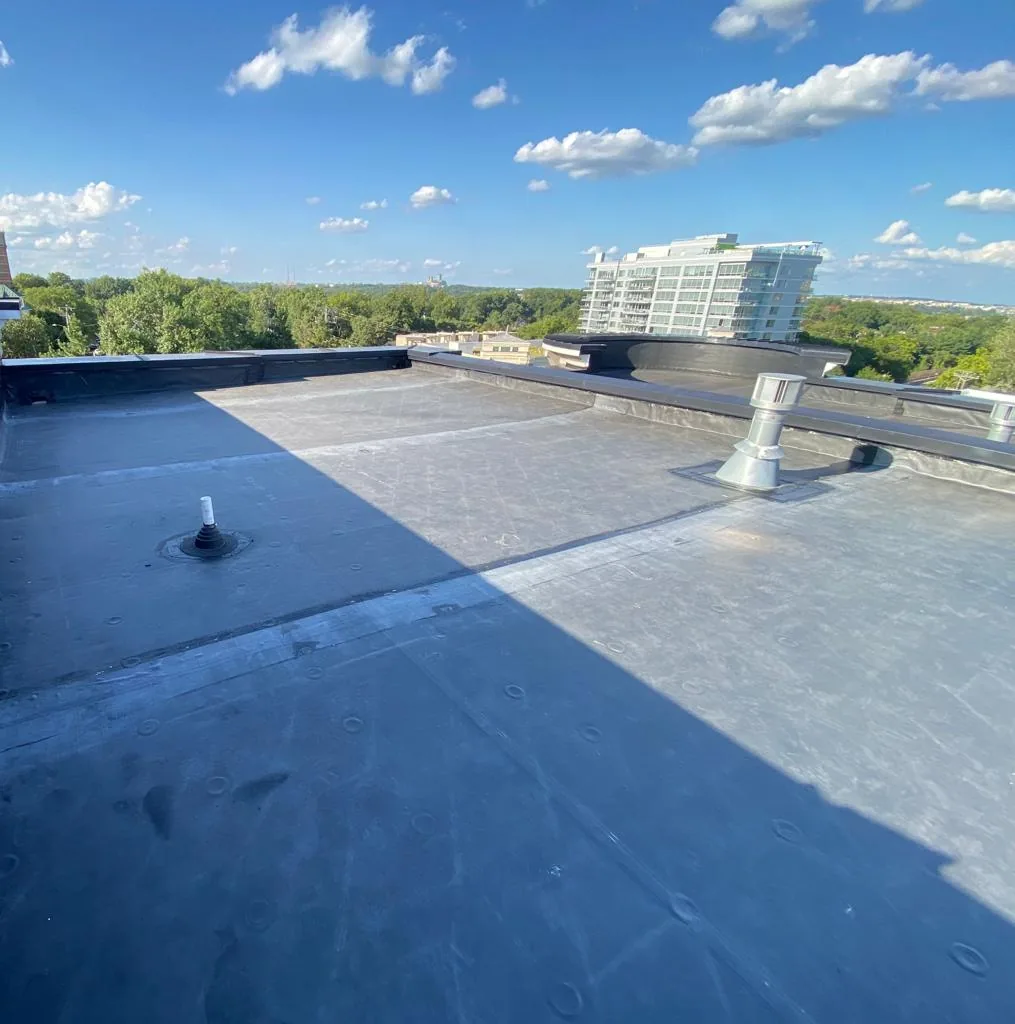
- How many things poke through. Many pipes, curbs and units in a small area make field flashing tedious.
- What is touching the old roof. Rubberized asphalt or tar-based flashing nearby is a problem for PVC unless it is separated.
- How many layers are there. Two old layers or wet insulation means a tear-off, whichever sheet follows.
- Who owns the roof. A single owner decides quickly. A condominium board needs documents and a vote.
Talk to Reston Roof
Phone ConsultationThe Buildings With Several Units Under One Roof
The census survey for Annandale shows about 31 percent of its 14,474 homes, roughly 4,500, in buildings of five or more units. The largest group is buildings of 10 to 19 units, with about 2,300 homes, and about 780 more sit in buildings of 50 or more. The county's planning description of the area, as we have it, places garden-style apartments and condominiums near the Annandale commercial center, which sits where Little River Turnpike, Columbia Pike and Backlick Road meet.
For a manager or board, the practical questions are who owns the membrane, whether leaks can be traced to a unit, and whether the building has one roof or several levels. Have those answers ready for the first call, because they decide how a proposal is written. Access matters too: a hoist or a truck for materials on a site off Braddock Road or Gallows Road needs a plan for parking and for residents' cars.
Three Facts About PVC That Shape Our Advice
It can lose plasticizer. PVC is a plasticized sheet, and one maker warns that rubberized asphalt can draw plasticizers out of it, leaving it brittle. The fix is separation with metal or a compatible sealant. On an older building whose roof was patched with black mastic, we look at every flashing before ordering anything.
It wants to be looked at. One maker recommends inspecting flashings, drains and termination sealants at least twice a year and after each storm. For a managed building that is easy to schedule and log.
It can be built in a shop. Some makers fabricate custom sections with welded seams, so fewer seams are made on the roof. Thickness runs from about 40 to 80 mil depending on the maker. Makers publish guarantee terms up to 25 or 30 years in some lines, and those are terms, not life expectancies.
Two PVC Roofs, Described as Typical Jobs
A 12-unit garden building from the 1960s. The low roof has a dozen plumbing vents, a few exhaust fans and two stair-tower curbs, and the board has been patching leaks for years. We would survey the roof for wet insulation, tear off failing layers, and talk to the board about prefabricated PVC sections with factory-welded seams. The manager sees a numbered plan of the roof, photos of any wet areas and a written scope to put to the board.
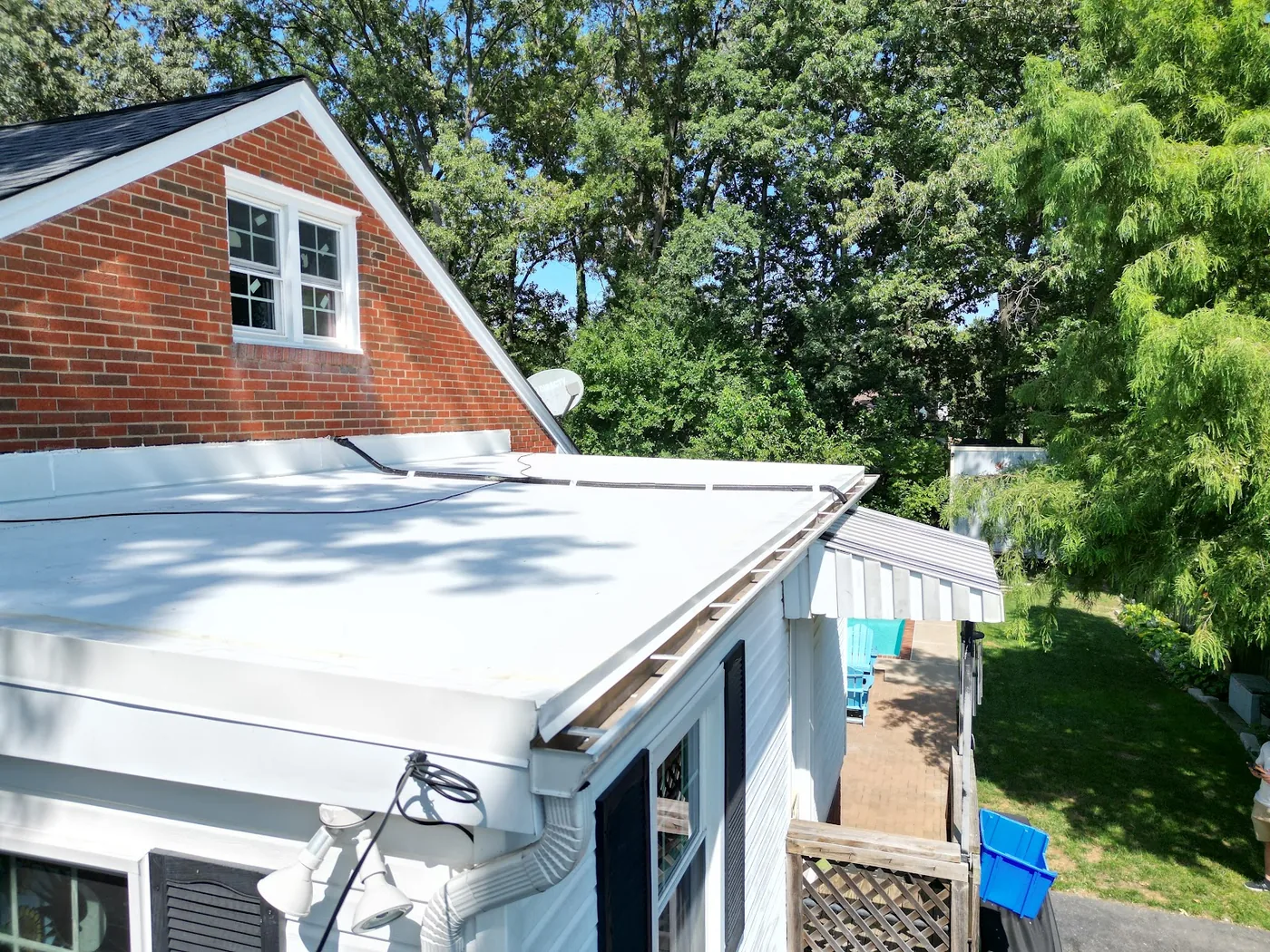
A detached house with a flat roof over a rear kitchen addition. The range hood vents through the roof and has left a greasy film around the pipe. A rubber sheet is the wrong match for that exposure. We would flash the vent with a boot made for the membrane, weld a white PVC sheet over a dry deck, and show the owner the maker's chemical resistance data for that exposure before choosing.
Where PVC Does Not Fit
- A plain low-budget flat roof with no exhaust. TPO or EPDM may serve as well, and we would say so.
- Grease immunity. PVC does not have it. One maker says its PVC is inherently resistant to oils and grease, and another says enhanced chemical resistance. Resistance depends on the chemical and the exposure.
- Steep roofs. A membrane is a low-slope system. A house roof with a pitch is better done in shingles or metal.
- Ponding. Water that stays for days is a drainage fault, and the sheet cannot fix it.
Permits for Larger Buildings
Annandale is unincorporated, so Fairfax County Land Development Services is the building official. State rules exempt replacing unlimited roof covering only for houses and townhouse-type buildings, and then with a design wind condition we leave to the county to confirm. For other building types the exemption stops at 100 square feet, so a larger multi-unit roof is treated differently from a house. County guidance also lists roof repairs as permit work. We confirm each scope with the county before we start. Neighboring Lincolnia and Wakefield are separate communities that also use the county office, while the City of Falls Church has its own.
A condominium or community association has its own say over a roof, so ask the board early. For more on how we plan a larger job, see our commercial roof maintenance checklist and our Fairfax County permits guide.
PVC Questions From Annandale Owners and Managers
What does the gray underside on some PVC sheets tell an inspector?
One maker builds its PVC with a gray bottom ply, so a properly fused seam shows a visible sign of the weld. That helps an inspector, but it does not replace a probe along the seam edge. Welds also depend on cleaning weathered or dirty membrane first, because heat cannot fuse a film of dirt. We would use both the visual cue and a physical check before closing out a roof.
Is PVC ever the wrong pick for a townhouse rear roof?
Often, yes. PVC fits where grease, oils or a crowded roof matter. A small rear section with no kitchen exhaust and a few penetrations is usually served as well by TPO or EPDM, and PVC may be more than that roof needs. The decking under a townhouse roof can also need fire-rated boards, which is a county question that applies whichever sheet you choose.
How is a PVC sheet attached to the roof?
Makers list three main ways: fully adhered with adhesive, mechanically fastened with plates and screws, and induction welded. One maker calls for at least five fasteners per four by eight foot insulation board in its fastened system, with a weld at least 1.5 inches wide at the seam. Which method suits a roof depends on the deck, the insulation and the wind rating the maker requires, and we confirm it before quoting.
Is white PVC worth choosing when Fairfax County's energy code does not ask for a cool roof?
It is optional, not required. Published white PVC sheets list initial reflectance around 0.86 to 0.87, above the ENERGY STAR low-slope bar of 0.65, while gray at 0.59 for one maker falls below it. Because the Virginia code does not require a cool roof in this climate zone, white is a comfort and appearance choice. We would not promise a particular energy saving from it.
How do pipes, vents and curbs get handled on a PVC roof without lots of field seams?
They are flashed, not flattened. Each penetration is flashed with a boot or accessory made for the sheet, and some makers fabricate sections in a plant with welded seams so fewer have to be made on the roof. That can help where many pipes and curbs crowd a small area. It does not remove the need to weld and probe each flashing on the roof.
Related Services
Compare other roof types for the same building:
PVC in communities around Annandale:
Managing a multi-unit building or a vent-heavy roof in Annandale?
Tell us the address, how many units sit under the roof, and what the vents discharge. That is enough to judge whether PVC fits or a simpler sheet will do. Call (571) 453-6515.
Book a Phone Consultation